


In the global food packaging industry, aluminum foil flat bottom pouches are increasingly used not because they are the most common option, but because they solve specific commercial and technical problems that other packaging formats cannot handle effectively. For many food brands, the decision is no longer about “what packaging is available”, but about “what packaging delivers the best performance across shelf impact, product protection, and supply chain efficiency”.
Unlike traditional flexible bags or rigid containers, flat bottom pouches introduce a hybrid structure that combines box-like stability with high-barrier material protection, making them particularly suitable for premium and export-oriented food categories.
Flat Bottom Pouches Are Designed for Market Performance, Not Just Containment
The most important thing to understand about aluminum foil flat bottom pouches is that they are engineered for market visibility as much as for product protection. Their structure is intentionally designed to create a strong shelf presence, which directly influences consumer behavior in retail environments.
Instead of collapsing or folding like standard pouches, the flat base allows the package to stand independently with a consistent shape, which helps brands maintain visual consistency across large retail chains.
This structural advantage leads to several commercial benefits:
● More uniform shelf appearance across different retail locations and distributors
● Higher visual impact compared to irregular or soft-deforming packaging formats
● Improved brand recognition due to consistent upright product presentation
● Better compatibility with premium retail shelving systems and display units
This makes flat bottom pouches especially valuable in competitive categories where shelf differentiation directly affects sales performance.
Aluminum Foil Is Not Just a Barrier Material, It Is a Product Protection System
Aluminum foil in food packaging is often misunderstood as just a “layer for blocking light”, but in reality it functions as a complete protection system that stabilizes product quality across multiple environmental factors.
Food products are constantly exposed to oxygen, moisture, temperature variation, and light during storage and transportation. Aluminum foil acts as a near-complete barrier against these external influences.
Its protective functions include:
● Preventing oxidation of fats and oils, especially in coffee, nuts, and snack products
● Blocking light exposure that can degrade color, flavor, and nutritional content
● Reducing moisture penetration that can affect texture and product stability
● Controlling aroma loss, which is critical for premium food categories
Because of these functions, aluminum foil remains a core material for high-value food packaging systems despite the growth of alternative materials.
Why Flat Bottom Design Is Becoming a Standard in Premium Packaging
The adoption of flat bottom structures is not accidental. It reflects a shift in how food brands approach packaging as part of their overall commercial strategy.
Instead of focusing only on cost and basic protection, companies are increasingly optimizing packaging for logistics efficiency, retail performance, and brand positioning simultaneously.
Flat bottom pouches are particularly effective when:
● Products require strong shelf visibility to compete in crowded retail categories
● Packaging must remain stable during long-distance export distribution
● Brands are positioned in the premium or specialty food segment
● Packaging is used in both physical retail and e-commerce environments
This combination of requirements makes flat bottom structures a natural fit for modern food supply chains.
Engineering Complexity Behind a Simple Appearance
Although aluminum foil flat bottom pouches look simple from a consumer perspective, their production involves highly controlled multi-stage engineering processes.
The challenge lies in maintaining structural integrity across multiple laminated layers while ensuring consistent sealing performance at high-speed production levels.
Key engineering considerations include:
● Precision alignment of bottom folds to ensure weight distribution stability
● Lamination bonding strength between aluminum foil and polymer layers
● Heat-sealing consistency across multiple stress zones and edges
● Material tension control during high-speed converting and filling processes
These technical requirements directly influence production yield, packaging reliability, and long-term performance in real-world logistics.
Application Strategy: Why Not Every Product Should Use Flat Bottom Pouches
A common misconception in packaging selection is that premium packaging automatically leads to better sales performance. In reality, aluminum foil flat bottom pouches should be used strategically rather than universally.
Their value is highest when packaging plays a direct role in consumer decision-making or product preservation.
Best-fit scenarios include:
● Coffee and specialty beverages where aroma preservation is critical
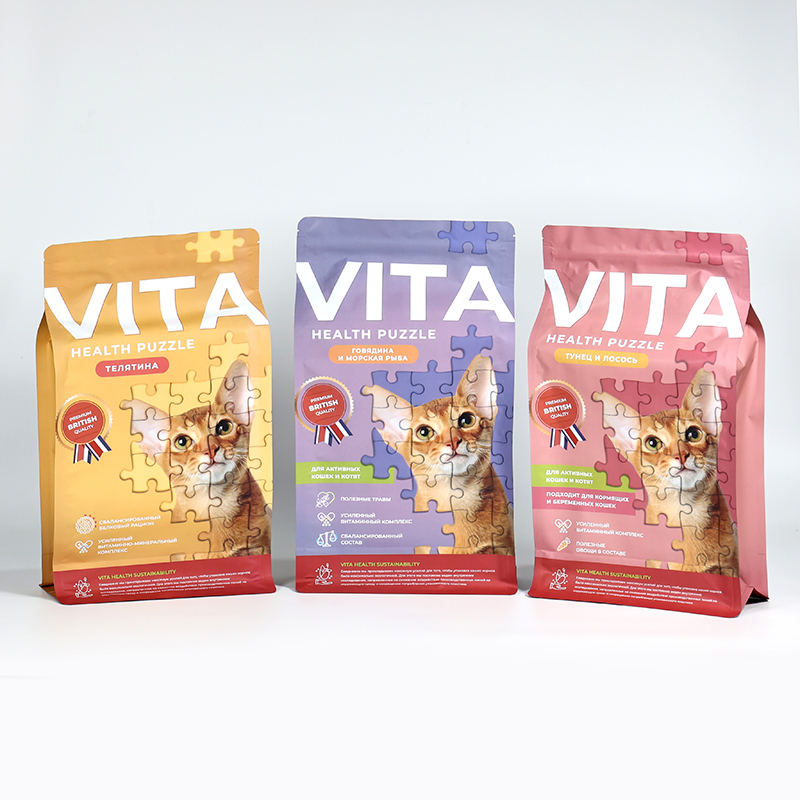
● Premium pet food where brand perception strongly influences purchase behavior
● Export-oriented food products that require stable long-distance logistics performance
● High-margin snack and health food categories competing in retail environments
Less suitable scenarios include:
● Low-margin commodities where packaging cost must remain minimal
● Products sold in bulk industrial formats rather than retail shelves
● Short shelf-life products that do not require long-term barrier protection
This distinction is important for avoiding unnecessary packaging cost increases without measurable commercial return.
Sustainability Pressure Is Reshaping Flat Bottom Packaging Design
The packaging industry is undergoing a major transformation driven by environmental regulations and consumer expectations. Aluminum foil structures, while highly effective, are also being re-engineered to reduce environmental impact.
The challenge lies in maintaining barrier performance while simplifying material composition.
Key innovation directions include:
● Development of recyclable mono-material flat bottom structures
● Reduction of aluminum layer thickness without losing oxygen barrier performance
● Integration of paper-based hybrid packaging systems for premium eco positioning
● Improvement of adhesive and sealing technologies to support recycling compatibility
These developments indicate that future flat bottom packaging will need to balance performance with environmental responsibility.
Conclusion
Aluminum foil flat bottom pouches represent a strategic packaging choice that goes far beyond basic food containment. They combine structural stability, high-barrier protection, and strong retail presentation into a single system that supports modern food supply chain requirements.
Their value is most evident in premium, export-oriented, and highly competitive food categories where packaging directly influences both brand perception and commercial performance.
Selecting this packaging format should always be a strategic decision based on product positioning, market requirements, and logistics structure rather than material preference alone.
FAQ
1. Are aluminum foil flat bottom pouches mainly for premium products?
Yes, they are primarily used for premium or high-value food categories where shelf impact and product protection are critical.
2. Do flat bottom pouches improve product sales?
They can improve sales indirectly by increasing shelf visibility and enhancing brand perception in retail environments.
3. Are they suitable for all food packaging applications?
No, they are best suited for products that require strong barrier protection and premium presentation rather than low-cost bulk goods.
4. What is the biggest advantage of aluminum foil in these pouches?
The biggest advantage is its near-complete barrier protection against oxygen, moisture, and light, which helps preserve product quality over time.
Post time: Jun-09-2026