


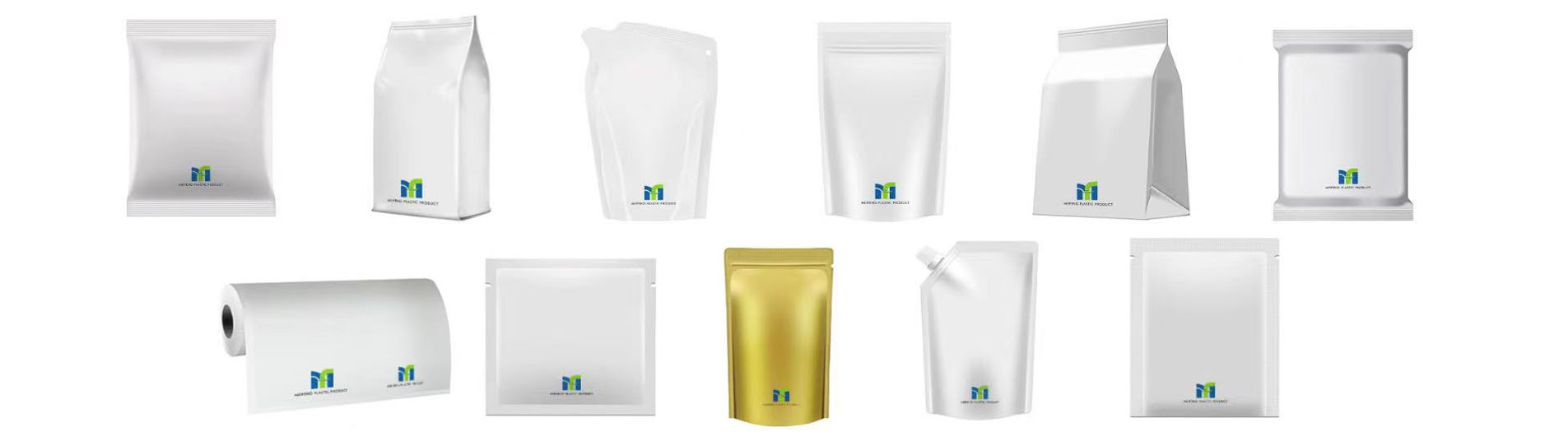
Food packaging roll films are flexible packaging materials supplied in roll form for food packaging production. Unlike pre-made bags, roll films are not made into a fixed pouch shape in advance. They are used on packaging machines to form different package styles during production, such as pillow bags, sachets, flow wrap packs, lidding films, vacuum packs, or small portion packs. Because of this flexibility, food packaging roll films are widely used for snacks, biscuits, candy, coffee, tea, frozen food, noodles, powder products, sauces, meat products, seafood, bakery food, pet food, and many other food categories.
For food brands and food factories, roll film packaging is suitable when products need fast packing, stable sealing, clear printing, and reliable food protection. The film can be customized according to the product’s shelf life, packaging machine, filling method, barrier requirement, and brand design. A suitable roll film should not only look good after printing, but also protect the food, run smoothly during packing, and keep every finished package consistent.
Product Features of Food Packaging Roll Films
Food packaging roll films are usually made with laminated materials. Different layers are combined to provide printing performance, strength, barrier protection, heat sealing, and food contact safety. The final structure depends on what food is being packed and how the package will be used.
A roll film for dry snacks may focus on moisture resistance and attractive printing, while a roll film for coffee may require better oxygen barrier and aroma protection. Frozen food roll films need flexibility and strength under low-temperature storage, while meat or seafood packaging may require stronger puncture resistance and reliable sealing. For sauces or oily food, the sealing layer should be stable enough to reduce leakage risk during packing and storage.
Common product features can include:
- Good heat sealing performance
- Moisture and oxygen barrier options
- Clear and stable printing effect
- Flexible structure for different packing machines
- Food-grade inner contact layer
- Optional high-barrier material structure
- Suitable strength for transportation and storage
- Custom film width, thickness, and roll size
These features make food packaging roll films suitable for both high-volume food production and customized food packaging projects.
Why Barrier Performance Matters
One of the main purposes of food packaging roll films is to protect food quality. Food products may be affected by moisture, oxygen, light, odor, grease, or temperature changes during storage and transportation. If the packaging film does not match the food, the product may lose texture, flavor, aroma, or appearance before it reaches consumers.
For example, crispy snacks need packaging that can help block moisture because humidity can make them soft. Coffee and tea need packaging that protects aroma and reduces oxygen exposure. Powder products need moisture resistance to reduce clumping. Frozen food needs packaging that remains durable in cold storage. Pet food and meat products need sealing strength and odor control.
A good food packaging roll film should be selected based on the actual food product. Not every product needs the strongest barrier film, but every product needs a film structure that matches its real shelf life and storage condition.
Sealing Performance Affects Package Quality
For roll film packaging, sealing performance is very important because the package is formed and sealed during production. If the film does not seal properly, problems may appear later, such as air leakage, broken edges, poor package shape, or product contamination risk.
The sealing layer should match the packing machine and the food product. Some foods are light and dry, so sealing is relatively simple. Other products, such as sauces, oily food, frozen products, or heavy food portions, may require stronger sealing performance and more stable film structure.
When food packaging roll films are used on automatic packaging machines, stable sealing also helps improve production efficiency. The film should be easy to run, easy to seal, and suitable for continuous packing.
Printing and Brand Presentation
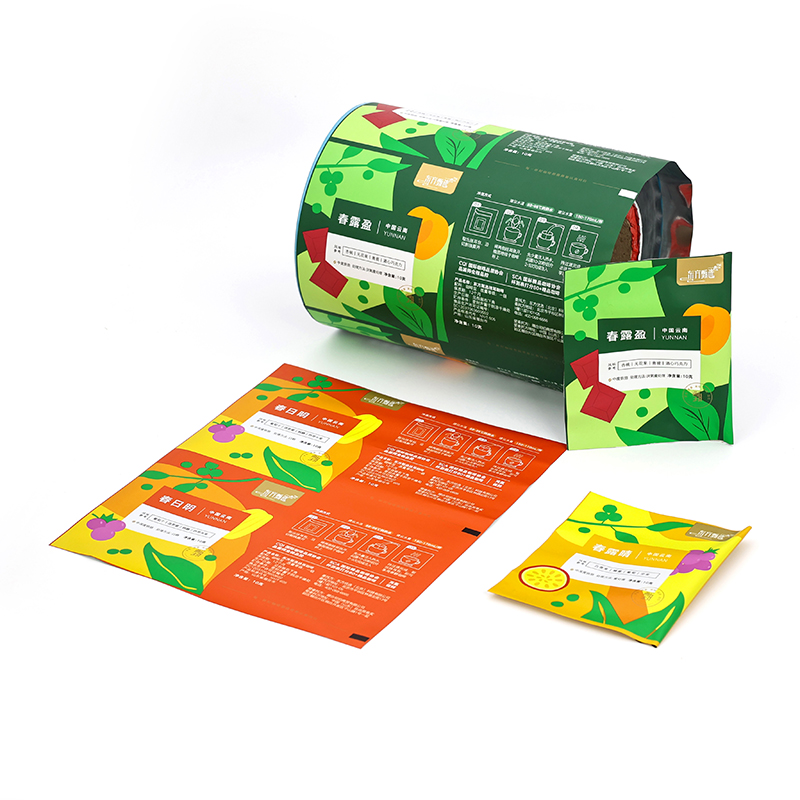
Food packaging roll films can be customized with full-color printing to show brand identity and product information. Printed roll films can include brand logo, product name, flavor, ingredients, nutrition facts, storage instructions, barcode, QR code, and marketing messages.
For retail food products, printing quality has a direct effect on customer impression. A clear and neat package can make the product look more professional, while poor printing alignment or weak color performance may reduce product value. For products with different flavors or sizes, printed roll films can also help create a consistent packaging series.
Food brands can choose different visual styles according to market positioning, such as transparent film, matte film, glossy film, metalized effect, or aluminum foil structure. The final design should match both the product category and the customer group.
Common Applications of Food Packaging Roll Films
Food packaging roll films are used across many food packaging markets because they can be adapted to different product shapes and machine types. They are especially suitable for products that need continuous packing or consistent package size.
Common applications include:
- Snack food roll film for chips, nuts, and puffed food
- Biscuit and bakery roll film for cookies, bread, and cakes
- Candy and chocolate roll film for small retail packs
- Coffee and tea roll film for sachets or small bags
- Powder roll film for seasoning, protein powder, and drink powder
- Frozen food roll film for dumplings, vegetables, and seafood
- Meat and seafood roll film for vacuum or tray packaging
- Sauce roll film for small portion liquid packs
- Pet food roll film for treats and small food packs
- Ready meal roll film for tray sealing or lidding use
Different applications require different film structures, so the product should be matched with the correct material, thickness, width, and sealing layer.
How Our Roll Film Products Support Food Packaging Projects
For food packaging projects, one film structure cannot meet every need. A snack brand, a frozen food factory, a coffee company, and a sauce producer may all use roll films, but their packaging requirements are very different. That is why roll film products should be selected based on food type, packing method, storage condition, and sales channel.
For snack and biscuit packaging, the film should help maintain crispness and provide attractive printing. For coffee and tea packaging, aroma protection and barrier performance are important. For frozen food, the film should stay strong and flexible under cold storage. For powder food, moisture resistance and clean sealing are key points. For sauce or liquid food, sealing stability and leakage resistance should be considered.
Our roll film products can be used for both standard food packaging and customized packaging needs. Whether the product requires transparent film, printed film, high-barrier film, aluminum foil film, metalized film, or laminated plastic film, the packaging structure can be matched to the actual application.
Choosing the Right Food Packaging Roll Films
When choosing food packaging roll films, buyers should first confirm the food product and the packaging method. The food’s moisture sensitivity, oil content, aroma, weight, texture, and shelf life will affect the material structure. The packaging machine also matters because film width, sealing temperature, roll direction, and film thickness must match the equipment.
Buyers should also consider the selling environment. Products for supermarkets may need better printing and shelf appeal. Products for e-commerce may need stronger transportation protection. Frozen food needs low-temperature durability, while coffee, tea, nuts, and high-value food may need stronger barrier performance.
A suitable food packaging roll film should protect the food, support smooth production, reduce package failure, and present the brand clearly.
FAQ
1. What are food packaging roll films?
Food packaging roll films are flexible packaging materials supplied in roll form and used on packaging machines to form, fill, seal, and cut food packages during production. They are widely used for snacks, coffee, tea, frozen food, powder products, sauces, meat, seafood, bakery products, and pet food.
2. What are the advantages of food packaging roll films?
Food packaging roll films support efficient production, flexible package forming, custom printing, compact storage, stable sealing, and different barrier protection options. They are suitable for food factories and brands that need automatic or continuous packaging.
3. Can food packaging roll films be customized?
Yes. Food packaging roll films can be customized in material structure, thickness, width, roll size, printing design, barrier performance, sealing layer, and machine direction according to the food product and packaging equipment.
4. How do I choose the right roll film for food packaging?
You should consider the food type, shelf life, moisture and oxygen barrier needs, sealing method, packaging machine, film width, roll size, storage condition, and printing design. The right roll film should match both the food product and the production process.
Post time: Jul-02-2026