


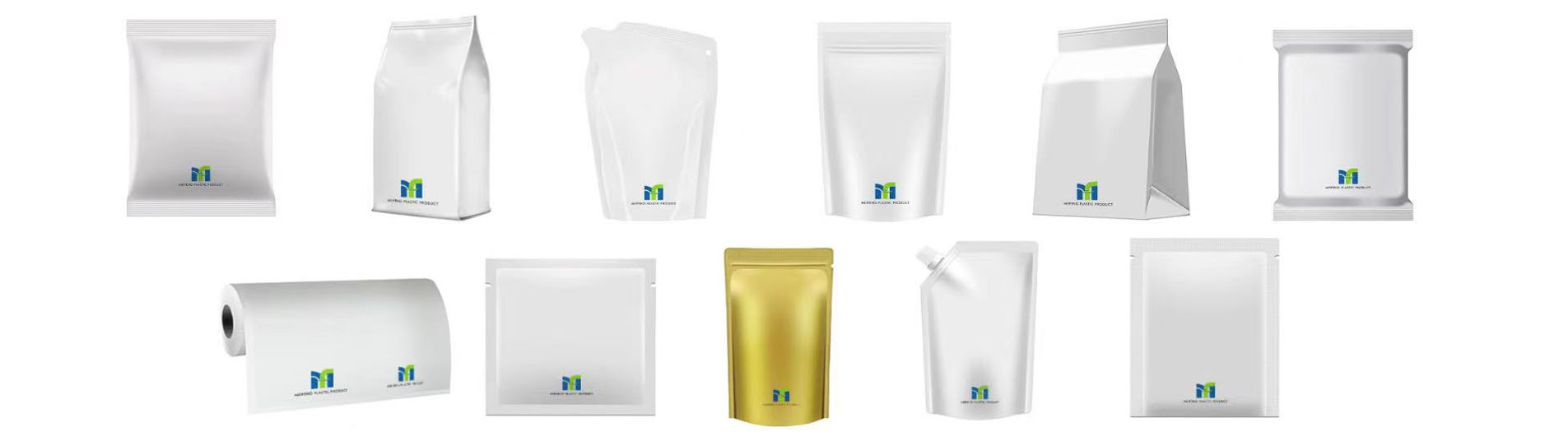
In today’s global food industry, sustainability is no longer a secondary consideration but a core requirement that directly influences brand positioning, regulatory compliance, and long-term market competitiveness, and custom recyclable food packaging has emerged as one of the most important solutions for companies aiming to reduce environmental impact while maintaining high performance packaging functionality. As governments introduce stricter plastic regulations and consumers become more environmentally conscious, food manufacturers are increasingly shifting toward recyclable packaging systems that can be integrated into existing production lines without sacrificing product safety or shelf life.
Unlike traditional multilayer packaging structures that are difficult to separate and recycle, recyclable food packaging is designed with material simplification and circular economy principles in mind, making it a critical innovation in modern flexible packaging systems.
What Makes Food Packaging Truly Recyclable in Industrial Applications?
Recyclability in food packaging is not determined by a single material choice but rather by the overall structure design, processing compatibility, and end-of-life recovery capability within real industrial recycling systems.
For packaging to be considered truly recyclable at scale, it must be compatible with existing waste collection and recycling infrastructure while also maintaining the necessary barrier properties required for food preservation. This balance between functionality and sustainability is what defines modern recyclable packaging innovation.
In many cases, recyclable food packaging focuses on mono-material structures that eliminate incompatible layers and adhesives that traditionally make recycling difficult.
Why Are Food Brands Switching to Custom Recyclable Packaging Solutions?
One of the most frequently searched questions in the packaging industry is why so many global food brands are actively replacing conventional packaging with recyclable alternatives, and the answer lies in a combination of regulatory pressure, consumer expectations, and supply chain optimization.
Custom recyclable food packaging allows brands to design packaging solutions that are tailored to specific product requirements while still meeting sustainability goals, which makes it significantly more flexible than standard off-the-shelf packaging formats.
At the same time, brands are under increasing pressure from retailers and international markets to reduce plastic waste, which has made recyclable packaging not only a marketing advantage but also a compliance necessity in many regions.
Material Innovation Behind Recyclable Food Packaging Systems
The development of recyclable food packaging relies heavily on advancements in polymer science and multilayer material simplification strategies that aim to replace complex composite structures with more uniform and recoverable alternatives.
Instead of combining multiple incompatible materials such as mixed plastics, aluminum layers, and non-recyclable adhesives, modern recyclable packaging focuses on using single-polymer systems that can be processed through existing recycling streams.
Common recyclable packaging material approaches include:
● Mono-material polyethylene (PE) structures that maintain flexibility and sealing performance while enabling mechanical recycling within standard PE waste streams
● Recyclable polypropylene (PP) based packaging systems designed for higher temperature resistance and improved structural rigidity in food applications
● Simplified barrier coating technologies that replace traditional aluminum foil layers with recyclable high-barrier polymer coatings
● Water-based adhesive systems that reduce contamination in recycling processes and improve material recovery efficiency
These innovations allow food packaging to maintain essential protective functions while significantly improving environmental compatibility.
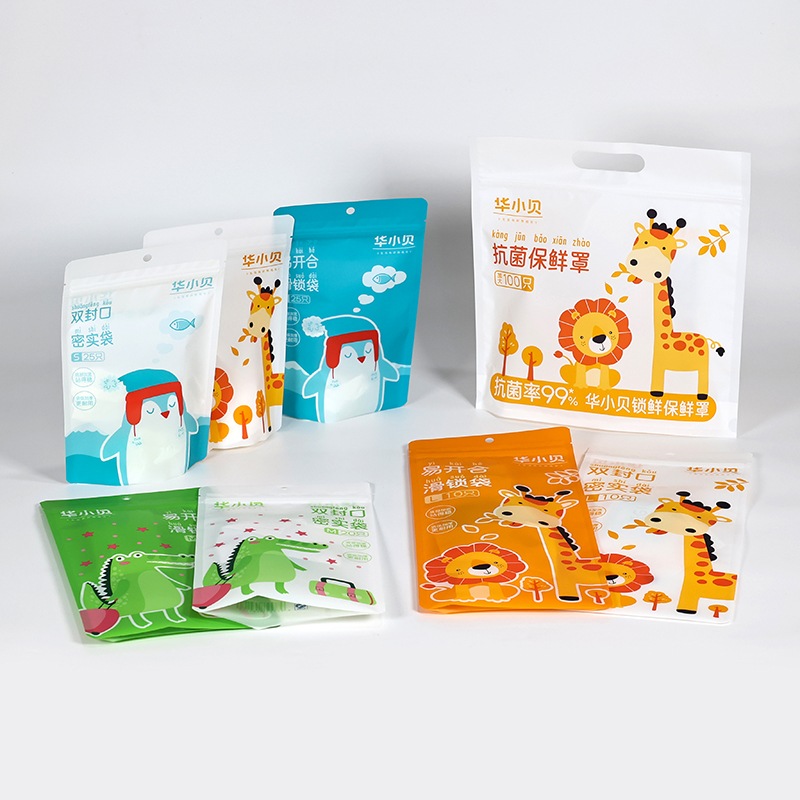
Functional Requirements Beyond Sustainability Claims
While recyclability is a key feature, food packaging must still meet strict functional requirements to ensure product safety, freshness, and market performance across global distribution networks.
Custom recyclable food packaging must therefore balance environmental design with practical performance characteristics that support real-world industrial usage.
Core functional requirements include:
● Adequate oxygen and moisture barrier performance to maintain food freshness and extend shelf life under normal storage conditions
● Strong mechanical durability to withstand filling, sealing, transportation, and retail handling without structural failure
● Reliable heat-sealing compatibility to ensure packaging integrity across high-speed automated production lines
● Printability and branding capability that supports high-quality visual presentation for competitive retail environments
These requirements ensure that sustainability does not compromise commercial usability or product protection performance.
Industry Applications Across Modern Food Categories
Recyclable food packaging is being rapidly adopted across multiple food categories due to its adaptability and alignment with both retail and industrial packaging requirements.
It is particularly valuable for brands that operate in international markets where sustainability regulations vary but are becoming increasingly strict.
Common application areas include:
● Snack food packaging such as chips, biscuits, nuts, and confectionery products that require lightweight and high-visibility retail packaging
● Dry food and grain products including rice, pasta, flour, and cereals that benefit from moisture-resistant recyclable structures
● Coffee and tea packaging where aroma preservation must be balanced with environmentally responsible material design
● Pet food packaging that requires durable yet recyclable structures capable of handling heavier product weights
● Organic and health food packaging where sustainability messaging is an important part of brand identity
This broad applicability makes recyclable packaging one of the fastest-growing segments in flexible packaging markets worldwide.
Supply Chain and Cost Efficiency Considerations
Beyond environmental benefits, recyclable food packaging also contributes to improved supply chain efficiency by reducing material complexity and optimizing packaging weight and storage space.
Because many recyclable structures are based on lightweight mono-material films, they reduce transportation costs and improve warehouse storage efficiency compared to traditional rigid or multilayer composite packaging systems.
Key operational advantages include:
● Reduced material complexity that simplifies production and improves manufacturing consistency
● Lower transportation weight compared to rigid packaging formats, resulting in improved logistics cost efficiency
● Improved storage efficiency due to flexible and compact packaging formats before filling
● Easier waste stream separation that supports compliance with regional recycling regulations
These benefits make recyclable packaging a strategic choice for both environmental and economic optimization.
Branding and Market Positioning Advantages
In modern consumer markets, sustainability is not only an environmental requirement but also a powerful branding tool that directly influences purchasing decisions, especially among younger and environmentally conscious consumers.
Custom recyclable food packaging allows brands to communicate sustainability commitments directly through packaging design, labeling, and material transparency.
This creates stronger emotional connections with consumers while also improving brand credibility in highly competitive retail environments.
Future Development of Recyclable Food Packaging Technology
The future of recyclable food packaging is expected to focus on improving barrier performance while maintaining full compatibility with existing recycling systems, which remains one of the biggest technical challenges in the industry.
Research and development efforts are increasingly focused on advanced mono-material structures, recyclable high-barrier coatings, and bio-based polymers that can reduce dependence on fossil-based plastics.
As global regulations continue to tighten, recyclable packaging will transition from a voluntary sustainability initiative to a mandatory industry standard across most food categories.
Conclusion
Custom recyclable food packaging represents a significant transformation in the global food packaging industry, combining environmental responsibility with functional performance and commercial efficiency. Its development reflects a broader shift toward circular economy principles, where packaging is designed not only for product protection but also for end-of-life recovery and resource reuse.
As sustainability regulations continue to evolve and consumer expectations rise, recyclable food packaging will play an increasingly central role in shaping the future of global food supply chains and brand competitiveness.
FAQ
1. What does recyclable food packaging mean?
It refers to packaging materials designed to be recovered and reused through industrial recycling systems, typically using mono-material or simplified structures that are compatible with existing recycling infrastructure.
2. Is recyclable food packaging as strong as traditional packaging?
Yes, modern recyclable materials are engineered to provide comparable strength, sealing performance, and barrier protection while reducing material complexity.
3. Can recyclable food packaging extend food shelf life?
Yes, depending on the material structure used, recyclable packaging can provide sufficient barrier properties to maintain product freshness and extend shelf life under normal storage conditions.
4. Why is recyclable packaging important for food brands?
It helps brands comply with environmental regulations, reduce carbon footprint, improve sustainability positioning, and meet growing consumer demand for eco-friendly packaging solutions.
Post time: Jun-04-2026