


Vacuum Food Packaging Bags are flexible food packaging bags designed to remove air from the package before sealing. This packaging method is commonly used for meat, seafood, cheese, cooked food, frozen food, dried food, vegetables, ready meals, and other products that need better freshness protection during storage and transportation. By reducing the amount of oxygen inside the package, vacuum food packaging bags can help slow oxidation, reduce moisture loss, protect product appearance, and extend shelf life under suitable storage conditions.
Unlike ordinary food bags, vacuum packaging bags must have strong sealing performance, good puncture resistance, and suitable barrier properties. During vacuum packing, the bag is tightly attached to the food surface, so the material must be strong enough to handle sharp edges, product weight, freezing conditions, and transportation pressure. For food factories, supermarkets, restaurants, and food processing brands, choosing the right vacuum food packaging bag is important for product safety, quality, and customer experience.
Main Advantages of Vacuum Food Packaging Bags
The first advantage of Vacuum Food Packaging Bags is better freshness protection. Many fresh and processed foods are sensitive to oxygen. When too much air remains inside the package, food may change color, lose flavor, dry out, or become more vulnerable to spoilage. Vacuum packaging helps reduce oxygen exposure and keeps food in a more stable condition during storage.
Another advantage is improved product appearance. For meat, seafood, cheese, cooked food, and frozen food, vacuum packaging can hold the product tightly and make the package look neat and compact. This is useful for retail display, cold chain transportation, and portion-controlled food packaging.
Vacuum food packaging bags also help save storage space. Since the air is removed, the package becomes flatter and more compact compared with loose packaging. This makes it easier to stack products in cartons, freezers, refrigerators, or warehouse storage.
In addition, vacuum packaging can help reduce leakage risk when the sealing layer and bag structure are properly selected. For food with moisture, oil, or marinade, stable sealing is especially important because poor sealing may cause package failure during transport or storage.
How Vacuum Packaging Helps Food Quality
The main purpose of vacuum packaging is to create a low-air environment around the food. This is helpful for many food products because oxygen can speed up oxidation and affect taste, color, and texture.
For fresh meat, vacuum packaging can help maintain a clean package appearance and reduce air contact. For seafood, it helps protect freshness and reduces freezer burn when used with frozen storage. For cheese, it can reduce moisture loss and protect texture. For cooked food and ready meals, it helps keep the product sealed and convenient for storage. For dried food, vacuum packaging can reduce air exposure and help maintain product quality for a longer period.
However, vacuum packaging should be used together with proper food processing, storage temperature, and hygiene control. The bag itself is important, but food safety also depends on the full production and storage process.
Common Applications of Vacuum Food Packaging Bags
Vacuum food packaging bags are used in many food industries because they are suitable for both fresh food and processed food. They are especially useful for products that need compact packaging, oxygen reduction, or freezer storage.
Common applications include:
- Fresh meat packaging
- Beef, pork, lamb, and poultry packaging
- Fish and seafood packaging
- Cheese and dairy product packaging
- Cooked food and ready meal packaging
- Frozen food packaging
- Sausage and ham packaging
- Marinated food packaging
Different food products require different bag thickness, barrier performance, and puncture resistance. For example, seafood with shells may need stronger material than sliced cheese, while frozen meat may need better low-temperature durability than dry food.
Material Features of Vacuum Food Packaging Bags
Vacuum food packaging bags are usually made with multi-layer materials. The most common structures include PA/PE, PET/PE, or other laminated materials designed for strength, sealing, and food contact safety. PA is often used to improve puncture resistance and toughness, while PE is commonly used as the inner heat-sealing layer.
A good vacuum bag should have several important material features:
- Strong heat sealing performance
- Good puncture resistance
- Suitable oxygen barrier
- Food-grade contact layer
- Stable performance under refrigeration or freezing
- Good flexibility after vacuuming
- Resistance to tearing during handling
- Thickness options for different food weights
For heavier products or products with bones, sharp corners, or hard surfaces, thicker and stronger vacuum bags are usually recommended. For smooth products such as cheese, cooked food, or dry ingredients, the structure can be adjusted according to shelf life and storage needs.
Clear Vacuum Bags and Printed Vacuum Bags
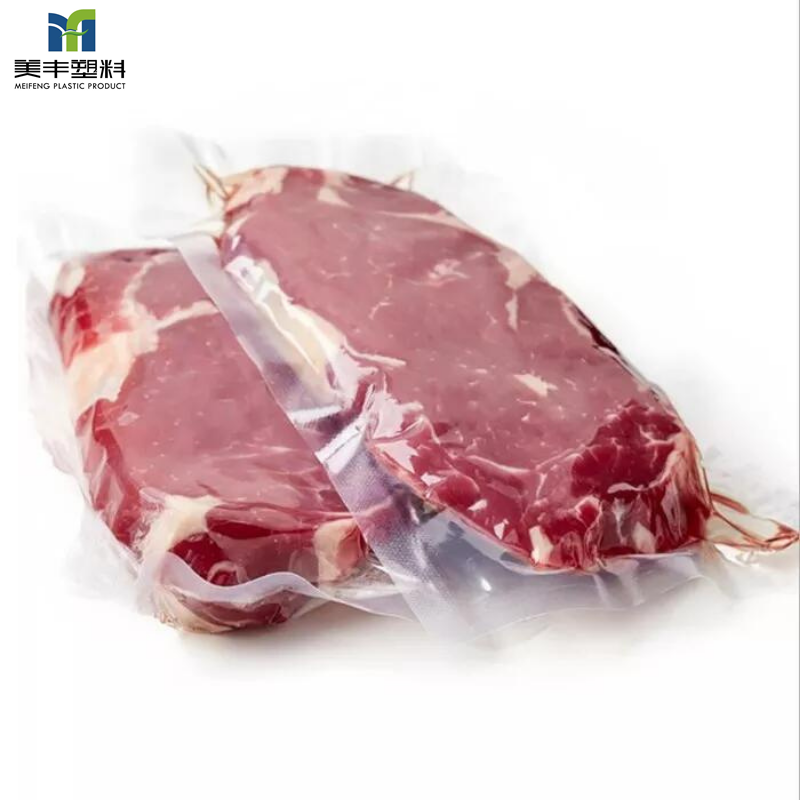
Many vacuum food packaging bags are transparent because customers and food operators often need to see the product inside. Clear vacuum bags are especially useful for meat, seafood, cheese, cooked food, and frozen products because product appearance is part of the buying decision.
For branded food products, printed vacuum bags can also be used. Printing can include brand logo, product name, weight, storage instructions, cooking method, barcode, and other information. This is useful for retail food brands that need both product visibility and brand recognition.
Some products may use partial printing, where the main product area remains visible while branding and product details are printed on selected areas. This approach can balance product display and professional packaging design.
Vacuum Bags for Frozen Food
Frozen food packaging has special requirements because the bag must remain stable under low temperatures. If the material becomes brittle, weak, or easy to tear, the package may fail during freezing, handling, or transportation.
Vacuum food packaging bags used for frozen meat, seafood, dumplings, prepared meals, and frozen ingredients should have good flexibility and puncture resistance. Strong sealing is also important because frozen products may be handled many times during storage and delivery.
For frozen food brands, vacuum packaging can help reduce air inside the package and support compact storage. It can also help protect products from freezer burn when the bag structure and storage conditions are suitable.
How to Choose Vacuum Food Packaging Bags
When choosing Vacuum Food Packaging Bags, buyers should first consider the food type. Meat, seafood, cheese, cooked food, frozen food, and dry ingredients have different requirements for puncture resistance, oxygen barrier, sealing strength, and bag thickness.
The second point is the storage condition. Products stored in refrigerators, freezers, or room-temperature environments may require different material structures. Frozen food usually needs better flexibility and durability, while fresh food may need strong sealing and clean product presentation.
The third point is the packaging equipment. Bag size, opening width, sealing temperature, and material thickness should match the vacuum packing machine. If the bag does not fit the equipment properly, production efficiency and sealing quality may be affected.
A suitable vacuum food packaging bag should protect the food, fit the machine, support storage conditions, and keep the final package neat and reliable.
FAQ
1. What are Vacuum Food Packaging Bags?
Vacuum Food Packaging Bags are flexible food packaging bags used to remove air from the package before sealing. They are commonly used for meat, seafood, cheese, cooked food, frozen food, dried food, and ready meals.
2. What are the advantages of vacuum food packaging bags?
The main advantages include reduced oxygen exposure, better freshness protection, compact storage, cleaner package appearance, improved freezer storage performance, and suitable protection for fresh and processed food products.
3. What materials are used for vacuum food packaging bags?
Common materials include PA/PE, PET/PE, and other laminated structures. PA can improve puncture resistance and toughness, while PE is often used as the food contact and heat-sealing layer.
4. How do I choose the right vacuum bag for food packaging?
You should consider the food type, product weight, puncture risk, shelf life, storage temperature, bag thickness, sealing strength, and vacuum packing machine requirements before choosing the packaging structure.
Post time: Jul-09-2026