


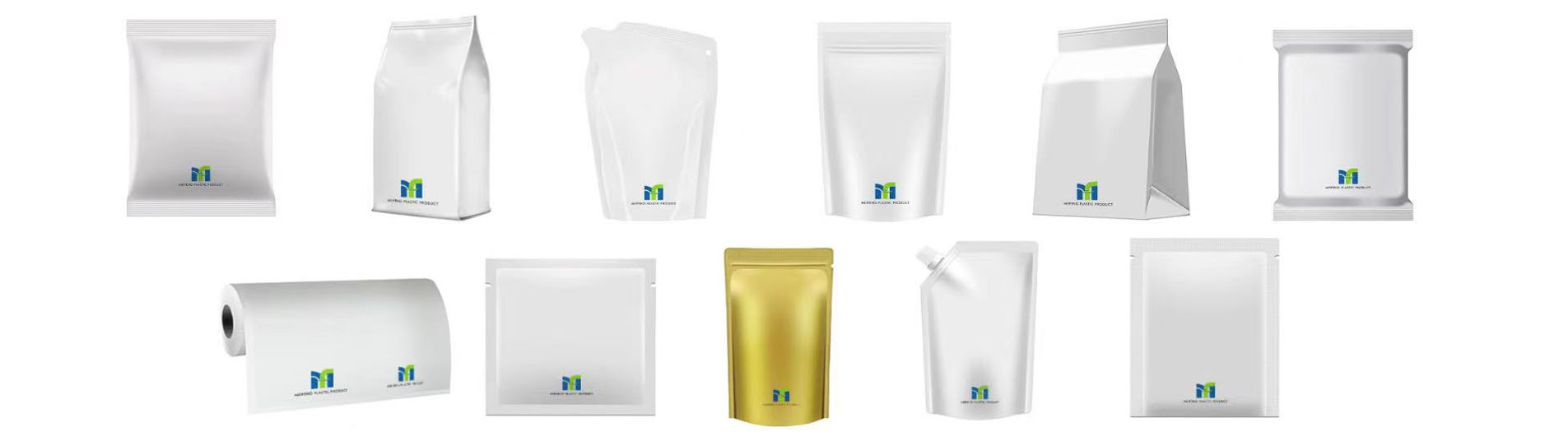
Frozen Food Packaging Bags are used for food products that need stable protection during freezing, storage, transportation, and retail display. For many frozen foods, a standard cold-resistant food bag can already meet basic packaging needs. Frozen vegetables, dumplings, bakery products, and simple portion packs usually require flexible materials, stable sealing, and good moisture resistance. However, not all frozen products face the same packaging risks.
Some frozen foods contain oil, sauce, meat juice, bones, seafood shells, or cooked ingredients. Some products need to be vacuum packed before freezing. Others may require heat treatment, sterilization, or longer shelf life before entering cold-chain distribution. In these situations, ordinary frozen food packaging bags may not provide enough protection, and higher-performance packaging structures such as a Vacuum Food Retort Bag should be considered.
This does not mean every frozen food product needs retort-grade packaging. The real question is whether the food itself, processing method, and supply chain conditions create extra pressure on the packaging bag. If the package needs to handle vacuum pressure, liquid content, oil exposure, puncture risk, temperature changes, or heat-processing requirements, the material structure should be selected more carefully.
Frozen Food Packaging Is Not One Single Bag Type
Many people search for frozen food packaging bags as if it were one fixed product. In reality, frozen food packaging can include many different formats. A frozen vegetable pillow bag, vacuum meat bag, seafood pouch, and retort-ready ready meal pouch can all belong to the frozen food packaging category, but they do not require the same material structure.
For simple frozen products, the main concerns are low-temperature flexibility, seal strength, and moisture protection. For higher-risk frozen products, the requirements become more complex. The packaging bag may need to resist puncture, reduce oxygen contact, prevent liquid leakage, protect flavor, and remain stable during processing.
Therefore, frozen food packaging should not be selected only by storage temperature. It should be selected according to the actual product condition. A bag suitable for frozen peas may not work for marinated meat. Packaging that works for frozen dumplings may not be strong enough for vacuum-packed seafood. A standard vacuum frozen bag may also be unsuitable if the product needs retort sterilization.
Three Levels of Frozen Food Packaging Requirements
A more practical way to understand frozen food packaging is to divide the requirements into three levels.
Level 1: Basic Frozen Storage Packaging
This level is suitable for frozen vegetables, frozen fruit, fries, dumplings, buns, and bakery products. The packaging mainly needs to remain flexible under freezing conditions and resist basic moisture exposure.
The key requirements usually include:
- Low-temperature flexibility
- Good heat sealing performance
- Moisture protection
- Printing appearance
- Machine packing efficiency
- Resistance to normal handling
For these products, PET / PE or other laminated food packaging films can usually meet the requirements, depending on product weight and packaging equipment.
Level 2: Vacuum Frozen Food Packaging
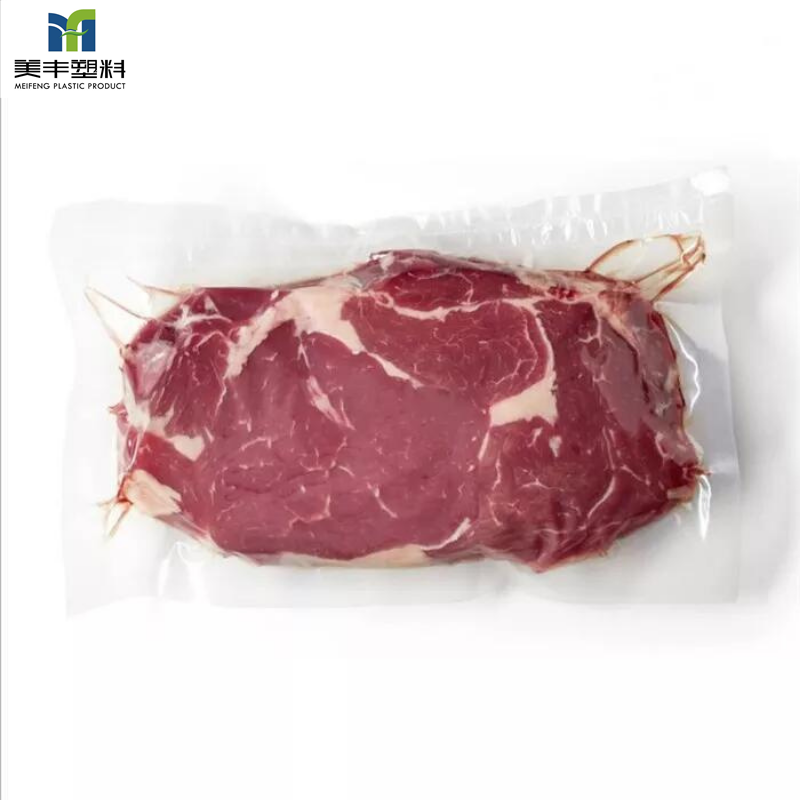
This level is commonly used for frozen meat, fish fillets, seafood portions, cheese, cooked meat, and processed food. These products often need air removal before freezing to reduce oxidation, freezer burn, and package volume.
Vacuum packaging makes the film fit tightly around the product surface, so the packaging needs stronger mechanical performance. If the product has bones, sharp edges, frozen hard corners, or rough surfaces, the puncture risk becomes much higher.
Common requirements include:
- Strong puncture resistance
- Stable vacuum sealing
- Better oxygen control
- Reduced freezer burn risk
- Stronger laminated structure
- Leak resistance during cold storage
PA / PE or PET / PA / PE structures are often suitable for this level because PA helps improve toughness and puncture resistance, while PE supports stable sealing.
Level 3: Vacuum and Retort-Grade Food Packaging
This level applies to products that go beyond ordinary frozen storage needs. Some cooked foods, ready meals, sauces, seafood, meat products, and pet food may need vacuum packaging and retort processing. In other cases, the formula and distribution requirements may call for packaging performance close to retort-grade protection.
This is where Vacuum Food Retort Bag becomes relevant. It is not simply a cold-storage bag. It is used when the package must support vacuum sealing and withstand higher processing requirements, such as heating, sterilization, pressure changes, or long shelf-life protection.
At this level, packaging may need:
- Higher heat resistance
- Stronger seal stability
- Better oil and liquid resistance
- High barrier protection
- Delamination resistance
- Stable performance after processing
- Aluminum foil or transparent retort-grade structure
This type of packaging is usually selected after confirming the food formula, processing temperature, filling method, shelf life, and storage conditions.
Frozen Food Packaging Bags vs Vacuum Food Retort Bag
Frozen food packaging bags and vacuum food retort bags may overlap in some food categories, but they are not the same type of packaging. The main differences are processing requirements and material performance.
| Comparison Point | Frozen Food Packaging Bags | Vacuum Food Retort Bag |
|---|---|---|
| Main Function | Protect food during freezing, storage, and cold-chain delivery | Support vacuum sealing and retort-grade food processing |
| Typical Products | Frozen vegetables, dumplings, meat, seafood, bakery products | Ready meals, cooked meat, sauces, seafood, pet food |
| Temperature Requirement | Low-temperature flexibility | Heat resistance and seal stability |
| Vacuum Use | Depends on the product | Usually designed for vacuum sealing |
| Barrier Level | Depends on the food type | Usually requires higher barrier performance |
| Material Focus | Cold resistance, puncture resistance, seal strength | Retort resistance, delamination control, high barrier, seal safety |
| Common Structures | PET / PE, PA / PE, PET / PA / PE | PET / AL / CPP, PET / PA / CPP, PET / AL / PA / CPP |
| Best Application | Cold-chain food products | Sterilized food, cooked food, shelf-stable food, or higher-risk food products |
The key point is simple: if the product is only frozen and distributed through the cold chain, frozen food packaging bags may be enough. If the product needs vacuum sealing, is already cooked, requires sterilization, contains oil or liquid, or needs a longer shelf life, a vacuum food retort bag or retort-grade structure may be more suitable.
When Can Standard Frozen Food Bags Fail?
Standard frozen packaging may fail when the actual product condition is more complex than expected. The bag may pass basic freezing tests but still fail during filling, vacuuming, stacking, transportation, or temperature changes.
One common issue is puncture. Frozen meat with bones, seafood shells, or hard product edges can press against the film. If the material structure lacks toughness, tiny holes may appear, leading to air leakage or freezer burn.
Another issue is seal failure. Frozen products often carry surface moisture, oil, powder, or sauce. These substances may contaminate the sealing area during filling. If the heat-seal layer is not properly matched, the package may leak during storage or delivery.
A third issue is insufficient barrier protection. Some cooked or prepared frozen foods are more sensitive to oxygen and odor than simple frozen vegetables. If the barrier level is too low, flavor and appearance may change more quickly.
A fourth issue is using cold-chain packaging for products that actually need heat-processing resistance. If the product also goes through heating or sterilization, a normal frozen vacuum bag may deform, delaminate, or leak.
Which Products May Need a Vacuum Food Retort Bag?
Not all frozen foods need retort-grade packaging, but some product categories require more careful packaging structure confirmation.
Cooked meat products often need stronger packaging because they are usually sensitive to oxygen, oil, meat juice, and texture changes. If the product needs vacuum sealing and later heating or sterilization, ordinary frozen packaging may not be enough.
Seafood products may create multiple packaging risks at the same time. Moisture, odor, shells, fish bones, and sharp frozen edges can all affect bag performance. Some high-value seafood products require stronger barrier protection and puncture resistance.
Ready meals and prepared dishes often contain sauce, rice, meat, vegetables, and oil in one package. This makes the packaging environment more complicated. If the product requires heat treatment or longer shelf stability, a vacuum food retort bag may be a safer choice.
Sauce-based frozen foods require strong sealing and good oil and liquid resistance. If sauce contaminates the sealing area, leakage risk increases. When the product also needs heating or sterilization, retort-grade materials can be considered.
Wet pet food and cooked pet food products commonly use retort packaging because they require stable sealing and longer shelf life. When these products are packed for special storage or distribution conditions, higher-performance laminated bags are often required.
How to Decide the Right Packaging Structure
Instead of simply asking for “frozen food packaging bags,” it is more important to clarify the real product and processing method. This helps avoid using a basic cold-resistant package for a product that actually needs vacuum or retort-grade protection.
The first question is whether the product is raw, cooked, semi-cooked, sauced, oily, or liquid-rich. The second question is whether the packaging is only used for freezing, or whether it also needs vacuum sealing, heating, sterilization, or long-term storage.
Product shape also matters. Foods with bones, shells, sharp corners, or hard frozen edges need better puncture resistance. Foods containing sauce or oil need stronger sealing and material compatibility. Foods requiring long shelf life need higher barrier protection.
For automatic packaging lines, the film or bag type must also match the equipment. Roll film width, thickness, sealing temperature, filling speed, and bag format can all affect production stability.
Custom Packaging Solutions for Frozen and Vacuum Retort Food
Frozen food packaging bags can be customized according to different food categories and processing methods. For simple frozen products, flexible laminated films or roll films can support automatic packing and cold-chain delivery. For meat and seafood, vacuum bags with better puncture resistance can help reduce air contact and freezer burn. For cooked foods, sauces, pet food, and higher-risk products, vacuum food retort bag structures can provide stronger heat resistance, barrier protection, and seal stability.
Available packaging formats include vacuum food bags, frozen food roll films, three-side seal bags, stand up pouches, aluminum foil retort bags, transparent retort pouches, and custom laminated films. Custom options can include material structure, thickness, oxygen barrier level, heat-seal layer, puncture resistance, printing design, tear notch, zipper, and surface finish.
The best packaging is not always the thickest or the most expensive. It is the structure that matches the food, processing method, and real storage environment.
FAQ
1. Are frozen food packaging bags the same as vacuum bags?
No. Frozen food packaging bags are mainly designed for low-temperature storage, while vacuum bags are used to remove air and fit tightly around the product. Some frozen foods use vacuum bags, but not all frozen food packaging requires vacuum performance.
2. When should a vacuum food retort bag be considered?
A vacuum food retort bag can be considered when the product needs vacuum sealing and may also require heating, sterilization, longer shelf life, stronger barrier protection, or packaging for cooked, sauced, oily, or ready-to-eat foods.
3. Can ordinary frozen food bags be used for retort food?
Usually not. Ordinary frozen food bags are mainly designed for low-temperature storage, while retort food packaging must withstand high temperature, pressure changes, moisture, and sterilization conditions. Retort-grade laminated materials are required.
4. What materials are commonly used for frozen and vacuum retort packaging?
For vacuum frozen packaging, PA / PE and PET / PA / PE are commonly used. For vacuum food retort bags, PET / AL / CPP, PET / PA / CPP, and PET / AL / PA / CPP are commonly used, depending on barrier performance, heat resistance, and product requirements.
Post time: Jul-23-2026