


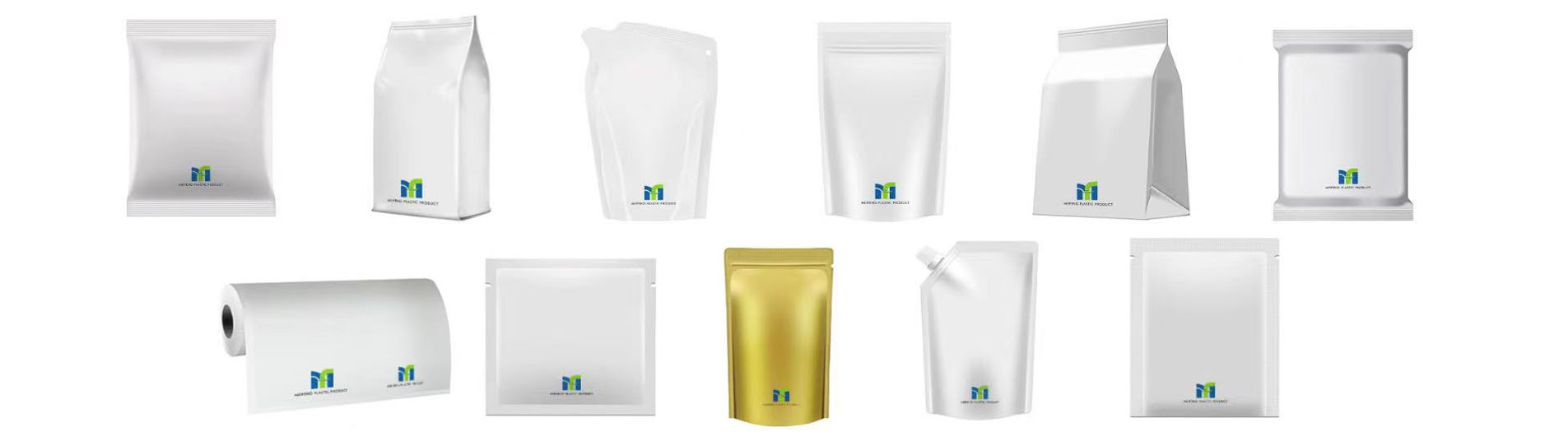
In today’s global food industry, the demand for long shelf life, convenient consumption, and safe preservation has driven significant innovation in packaging technology, and among all advanced packaging formats, the food retort pouch has become one of the most important solutions for heat-processed ready-to-eat meals and shelf-stable food products. It is widely used by food manufacturers that require high-temperature sterilization while maintaining product quality, flavor stability, and logistical efficiency across long distribution chains.
Unlike traditional cans or rigid containers, retort pouches are lightweight flexible laminated structures that can withstand high-temperature sterilization processes, making them a highly efficient alternative for modern processed food packaging systems.
Why Do Food Manufacturers Use Retort Pouches Instead of Cans?
One of the most frequently searched questions in the food packaging industry is why retort pouches are increasingly replacing traditional metal cans, and the answer lies in a combination of cost efficiency, performance advantages, and consumer convenience that aligns with modern food consumption behavior.
Retort pouches are designed to withstand thermal processing at high temperatures typically used for sterilization, which allows food to remain shelf-stable for extended periods without refrigeration. At the same time, they significantly reduce packaging weight and transportation cost compared to metal cans or glass jars.
Another important reason for adoption is consumer convenience, since flexible pouches are easier to open, store, and dispose of, which directly improves user experience in both retail and emergency food supply markets.
How Does Retort Pouch Technology Work in Food Processing?
The core functionality of a food retort pouch is based on its ability to survive high-temperature and high-pressure sterilization processes, commonly known as retort processing, which eliminates harmful microorganisms and extends product shelf life without the need for preservatives.
During production, filled and sealed pouches are exposed to controlled thermal sterilization, and the multilayer structure of the pouch prevents deformation, leakage, or contamination while maintaining internal food integrity.
The material structure is specifically engineered to resist heat, pressure, and moisture penetration while ensuring that sealing layers remain intact after processing, which is critical for food safety compliance in global markets.
What Materials Are Used in Food Retort Pouch Construction?
The performance of a retort pouch depends heavily on its multilayer material structure, which is designed to combine heat resistance, barrier protection, and mechanical strength within a single laminated system.
Manufacturers typically customize material combinations based on product type, sterilization temperature, and required shelf life.
Common retort pouch structures include:
● PET/AL/CPP multilayer structures that provide excellent oxygen and moisture barrier performance while maintaining high heat resistance suitable for meat, seafood, and ready meals
● Nylon-reinforced aluminum composite films that enhance puncture resistance and structural durability during high-pressure sterilization cycles
● Transparent retort-grade polypropylene structures that allow partial product visibility while maintaining sterilization compatibility for modern consumer packaging
● High-barrier laminated films designed for long shelf-life military rations, emergency food supplies, and export-ready processed foods requiring stable global distribution
Each structure is engineered to maintain stability under extreme processing conditions while preserving food taste, texture, and nutritional value.
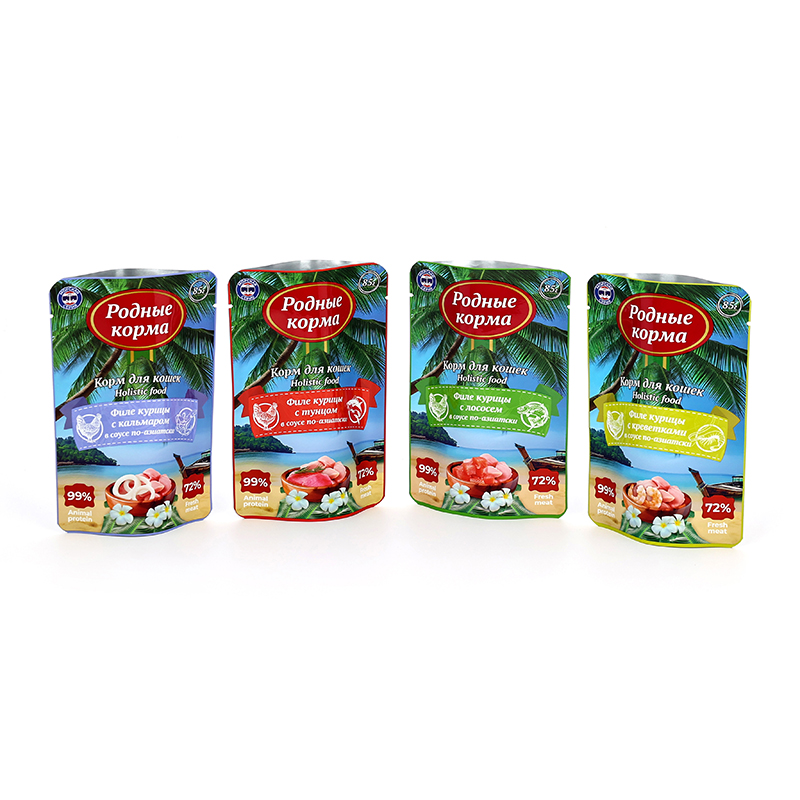
What Types of Food Products Use Retort Pouches?
Food retort pouches are widely used across multiple processed food categories because they offer both industrial efficiency and consumer convenience, making them suitable for global mass production and distribution systems.
They are especially popular in markets where ready-to-eat meals and long shelf-life packaged foods are in high demand.
Common applications include:
● Ready-to-eat meals such as curry, rice dishes, pasta, and soups that require long shelf stability without refrigeration
● Meat and poultry products including cooked chicken, beef, and processed protein meals that require sterilization and vacuum sealing
● Seafood products such as tuna, salmon, and cooked shellfish that need strong oxygen barrier protection and flavor preservation
● Baby food and nutritional purees where hygiene, safety, and sterilization compliance are critical requirements
● Emergency food rations and military supplies that require extremely long shelf life and resistance to environmental conditions
This wide application range makes retort packaging one of the most versatile solutions in processed food manufacturing.
What Are the Key Advantages of Food Retort Pouches?
The growing popularity of retort pouches is driven by a combination of functional, economic, and environmental advantages that align with modern food industry requirements.
Unlike rigid packaging systems, retort pouches offer flexibility in both production and logistics while maintaining high-level food safety standards.
Key advantages include:
● Extended shelf life achieved through high-temperature sterilization without refrigeration requirements
● Lightweight packaging structure that significantly reduces transportation and shipping costs
● Improved space efficiency in warehousing and retail storage due to flexible pouch design
● Enhanced consumer convenience with easy opening and resealable options depending on product design
● Reduced packaging waste compared to metal cans and glass containers, supporting sustainability goals
These advantages make retort pouches particularly attractive for global food exporters and large-scale food processing companies.
Are Food Retort Pouches Safe for High-Temperature Sterilization?
Food safety is one of the most critical concerns in packaging selection, and retort pouches are specifically engineered to meet strict international food safety standards for thermal processing applications.
The multilayer structure is designed to maintain stability under high-pressure steam sterilization environments, ensuring that no leakage, delamination, or contamination occurs during processing.
Food manufacturers must carefully select certified food-grade materials and validated sealing processes to ensure compliance with regulatory requirements in different international markets, especially for export-oriented production.
How Do Retort Pouches Improve Supply Chain Efficiency?
Beyond food preservation, retort pouches also play a significant role in improving supply chain efficiency due to their lightweight and compact design, which reduces logistics complexity across distribution networks.
Their reduced weight compared to cans or glass containers allows manufacturers to ship more units per container load, which directly improves transportation cost efficiency.
In addition, their flexible structure reduces warehouse space requirements and improves inventory handling efficiency, making them highly suitable for global supply chains with high-volume distribution demands.
Conclusion
Food retort pouches represent a highly advanced packaging solution that combines thermal resistance, long shelf life preservation, and supply chain efficiency into a single flexible packaging format. Their ability to replace traditional rigid containers while maintaining food safety and product quality has made them a key technology in modern processed food manufacturing.
As the global food industry continues to evolve toward convenience, sustainability, and large-scale efficiency, retort pouch packaging will remain an essential solution for manufacturers seeking reliable and cost-effective shelf-stable food packaging systems.
FAQ
1. What is a food retort pouch used for?
A food retort pouch is used for packaging shelf-stable ready-to-eat foods that require high-temperature sterilization, including meals, meat, seafood, and processed food products.
2. How long can food last in a retort pouch?
Depending on product formulation and sterilization conditions, food in retort pouches can typically last from 12 months to several years without refrigeration.
3. Are retort pouches better than cans?
In many cases, yes, because they are lighter, more space-efficient, easier to transport, and provide similar or better food preservation performance.
4. Can retort pouches be recycled?
Some newer designs use recyclable mono-material structures, but traditional multilayer retort pouches are more difficult to recycle due to mixed material layers.
Post time: May-28-2026