


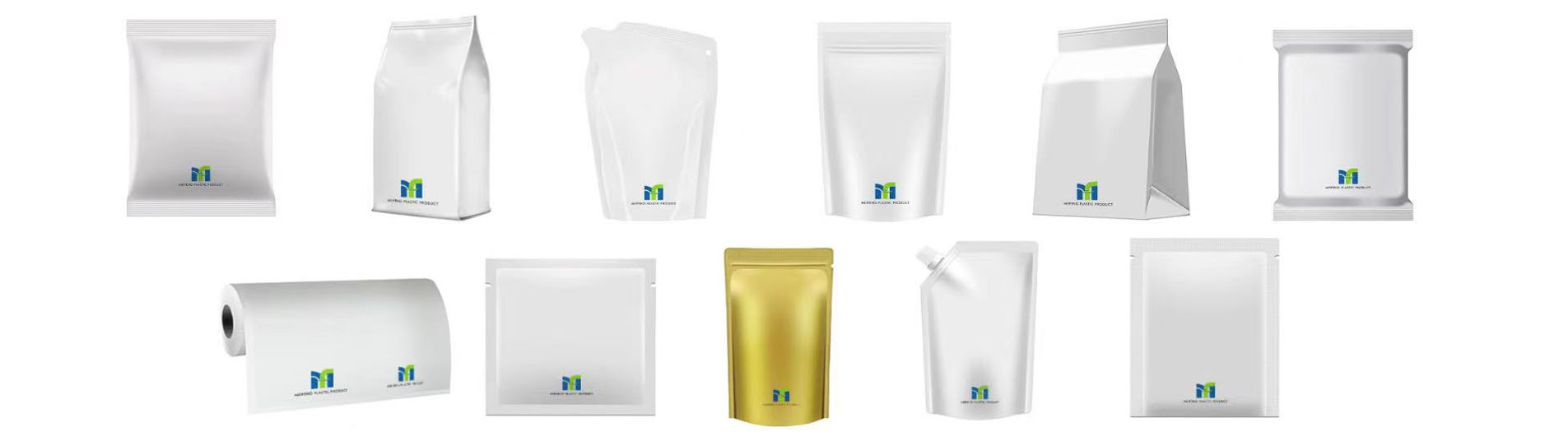
Vacuum Food Packaging Bags are designed to provide close product contact, stable sealing, and strong physical protection under reduced-air packaging conditions. Their performance depends on much more than film thickness. Material structure, puncture resistance, seal strength, low-temperature flexibility, oxygen barrier, and bag dimensions all influence how well the package performs.
For meat, seafood, cheese, prepared food, frozen products, and other foods, the most suitable vacuum bag is the one whose structure matches the weight, surface condition, storage temperature, and protection requirements of the contents.
Vacuum Bag Performance Depends on Structure, Not Thickness Alone
Thickness is easy to compare, but it does not fully represent the strength or protective performance of a vacuum bag.
Two bags with the same total thickness can perform differently if their laminated structures are different. A bag containing a stronger PA layer may offer better puncture resistance and toughness than a thicker structure made mainly from softer sealing materials.
Important factors include:
- total film thickness;
- PA content and layer arrangement;
- PE sealing layer;
- tensile strength;
- puncture resistance;
- oxygen barrier;
- low-temperature flexibility;
- side and bottom seal strength.
A suitable structure should balance these properties rather than simply increasing thickness.
Why PA/PE Is Common in Vacuum Food Packaging Bags
PA/PE is one of the most widely used structures for vacuum food packaging because the two materials provide different functions.
PA for strength and puncture resistance
PA, commonly known as nylon, helps improve mechanical strength, toughness, and resistance to puncture. This is especially valuable for meat, seafood, hard-edged foods, and products that may create concentrated pressure against the bag surface.
PA also contributes to oxygen-barrier performance, helping the package reduce oxygen transfer compared with simple PE structures.
PE for sealing and flexibility
PE provides softness, moisture resistance, and reliable heat-sealing performance. It also helps the bag remain flexible during handling and under low-temperature conditions.
When PA and PE are combined, the bag can provide both mechanical strength and sealing performance. The exact layer ratio can be adjusted according to the required puncture resistance, transparency, flexibility, and barrier level.
Three Areas of a Vacuum Bag Carry Most of the Stress
A vacuum bag should not be judged only by the center of the film. Different areas of the bag experience different types of pressure.
Bag surface
The main film area needs enough flexibility to conform closely around the food while still resisting stretching and tearing. Uneven thickness or weak lamination can reduce strength in localized areas.
Sealed edges
The sealed edges maintain package closure. Seal width, sealing-layer uniformity, and edge consistency all affect final reliability. A strong film with weak side seals can still fail under product weight or pressure.
Corners and transition areas
Corners often experience concentrated stress, especially when the food has hard surfaces or when frozen products develop rigid edges. Good tear resistance and puncture strength help prevent damage from starting at these points.
This is why bag construction should be evaluated as a complete structure rather than only by film thickness.
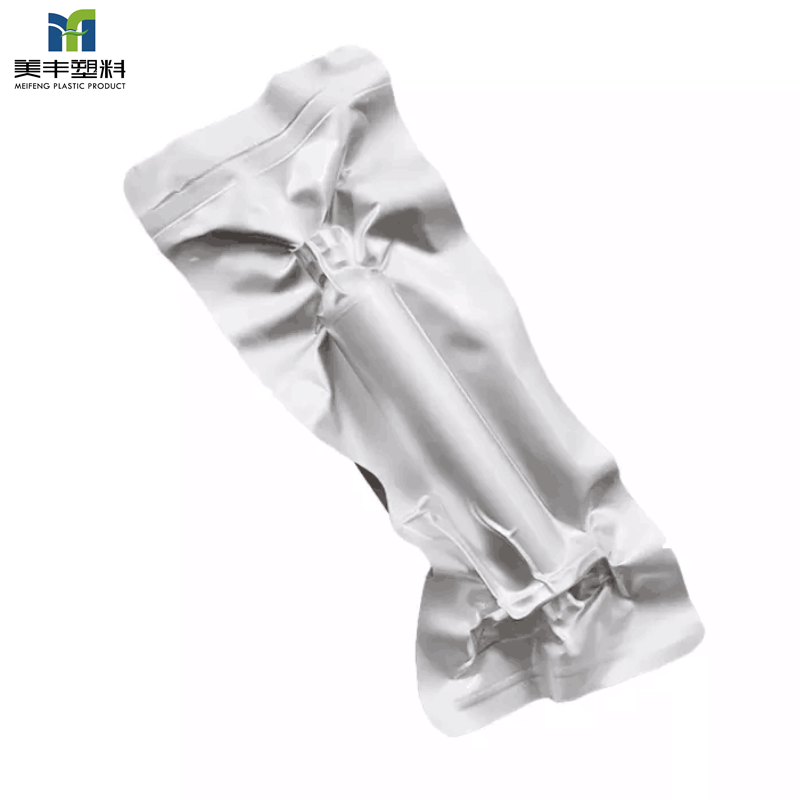
What Defines a Good Clear Vacuum Bag?
Clear vacuum bags are often used when product appearance needs to remain visible. Their quality can be evaluated through several physical characteristics.
A good clear bag should have:
- stable transparency;
- controlled haze;
- smooth film surface;
- even laminated layers;
- clean side edges;
- continuous seals;
- no obvious bubbles or delamination;
- consistent bag dimensions.
High transparency is useful for displaying meat color, seafood appearance, cheese texture, and prepared food condition. However, clarity should not come at the expense of mechanical performance.
For products that create more pressure on the film, a clear PA/PE structure can provide both visibility and strength.
Bone-In Meat Requires More Than a Standard Vacuum Bag
Bone-in meat is one of the more demanding applications for vacuum packaging bags.
Bones, cut edges, and hard frozen corners can create concentrated pressure on the film. A bag that works well for soft boneless meat may not provide enough protection for products with sharp contact points.
For these applications, the bag should place greater emphasis on:
- puncture resistance;
- tear resistance;
- film toughness;
- stronger PA-based structures;
- stable edge seals;
- sufficient flexibility around irregular shapes.
Simply increasing overall thickness is not always the most effective solution. A better material structure can improve resistance to puncture without making the bag excessively stiff.
Frozen Vacuum Bags Need Stable Low-Temperature Flexibility
Low temperatures change the way flexible materials behave. Some films become stiffer and more vulnerable to cracking after freezing.
Vacuum bags for frozen meat, seafood, dumplings, prepared foods, and other frozen products should maintain flexibility after temperature drops.
Important characteristics include:
- resistance to brittleness;
- flexibility at folds and corners;
- stable seal strength;
- puncture resistance after freezing;
- good lamination stability.
Frozen products may also develop hard edges after solidification, increasing pressure against the bag surface. For this reason, cold resistance and puncture resistance often need to work together.
PA/PE and PET/PA/PE structures can provide improved toughness where stronger mechanical performance is required.
Seal Strength Is Critical to Vacuum Bag Reliability
The sealing area is one of the most important parts of the bag.
A vacuum bag must maintain a continuous seal under product weight, internal stress, bending, and temperature changes. Seal performance depends on both the inner sealing material and the quality of the bag edges.
Key factors include:
- sealing-layer uniformity;
- side-seal width;
- bottom-seal strength;
- film thickness near the edge;
- resistance to oil or moisture contact;
- seal flexibility after cooling or freezing.
For oily foods, prepared foods, or products with surface moisture, the inner layer should provide suitable contact resistance and stable sealing behavior.
A strong sealing structure helps the package remain closed even when the bag is tightly fitted around irregular contents.
Vacuum Bag Thickness Should Match the Product
A thicker bag is not automatically the better option.
Lightweight, smooth-surface foods may not require a heavy film structure. Larger or heavier products place more stress on the bag and may need stronger mechanical performance. Bone-in products require greater puncture resistance, while frozen foods need both toughness and low-temperature flexibility.
Thickness should therefore be considered together with:
- product weight;
- surface hardness;
- presence of bones or shells;
- storage temperature;
- expected handling pressure;
- required oxygen barrier.
This provides a more useful basis for selecting a vacuum bag than thickness alone.
Bag Width, Length, and Seal Margin Affect Final Performance
Bag dimensions directly influence how the packaging fits around the product.
If the bag is too narrow, the side areas may experience excessive tension. If it is too large, excess material can reduce the neatness of the finished package and create unnecessary folds.
Useful dimensions to consider include:
- bag width;
- bag length;
- product thickness;
- edge allowance;
- sealing area;
- bottom and side stress points.
The bag should provide enough space to accommodate the product without placing excessive pressure on the side seals.
For irregular foods, additional allowance may be needed around hard corners or thick sections. Correct dimensions help the film distribute stress more evenly.
Different Foods Need Different Vacuum Bag Priorities
| Food Type | Main Bag Requirements |
|---|---|
| Fresh meat | Transparency, sealing, flexibility |
| Bone-in meat | Puncture resistance, tear strength |
| Seafood | Puncture resistance, moisture resistance, strong seals |
| Cheese | Oxygen barrier, close fit, clarity |
| Prepared food | Seal stability, oil resistance |
| Frozen food | Low-temperature flexibility, puncture resistance |
The bag structure should reflect the physical condition of the food rather than relying on one standard specification for every application.
Selecting the Right Vacuum Bag Starts with the Bag Itself
The performance of Vacuum Food Packaging Bags depends on the complete bag structure.
PA improves toughness and puncture resistance. PE supports flexibility and sealing. Strong edges help maintain closure. Correct dimensions reduce concentrated stress, while suitable low-temperature performance protects the bag during frozen storage.
For different foods, the most important question is not simply “How thick is the bag?” but whether the bag structure matches the product’s weight, shape, surface condition, temperature, and barrier requirements.
A well-matched vacuum bag provides a better balance of protection, strength, clarity, and sealing stability.
FAQ
1. What material is commonly used for Vacuum Food Packaging Bags?
PA/PE is a common structure because PA provides strength and puncture resistance, while PE offers flexibility and reliable sealing performance.
2. Are thicker vacuum bags always stronger?
Not necessarily. Strength depends on the material structure, PA content, puncture resistance, and seal quality as well as total thickness.
3. What type of vacuum bag is suitable for frozen food?
Frozen food bags should provide good low-temperature flexibility, puncture resistance, and stable sealing performance. PA/PE-based structures are commonly used.
4. Can vacuum food packaging bags be customized?
Yes. Material structure, thickness, width, length, transparency, oxygen barrier, puncture resistance, low-temperature performance, seal width, and printing can all be customized.
Post time: Aug-11-2026