


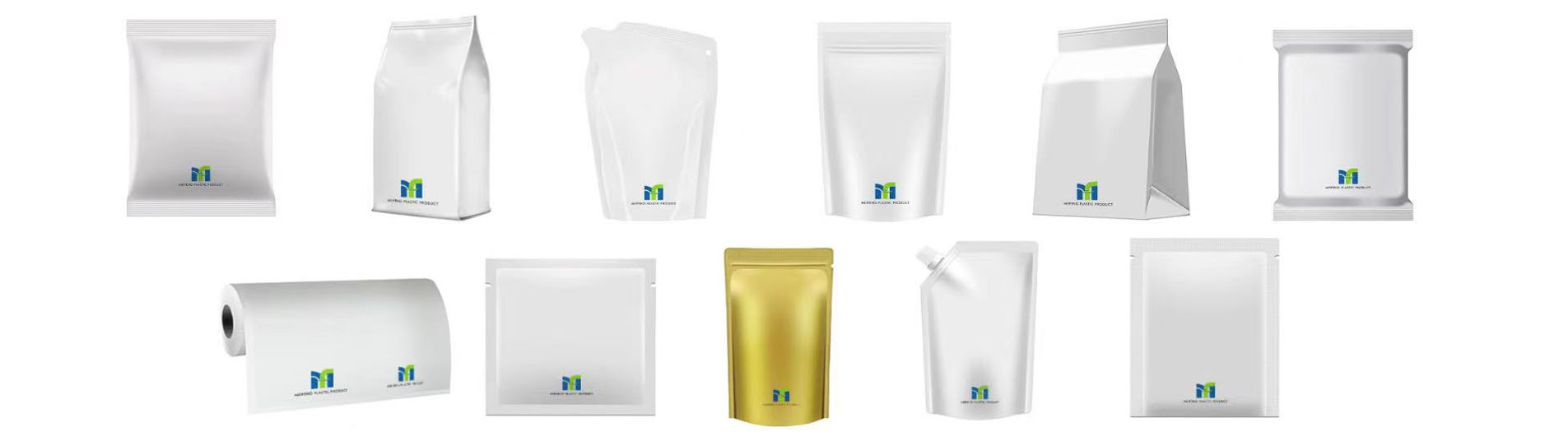
A Retort Pouch is mainly used for foods that require high-temperature processing while still using a flexible packaging format. However, retort packaging is not limited to one fixed pouch type. Depending on the final package appearance, food form, and intended use, different options can be considered, including aluminium retort pouches, transparent retort materials, vacuum food retort bags, three-side seal retort pouches, and stand-up retort pouches.
For ready-to-eat foods, meat, seafood, rice products, sauces, soups, pet food, and other thermally processed foods, the most visible differences between retort pouch products usually appear in the final package format. Some products are better suited to a fully opaque printed pouch, some benefit from keeping the contents visible, while others require packaging that fits more closely around the food itself. Therefore, instead of comparing material thickness or individual film layers first, it is often more practical to define the desired finished package and then select the appropriate Retort Pouch structure.
Retort Pouch Types Can Be Classified by Final Package Format
Retort packaging materials can be converted into several different pouch formats rather than one universal bag. These structures affect whether the food remains visible, whether the package can stand upright, how closely the pouch follows the product shape, and how much front and back surface area is available for printing.
| Retort Pouch Type | Main Characteristic | Common Food Applications |
|---|---|---|
| Aluminium Retort Pouch | Opaque laminated package | Ready meals, meat, rice, sauces, pet food |
| Transparent Retort Pouch | Keeps contents visible | Prepared foods, meat, seafood |
| Vacuum Food Retort Bag | Fits more closely around the product | Meat, seafood, compact food portions |
| Three-Side Seal Retort Pouch | Flat and simple structure | Sauces, prepared foods, individual portions |
| Stand-Up Retort Pouch | Expandable bottom for upright packaging | Soups, sauces, pet food, ready meals |
| Retort Packaging Material | Suitable for different pouch formats | Customized food packaging applications |
This classification makes the differences between the products easier to understand. The important question is not only whether a package can be used for retort processing, but also whether its final shape suits the food form, presentation style, and portion size.
Aluminium Retort Pouch for Fully Covered Food Packaging
An Aluminium Retort Pouch uses an opaque laminated structure, which means the food inside is not directly visible from the outside. The entire pouch surface can therefore be used for printed graphics and product information. This type of packaging is commonly used for ready-to-eat foods, cooked meat, rice products, sauces, seafood, and wet pet food.
Depending on the required specification, aluminium retort structures can combine materials such as PET, aluminium foil, PA/nylon, and CPP. From the perspective of the finished package, however, the most noticeable characteristic is not the individual layer composition but the fully opaque appearance it creates.
When the food does not need to be shown through a transparent area and the package requires a complete printed surface and light shielding, this format is particularly suitable. Compared with transparent retort packaging, the Aluminium Retort Pouch relies more heavily on the pouch surface itself to communicate the product visually, while the contents remain fully covered.
Transparent Retort Material for Visible Food Presentation
Transparent Retort Material offers a different packaging direction. Instead of completely covering the contents with an aluminium foil layer, it keeps the pouch transparent so that the color, shape, texture, and portion of the food can remain visible.
This format can be suitable for meat pieces, seafood, vegetables, and certain prepared foods where the appearance of the contents contributes to the overall package presentation. Transparent retort structures can use combinations of PET, PA, RCPP, and other suitable materials according to the food and pouch format.
The main difference between transparent retort packaging and aluminium retort pouches is therefore not simply whether aluminium foil is present. The more important distinction is whether the food itself should remain part of the visual presentation. Transparent packaging highlights the contents, while aluminium retort packaging provides a fully covered surface for printing.
Vacuum Food Retort Bag for Closer Product Fit
A Vacuum Food Retort Bag is suitable for applications where the pouch needs to fit more closely around the product. Unlike a conventional loose retort pouch, this type of package follows the shape of the food more directly after packaging, which makes it particularly suitable for meat, seafood, and other compact food portions.
For example, a whole piece of meat or seafood usually has a clear physical shape. In such cases, the package does not necessarily need to form a rigid-looking pouch body. A closer-fitting bag can reduce unnecessary internal space and create a more compact finished package.
This is also one of the main differences between a Vacuum Food Retort Bag and a Stand-Up Retort Pouch. Stand-up pouches are designed to create a defined pouch body and bottom structure, while vacuum food retort bags focus more on the relationship between the package and the actual product shape.
Three-Side Seal Retort Pouch Keeps the Structure Simple
A Three-Side Seal Retort Pouch mainly consists of front and back panels, with sealed edges forming a relatively simple flat package. Because it does not include an expandable bottom or complex side gussets, the finished pouch remains compact and relatively flat.
This structure is suitable for sauces, prepared foods, individual portions, meat products, and other foods that do not require an upright package. The front and back panels also provide two clear printing areas, allowing graphics and information to be arranged without being divided across multiple gussets or panels.
For smaller portions or food products that need a flat package format, the value of the three-side seal retort pouch lies in its direct structure, compact shape, and flexibility across different food packaging specifications.
Stand-Up Retort Pouch Creates an Upright Package
A Stand-Up Retort Pouch includes an expandable bottom that allows the finished pouch to form a standing base. Compared with a flat pouch, it creates a more defined three-dimensional body and front-facing display area, making it suitable for products that benefit from an upright package format.
Sauces, soups, prepared foods, and wet pet food can all use this type of structure depending on the final packaging requirement. The value of a stand-up retort pouch is not simply increased capacity. The entire package shape changes, and the bottom becomes an important part of the pouch structure.
When choosing between a three-side seal pouch and a stand-up retort pouch, the key consideration is whether the final package should remain flat or form a clear upright shape rather than which structure is more complex.
Retort Packaging Material Supports Different Finished Pouch Designs
Retort Packaging Material is not limited to one fixed pouch format. Depending on the food and packaging requirements, retort-compatible laminates can be converted into aluminium foil pouches, transparent pouches, vacuum bags, three-side seal bags, or stand-up pouches.
Material structures can include PET, aluminium foil, PA/nylon, CPP, and other suitable layers, while pouch dimensions, transparency, printing, and final construction can also be adjusted. For example, a printed rice retort pouch, a transparent seafood pouch, and a stand-up pet food pouch can all belong to the Retort Pouch category while having clearly different finished structures.
For this reason, retort packaging material is better understood as the foundation that supports different pouch designs rather than as one fixed packaging template.
How Can Different Foods Be Matched with the Right Retort Pouch?
Food category can provide a useful starting point, but it does not determine the final pouch format by itself. Ready meals and rice products can use aluminium foil pouches, transparent packaging, or stand-up structures depending on how the final product should be presented. Meat and seafood can use conventional flat retort pouches or Vacuum Food Retort Bags, while sauces and soups can be packaged in either three-side seal or stand-up formats.
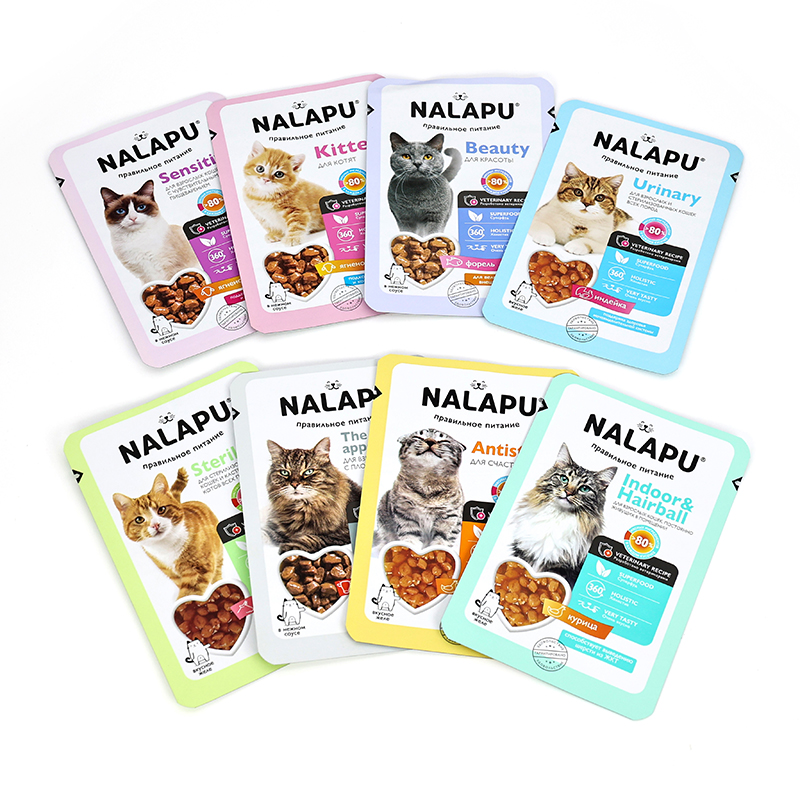
Wet pet food can also use aluminium foil, flat, or stand-up structures depending on portion size, package presentation, and final pouch requirements. This shows that one food category does not necessarily correspond to one fixed packaging solution.
Instead of selecting a pouch only by food name, it is more practical to first define whether the product should remain visible, whether the package should stay flat, stand upright, or fit closely around the contents, how much front-facing area is required, and what the final package should look like.
The process can be summarized as:Food presentation → pouch format → package dimensions → retort material structure
Retort Pouch Includes More Than One High-Temperature Packaging Structure
The Retort Pouch category includes several different product directions. Aluminium Retort Pouch provides a fully opaque package, Transparent Retort Material keeps the food visible, and Vacuum Food Retort Bag fits more closely around meat, seafood, and other compact food products. Three-side seal and stand-up retort pouches then provide flat and upright packaging formats for different applications.
Combined with adjustable Retort Packaging Material, these pouch types can be used for ready-to-eat foods, rice, meat, seafood, sauces, soups, pet food, and other foods that require high-temperature processing. Rather than treating all retort packaging as one standard bag, it is more useful to define the desired finished package first and then match the pouch format and material structure to that requirement.
FAQ
1. What are the common types of Retort Pouch?
Common types include aluminium retort pouches, transparent retort pouches, vacuum food retort bags, three-side seal retort pouches, and stand-up retort pouches. Each format supports different package appearances and food forms.
2. What is the main difference between an Aluminium Retort Pouch and a transparent retort pouch?
An aluminium retort pouch creates a fully opaque package, while a transparent retort structure keeps the food visible. The main difference is how the final product is presented.
3. When is a Vacuum Food Retort Bag more suitable?
It is particularly suitable for meat, seafood, and other compact food products when the package needs to fit more closely around the product shape and reduce unnecessary internal space.
4. Can Retort Packaging Material be used for different pouch formats?
Yes. Retort-compatible laminated materials can be converted into different pouch sizes, transparent or opaque structures, printed formats, and finished pouch designs according to the food application.
Post time: Sep-01-2026