


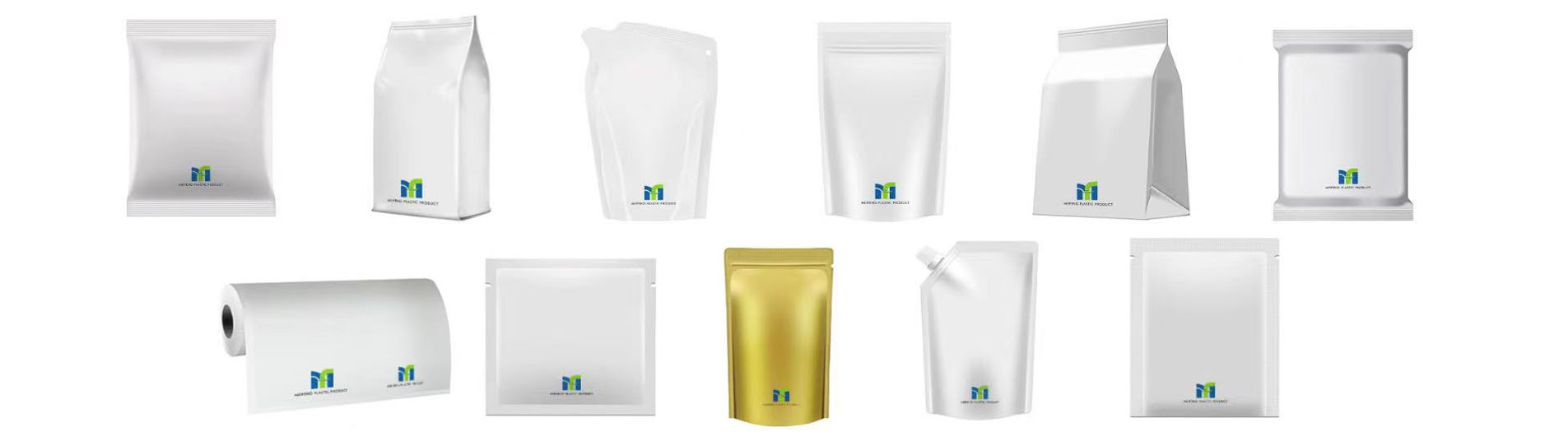
A Retort Pouch is not defined by one material or one thickness value. Its performance comes from the way several layers are combined to provide heat resistance, barrier protection, puncture resistance, sealing stability, and package flexibility.
Common structures include PET / AL / RCPP, PET / AL / PA / RCPP, and PET / PA / RCPP. The important difference between them is not simply the number of layers, but what each layer contributes to the complete pouch.
Core Materials and Their Functions
The easiest way to understand a retort pouch is to identify the role of each material.
| Material | Main Function | Main Effect on the Pouch |
|---|---|---|
| PET | Outer strength, printability, dimensional stability | Helps maintain surface quality and shape |
| PA | Toughness and puncture resistance | Improves resistance to hard edges and mechanical stress |
| AL | Oxygen, moisture and light barrier | Provides strong environmental protection |
| RCPP | Heat sealing and thermal stability | Forms the inner sealing layer for retort conditions |
These materials are selected because one layer cannot provide every required property.
PET supports the outer surface. PA improves mechanical toughness. Aluminum foil provides high barrier performance. RCPP forms the food-contact sealing layer and maintains better stability under elevated temperatures.
Three Common Retort Pouch Structures Compared
Different structures are designed around different priorities.
| Structure | Transparency | Barrier Level | Puncture Resistance | Main Characteristic |
| PET / AL / RCPP | Opaque | High | Moderate | High barrier with a relatively simple laminate |
| PET / AL / PA / RCPP | Opaque | High | High | Combines barrier protection with stronger toughness |
| PET / PA / RCPP | Transparent | Moderate, depending on materials | High | Combines visibility with mechanical strength |
PET / AL / RCPP
This three-layer structure combines an outer PET layer, aluminum foil barrier, and RCPP sealing layer.
It is suitable when the main requirements are:
- strong oxygen protection;
- moisture resistance;
- complete light blocking;
- aroma retention;
- stable sealing under retort conditions.
Its main advantage is that the structure provides high barrier performance without adding an extra reinforcement layer.
PET / AL / PA / RCPP
Adding PA changes the mechanical performance of the pouch.
This structure is more suitable when the contents may create greater pressure against the film, such as products with harder surfaces, irregular shapes, shells, or bones.
The PA layer helps improve puncture resistance and distributes localized stress more effectively. It also helps reduce direct mechanical pressure on the aluminum foil layer.
The main reason for using the four-layer structure is therefore not simply to increase thickness, but to add mechanical reinforcement to a high-barrier pouch.
PET / PA / RCPP
This structure removes aluminum foil and keeps the pouch transparent.
It is useful when product visibility is important but the package still needs toughness and heat-resistant sealing.
Because there is no aluminum foil layer, the barrier strategy is different. The structure cannot provide complete light blocking and may require additional transparent barrier materials when stronger oxygen protection is needed.
Why Total Thickness Is a Poor Comparison by Itself
A retort pouch may be described as 100, 120, or 140 microns, but the total number does not show how the thickness is distributed between the layers.
Two pouches with the same total thickness can behave differently.
For example:
- increasing PA can improve puncture resistance;
- increasing RCPP can influence seal strength and flexibility;
- changing PET thickness can affect stiffness and dimensional stability;
- changing aluminum foil gauge can influence barrier stability and resistance to flex damage.
This means a 120-micron PET / AL / RCPP pouch and a 120-micron PET / AL / PA / RCPP pouch should not be treated as equivalent simply because their overall thickness is the same.
For retort packaging, the layer configuration is often more informative than total thickness alone.
Transparent and Aluminum Retort Pouches Solve Different Problems
Transparent and aluminum foil retort pouches should not be compared only by appearance.
Aluminum foil retort pouch
The aluminum layer creates an opaque barrier and is particularly useful when protection from oxygen, moisture, light, and aroma loss is important.
Its main strengths are:
- high barrier performance;
- complete light protection;
- strong aroma retention;
- good protection for sensitive contents.
Transparent retort pouch
Transparent structures maintain visibility of the contents and rely on non-opaque films for strength and barrier performance.
Their main strengths are:
- product visibility;
- clean transparent appearance;
- good mechanical flexibility;
- strong puncture resistance when PA is included.
The key difference is therefore the protection strategy. Aluminum structures prioritize maximum barrier performance, while transparent structures balance visibility with heat resistance, strength, and sealing.
Why the Seal Layer Deserves Special Attention
The seal area is one of the most important parts of a retort pouch because it behaves differently from the main pouch body.
RCPP is commonly used as the inner layer because it combines heat-sealing ability with thermal stability.
A suitable sealing layer needs to maintain:
- continuous seal formation;
- adequate seal strength;
- flexibility after heating;
- resistance to edge opening;
- stable performance around pouch corners.
A pouch can have excellent barrier materials and still perform poorly if the seal area is unstable.
For this reason, seal width, RCPP uniformity, edge consistency, and laminate adhesion near the seal should be considered separately from oxygen or moisture barrier performance.
What Can Pouch Appearance Reveal After Heat Exposure?
High-temperature exposure can reveal whether the laminate is structurally balanced.
Several visible changes can provide useful information:
| Visible Change | Possible Structural Concern |
| Delamination | Adhesive or layer compatibility issue |
| Bubbling | Bonding instability or trapped volatile material |
| Excessive curling | Uneven shrinkage between layers |
| Seal distortion | Inner-layer or sealing-area instability |
| Wrinkling | Internal stress or laminate imbalance |
| Edge weakness | Seal or layer adhesion problem |
These changes do not all have the same cause. This is why describing a pouch simply as “heat resistant” is not enough.
The complete laminate, including the adhesive system between layers, must remain stable under the intended thermal conditions.
How Retort Pouch Structures Can Be Adjusted
Retort pouch specifications can be developed around different performance requirements.
Common structural options include:
- transparent laminated structures;
- aluminum foil laminated structures;
- three-layer constructions;
- four-layer constructions with PA reinforcement;
- different RCPP sealing-layer thicknesses;
- different barrier levels;
- different pouch widths and lengths;
- three-side seal formats;
- stand-up retort pouches;
- printed or unprinted surfaces.
The structure can therefore be adjusted depending on whether the priority is stronger barrier protection, higher puncture resistance, transparent presentation, seal strength, or a balance of several properties.
A More Useful Way to Compare Retort Pouches
Instead of asking only, “How thick is the pouch?”, a more useful comparison considers four questions:
- Does the pouch need to be transparent or opaque?
- How much oxygen, moisture, and light barrier is required?
- Does the content create significant puncture or mechanical stress?
- What inner sealing structure is used for the retort conditions?
These four points usually explain more about pouch performance than one total thickness value.
A PET / AL / RCPP structure emphasizes high barrier protection. PET / AL / PA / RCPP adds stronger mechanical reinforcement. PET / PA / RCPP prioritizes transparency and toughness.
The most suitable Retort Pouch structure is therefore determined by the balance between barrier performance, mechanical strength, visibility, and seal stability.
FAQ
1. What is the main difference between PET / AL / RCPP and PET / AL / PA / RCPP?
The four-layer structure includes PA, which adds toughness and puncture resistance. Both structures can provide high barrier performance because they contain aluminum foil.
2. Why is PA used in some retort pouches?
PA improves mechanical strength and resistance to puncture, especially where the pouch may contact hard, sharp, or irregular surfaces.
3. Why is RCPP commonly used as the inner layer?
RCPP combines heat-sealing ability with better thermal stability, making it suitable for the inner sealing layer of retort pouch structures.
4. Can a transparent retort pouch provide barrier protection?
Yes. Transparent retort pouches can use laminated barrier materials, although their barrier system is different from aluminum foil structures and does not provide complete light blocking.
Post time: Aug-13-2026