


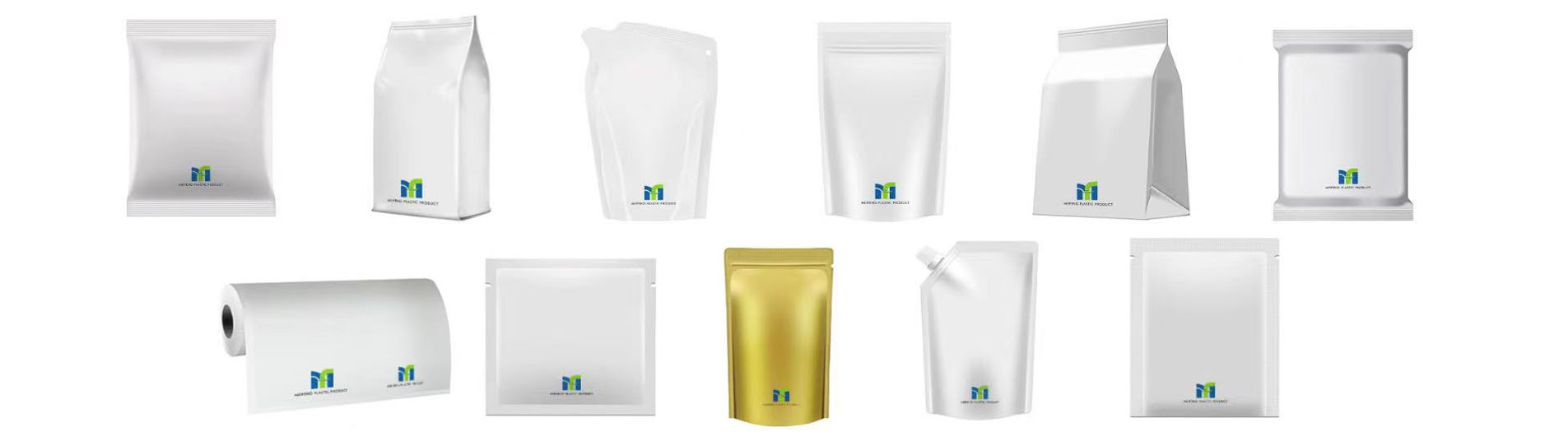
Pet Food Packaging Bags are designed for dry pet food, wet pet food, treats, freeze-dried food, nutrition products, and private-label pet food brands. Compared with many common food packaging bags, pet food packaging often needs to handle heavier filling weight, stronger odor control, oil resistance, longer shelf display, and repeated opening after purchase.
For pet food products, packaging is not only about holding the product. It also needs to protect nutrition, reduce moisture exposure, prevent odor transfer, support transportation, and create a clear brand image on the shelf. A pet food bag that looks attractive but cannot resist tearing, oil migration, or poor sealing may lead to product damage and customer complaints.
The right pet food packaging structure depends on the product type, weight, shelf life, ingredient composition, storage condition, and sales channel. Dry kibble, pet treats, freeze-dried food, wet food, and powdered nutrition products all require different packaging solutions.
Pet Food Packaging Has Different Pressure Than Regular Food Packaging
Pet food packaging usually faces more physical pressure than many small food packages. Dry pet food bags are often filled in medium or large weights, and the products inside may have hard edges. During transportation and storage, bags may be stacked, moved, squeezed, and handled many times.
Another important factor is odor. Many pet food products contain meat powder, fish meal, oils, fats, or strong-flavor ingredients. If the packaging barrier is not suitable, odor may escape from the bag or outside odor may affect the product. This is especially important for premium pet food, fish-based formulas, and high-protein products.
Oil resistance is also important. Some pet foods contain animal fat, fish oil, or added nutrition oils. If the inner layer and laminated structure are not suitable, oil may affect the bag surface, sealing area, or printing appearance over time.
Because of these factors, pet food packaging bags usually need stronger laminated materials, stable sealing, good barrier performance, and practical bag structures.
Main Packaging Requirements for Pet Food
Different pet food products may have different packaging priorities, but several requirements are common across the category.
Strong Bag Structure
Pet food bags need to resist tearing, dropping, stacking, and repeated handling. Larger bags need stronger mechanical strength than small snack packaging. For heavier products, flat bottom bags or side gusset bags are often selected because they provide better stability and capacity.
Moisture Protection
Dry pet food and treats can absorb moisture from the environment. Moisture may affect texture, smell, and storage quality. Good moisture barrier performance helps keep kibble crunchy and treats stable during shelf life.
Odor Barrier
Many pet food products have strong natural odor. A suitable laminated structure helps control odor release and protects the product from outside smells. This is useful for both retail display and home storage.
Oil Resistance
Pet food formulas often contain oils and fats. Packaging materials should be selected to reduce oil migration and surface staining. This is especially important for high-fat formulas, fish-based pet food, and pet treats.
Reclosable Convenience
Many pet food bags are used over several days or weeks after opening. Zippers, resealable closures, and stable bag shapes can improve consumer convenience and help protect the product after first use.
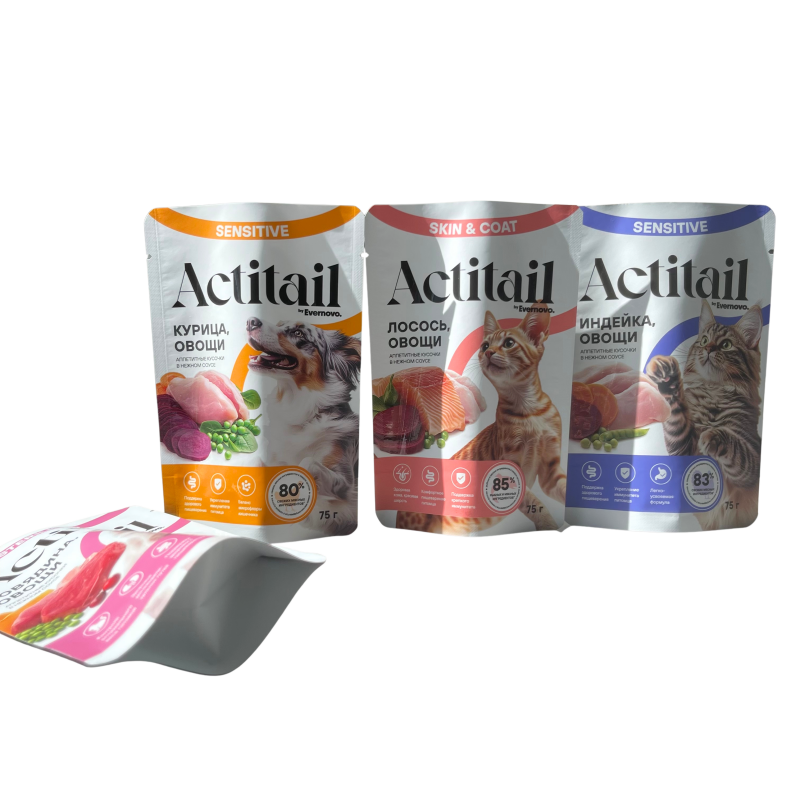
Pet Food Packaging Bags vs Regular Food Packaging Bags
Although pet food is also a food product, its packaging requirements are often different from general snack or dry food packaging.
| Comparison Point | Pet Food Packaging Bags | Regular Food Packaging Bags |
|---|---|---|
| Filling Weight | Often medium or large weight | Usually smaller weight |
| Product Shape | Kibble, pellets, treats, powder, wet food | Snacks, grains, powders, bakery items |
| Odor Control | Often very important | Depends on product type |
| Oil Resistance | Frequently required | Not always needed |
| Bag Strength | Needs stronger structure for handling and stacking | Standard strength may be enough |
| Reclosing Need | Common for repeated use | Depends on product |
| Common Bag Types | Flat bottom bags, side gusset bags, stand up pouches, retort pouches | Stand up pouches, roll films, three-side seal bags |
The main difference is that pet food packaging must combine product protection with practical use. It must perform well before sale, during transportation, and after the consumer opens the package.
Flat Bottom Bags for Premium Pet Food
Flat bottom pet food bags are widely used for premium dry pet food, freeze-dried pet food, and high-end pet treats. Their stable base allows the bag to stand neatly on shelves, which improves retail presentation and makes the product look more professional.
This bag type also provides multiple printable panels. The front panel can display brand and product information, while the side panels can show feeding guides, ingredients, nutrition facts, barcode, and storage instructions. For pet food brands, this extra communication space is useful because customers often read formulas and ingredient details before choosing a product.
Flat bottom bags can be customized with zippers, tear notches, matte finish, glossy finish, kraft paper appearance, transparent windows, and high-barrier laminated structures. They are suitable when the product needs both shelf appeal and practical storage.
Side Gusset Bags for Larger Pet Food Volumes
Side gusset pet food bags are suitable for larger weights and bulk packaging. The gusset structure allows the bag to expand after filling, making it practical for dry kibble and medium-to-large capacity pet food products.
This format is often used for dog food, cat food, animal feed supplements, and wholesale pet food packaging. It can support efficient filling, stable stacking, and good storage performance. For larger bags, material strength and sealing quality are especially important because the package must support product weight during transportation.
Side gusset bags can also be customized with different laminated structures, surface finishes, handles, zippers, or tin tie options depending on the product and usage scenario.
Stand Up Pouches for Pet Treats and Small Packs
Stand up pouches are commonly used for pet treats, small pet food packs, freeze-dried snacks, training rewards, and nutrition powders. They are flexible, easy to display, and suitable for smaller retail sizes.
For pet treats, stand up pouches with resealable zippers are especially practical. Consumers can open and close the bag many times while keeping the product protected. This improves convenience and helps reduce exposure to air and moisture.
Stand up pouches can also use transparent windows to show the product inside. This is useful for treats, freeze-dried cubes, dried meat snacks, and other products where visual texture helps attract attention.
Retort Pouches for Wet Pet Food
Wet pet food has different packaging needs from dry kibble and treats. It usually contains moisture, oil, meat ingredients, and sauce. In many cases, wet pet food requires heat processing or sterilization after sealing.
For this category, retort pouches are often used. A pet food retort pouch must withstand heat, pressure changes, moisture, and sealing stress during processing. Common structures may include PET / AL / CPP, PET / PA / CPP, or other retort-grade laminated materials.
Retort pet food packaging helps support longer shelf life and stable product protection. It is commonly used for wet cat food, wet dog food, meat-based pet meals, and prepared pet food portions.
How to Select the Right Pet Food Packaging Structure
The first factor is product type. Dry kibble, treats, freeze-dried food, wet food, and nutrition powder all have different packaging needs. Dry food usually needs moisture protection and bag strength. Treats may need odor control and resealable convenience. Wet food may require retort-grade materials.
The second factor is filling weight. Small pet treat pouches do not need the same structure as large dry pet food bags. Larger weights require stronger film thickness, better sealing, and more durable bag construction.
The third factor is product formula. High-oil, high-protein, fish-based, or strong-smell pet foods need better odor and oil resistance. Products with a long shelf life may require high-barrier structures.
The fourth factor is the sales channel. Retail pet food needs strong shelf display and clear printing. Online pet food must withstand shipping pressure. Bulk supply packaging should focus more on strength, sealing reliability, and handling convenience.
Custom Pet Food Packaging Bag Solutions
Pet food packaging bags can be customized in different formats and structures. Flat bottom bags are suitable for premium dry pet food and shelf display. Side gusset bags work well for larger filling weights. Stand up pouches are practical for treats, samples, and small packs. Retort pouches are suitable for wet pet food and heat-processed products.
Custom options may include material structure, thickness, oxygen and moisture barrier level, oil-resistant inner layer, zipper, tear notch, handle, window, matte or glossy surface, kraft paper appearance, and custom printing design.
A suitable pet food packaging bag should protect the product, support transportation, improve shelf display, and make daily use easier after opening. For pet food brands, packaging quality is closely connected with product freshness, customer experience, and brand trust.
FAQ
1. What are Pet Food Packaging Bags used for?
Pet Food Packaging Bags are used for dry pet food, wet pet food, pet treats, freeze-dried food, nutrition powder, and private-label pet food products.
2. What bag type is suitable for dry pet food?
Flat bottom bags and side gusset bags are commonly used for dry pet food because they offer good capacity, stable structure, and strong shelf display.
3. Do pet food bags need odor barrier protection?
Yes. Many pet food products contain meat, fish, oils, or strong-flavor ingredients, so odor barrier protection helps control smell and protect product quality.
4. What packaging is suitable for wet pet food?
Wet pet food often uses retort pouches because the packaging may need to withstand heat processing, moisture, pressure changes, and long shelf-life requirements.
Post time: Jul-28-2026