


Food Packaging Bags are an essential part of modern food production because they protect products during storage, transportation, and retail sales while also helping brands improve market presentation. However, selecting the right food packaging bag is not simply about choosing an attractive design or comparing prices. Different food products have different requirements for moisture resistance, oxygen barrier, sealing performance, durability, and shelf life protection.
For food manufacturers, distributors, and brand owners, the best packaging solution should be selected according to the characteristics of the food, packaging process, storage environment, and final sales channel. A suitable food packaging bag can reduce product damage, maintain freshness, improve customer experience, and create additional value for the brand.
Why Is Food Packaging Bag Selection Important?
Food packaging plays a direct role in maintaining product quality. During storage and transportation, food products may be affected by moisture, oxygen, light, temperature changes, and external contamination. Without suitable packaging protection, products may lose their original taste, texture, appearance, or shelf life.
Different food categories face different packaging challenges. Crispy snacks require moisture-resistant packaging to maintain texture, while coffee and tea require stronger aroma and oxygen protection. Frozen foods need packaging materials that remain flexible under low temperatures, and powder products require excellent moisture resistance to prevent clumping.
Therefore, choosing Food Packaging Bags should start from the product requirements rather than simply selecting a standard bag type. The correct packaging structure should provide the right balance between protection, appearance, production efficiency, and cost.
Choosing Food Packaging Bags Based on Food Type
Different foods require different packaging solutions because their physical characteristics and storage conditions are not the same.
Coffee Packaging Bags
Coffee is highly sensitive to oxygen and aroma loss, especially after roasting. Therefore, coffee packaging usually requires excellent barrier performance to reduce oxygen exposure and maintain freshness. Many coffee brands choose flat bottom bags, side gusset bags, or stand up pouches with one-way degassing valves, which allow carbon dioxide released from roasted coffee to escape while preventing external air from entering.
For premium coffee products, packaging appearance is also important. A well-designed coffee bag with high-quality printing and suitable material structure can improve shelf presentation and strengthen brand recognition.
Snack Packaging Bags
Snacks such as chips, nuts, cookies, and dried fruits require packaging that can protect texture and prevent moisture absorption. If the packaging barrier performance is insufficient, products may lose their crispness and customer satisfaction may decrease.
Stand up pouches, zipper bags, and printed roll films are commonly used for snack packaging because they provide convenient opening options, attractive printing surfaces, and reliable sealing performance. The material structure can be adjusted according to the product’s shelf life and storage requirements.
Frozen Food Packaging Bags
Frozen food packaging requires stronger material performance because products are often stored and transported under low temperatures. The packaging should remain flexible and durable without becoming brittle or easily damaged.
For frozen meat, seafood, vegetables, and prepared foods, vacuum food packaging bags and high-strength laminated bags are commonly selected. These packaging solutions provide reliable sealing performance and help protect products during freezing, transportation, and handling.
Pet Food Packaging Bags
Pet food packaging usually requires larger capacity and stronger durability because many products are sold in medium and large sizes. The packaging must handle heavier filling weights while maintaining a professional appearance.
Flat bottom bags and side gusset bags are popular choices for pet food because they provide stable structure, sufficient capacity, and better shelf display. Features such as zipper closures and odor-resistant materials can also improve consumer convenience.
Powder Product Packaging Bags
Powder products such as protein powder, seasoning powder, flour, and nutritional supplements require strong moisture protection. Exposure to humidity may cause powder products to absorb moisture, form lumps, or affect product quality.
High-barrier laminated packaging structures are commonly used for powder products. The packaging should provide reliable sealing performance while allowing convenient storage and transportation.
Selecting the Right Material Structure
The material structure of Food Packaging Bags directly affects product protection. Most food packaging bags use multi-layer laminated materials because a single material usually cannot provide all required functions, such as printing quality, strength, sealing performance, and barrier protection.
PET is commonly used as the outer layer because it provides excellent printing performance and surface strength. PE is often used as the inner sealing layer because of its flexibility and reliable heat-sealing ability. Aluminum foil provides strong protection against oxygen, moisture, and light, making it suitable for coffee, tea, and high-value food products. Kraft paper is often selected by brands that want a natural and premium appearance, especially for organic food and environmentally positioned products.
The ideal material combination depends on the food type, expected shelf life, storage environment, transportation method, and packaging equipment.
Choosing Functional Features for Food Packaging Bags
Besides material selection, additional packaging functions can improve product protection and user experience.
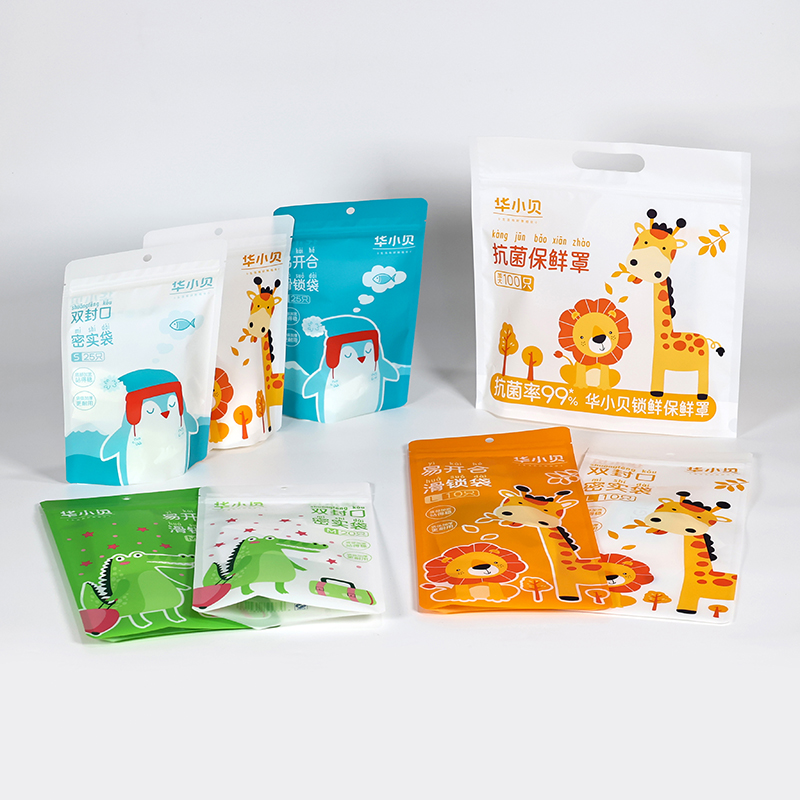
Zipper closures are commonly used for products that consumers need to open and close repeatedly, such as snacks, nuts, coffee, and pet food. They provide convenience while helping maintain product freshness after opening.
One-way degassing valves are especially important for coffee packaging because they allow gas released from roasted coffee to escape while preventing oxygen from entering the package. This helps protect aroma and product quality.
Transparent windows can be added to some food packaging bags to allow consumers to see the product inside. This is often used for nuts, snacks, and natural food products where product appearance influences purchasing decisions.
Vacuum packaging functions are suitable for products that require reduced air exposure, such as meat, seafood, and frozen food. By removing air before sealing, vacuum bags can provide better storage protection.
Custom Food Packaging Bags for Different Brand Requirements
Different brands have different packaging goals, so customized Food Packaging Bags are often the best solution. Packaging can be adjusted according to product category, filling weight, storage conditions, and market positioning.
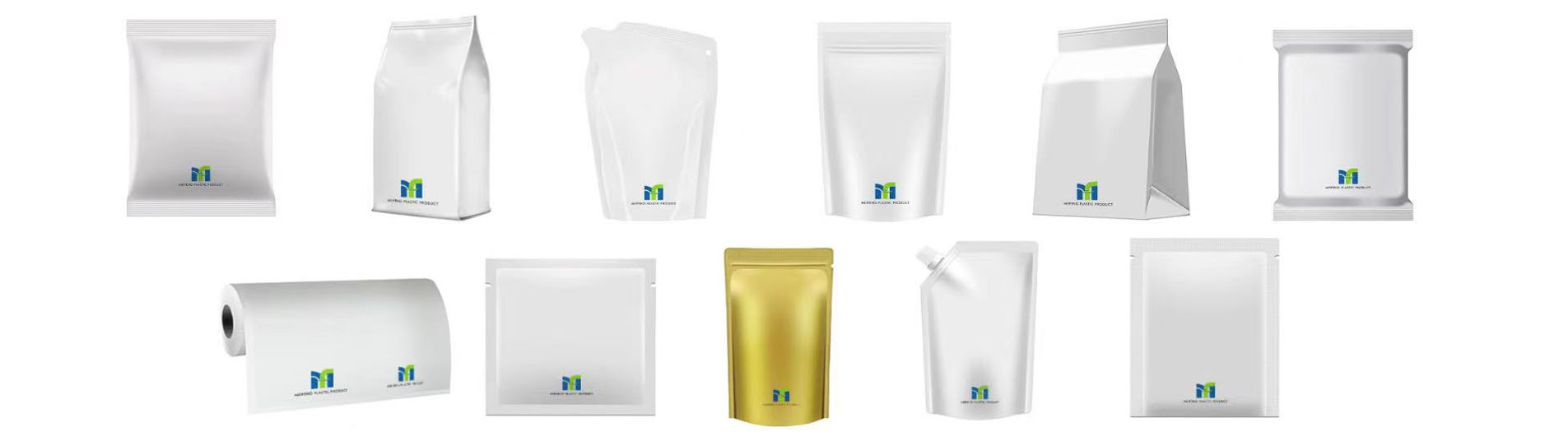
Our food packaging solutions include different bag types such as stand up pouches, flat bottom bags, vacuum bags, aluminum foil bags, kraft packaging bags, and food packaging roll films. According to customer requirements, packaging can be customized in terms of material structure, size, printing design, zipper function, valve options, window design, and barrier performance.
For coffee brands, high-barrier materials and degassing valves help maintain freshness and aroma. For pet food brands, stronger structures and larger sizes provide better durability. For snack and natural food brands, customized printing and special surface finishes help improve shelf presentation.
The right Food Packaging Bags should not only protect the product but also support efficient production and long-term brand development.
How to Select the Best Food Packaging Bags?
Before choosing Food Packaging Bags, buyers should evaluate several key factors. First, understand the food characteristics, including moisture sensitivity, oxygen exposure, product weight, and shelf life requirements. Second, consider storage and transportation conditions, including room temperature, refrigeration, or freezing environments.
The packaging method should also be considered. Buyers should confirm whether the bags will be filled manually or used with automatic packaging equipment. In addition, customer usage habits should be considered, including whether features such as zipper closures, valves, or transparent windows are required.
FAQ
1. How do I choose the right Food Packaging Bags?
The right choice depends on the food type, shelf life, storage conditions, packaging equipment, and required functions such as zipper closures, valves, or vacuum protection.
2. What materials are commonly used for Food Packaging Bags?
Common materials include PET, PE, aluminum foil, kraft paper, metalized film, and multi-layer laminated structures. The final material combination depends on product protection requirements.
3. Can Food Packaging Bags be customized?
Yes. Food Packaging Bags can be customized in terms of size, material structure, printing design, thickness, zipper, window, valve, and other functional options.
4. Which food products need high-barrier packaging?
Coffee, tea, powder products, nuts, nutritional products, and other sensitive foods often require high-barrier packaging to protect freshness and extend shelf life.
Post time: Jul-14-2026