


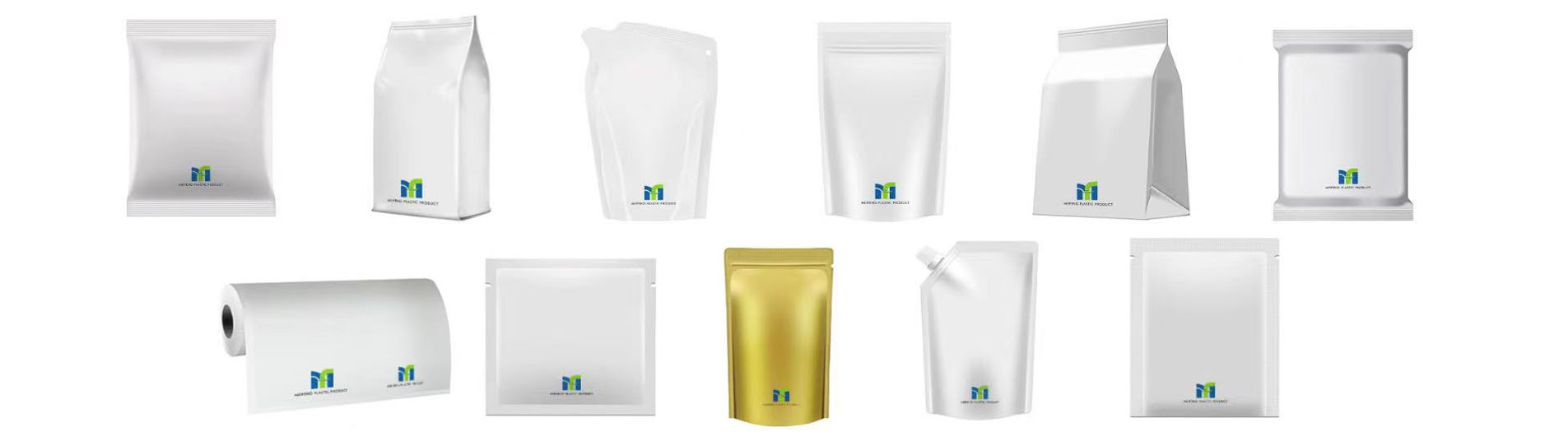
Retort food packaging has evolved from being a simple preservation container into a critical infrastructure component that supports the operation of modern global food supply chains, because it not only determines whether food can remain structurally stable and commercially sterile under high-temperature and high-pressure conditions, but also directly influences production efficiency, logistics cost, and international market competitiveness for manufacturers operating at scale.
For companies producing ready-to-eat meals, sauces, soups, and emergency food products in large volumes, retort packaging is no longer just a packaging material choice, but a system-level decision involving production engineering, supply chain design, and export strategy planning.
Why Has Retort Packaging Become a Core Element in Industrial Food Production Systems?
In modern food factory operations, true production efficiency is not determined by the speed of a single machine, but by how seamlessly the entire workflow—from cooking, filling, sealing, sterilization, to storage—can operate as a continuous system, and retort packaging plays a central role in enabling this continuity because it allows food to be sealed first and then directly transferred into high-temperature sterilization processes, where it achieves long-term ambient stability after a single thermal treatment cycle.
This production model allows factories to significantly reduce dependence on cold chain logistics and refrigerated storage systems, while also increasing production planning flexibility, enabling manufacturers to produce in bulk during low-cost raw material periods and distribute consistently during peak market demand cycles.
How Does Retort Packaging Restructure the Logic of Food Manufacturing Processes?
In traditional food processing systems, products typically require immediate refrigeration or freezing after cooking to maintain safety and quality, which, although effective in preserving food integrity, introduces high energy consumption, increased logistics complexity, and limitations on global distribution capability, whereas retort packaging fundamentally restructures this logic by integrating preservation directly into the sterilization process.
In modern industrial production systems, food is first processed and cooked under standardized conditions, then accurately filled into heat-resistant packaging materials using automated equipment, followed by vacuum or air-removal treatment and hermetic sealing, after which the sealed products are placed into high-pressure sterilization equipment for commercial sterilization, and finally stabilized through rapid cooling systems before final inspection and packaging.
The core value of this integrated process is that it merges “food production” and “food preservation” into a single continuous industrial system, significantly reducing intermediate losses and operational uncertainties.
How Does Retort Packaging Improve Factory-Level Production Efficiency?
From a manufacturing perspective, the efficiency improvement brought by retort packaging is not only reflected in increased output capacity but also in enhanced system stability and reduced loss rates, because it integrates seamlessly with automated filling systems, high-speed sealing machines, and batch sterilization equipment, forming a highly coordinated production chain that minimizes human intervention and improves batch consistency.
At the same time, since sterilization occurs after sealing, contamination risks during production are significantly reduced, which leads to lower rejection rates caused by microbial contamination and reduced spoilage during storage, ultimately improving overall profit margins.
In addition, because retort-packaged products have long ambient shelf life, manufacturers gain greater flexibility in production planning, allowing them to optimize output based on raw material pricing cycles, market demand fluctuations, and seasonal sales patterns.
Why Is Retort Packaging Gradually Replacing Traditional Canned Food Systems?
In many global markets, retort packaging is increasingly replacing traditional metal canned food systems because it delivers comparable food safety performance while significantly reducing material weight, improving transportation efficiency, and offering greater design flexibility.
Unlike rigid metal cans, flexible retort packaging allows faster heating during consumption, lower shipping costs due to reduced weight, and more diverse packaging formats suitable for modern retail, e-commerce, and convenience food markets, while also providing better visual branding opportunities through high-quality printing and structural customization.
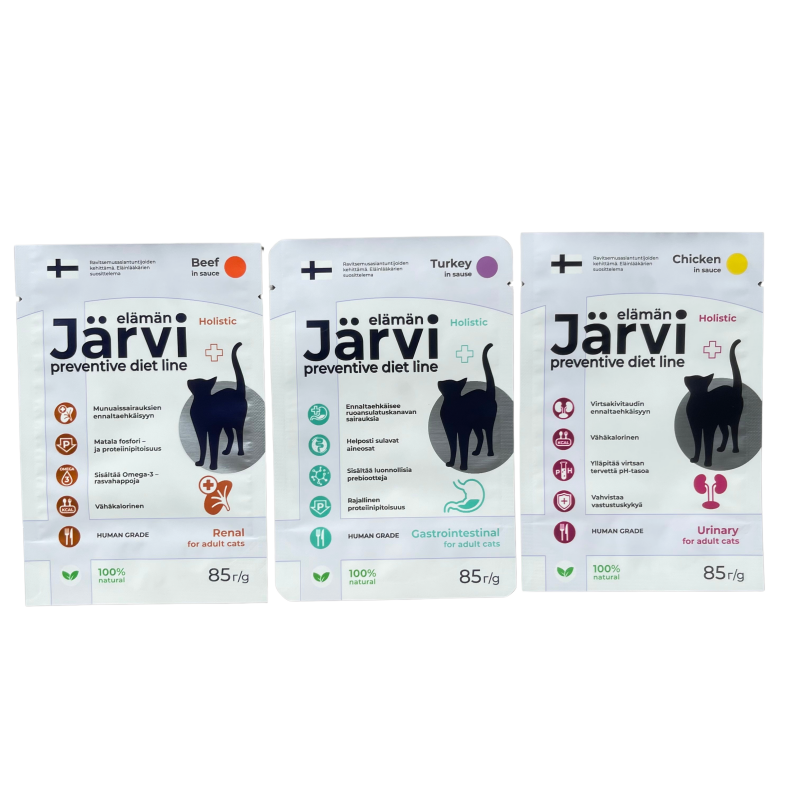
Key Application Areas of Retort Food Packaging
Retort packaging is widely applied across multiple industrial food categories, including ready-to-eat meals such as rice dishes, pasta meals, and curry-based products, liquid foods such as soups, sauces, and broth concentrates, protein-based foods including cooked meat and seafood products, and specialized food systems such as military rations, emergency survival food, aviation meals, and medical nutrition products.
How Does Packaging Design Influence Industrial Production Efficiency?
In industrial manufacturing systems, packaging design is not merely a visual consideration but a critical factor that directly impacts automation efficiency, since consistency in pouch dimensions, stability of sealing structures, and heat resistance performance all influence filling speed, sealing reliability, and deformation control during sterilization, and poorly designed packaging can result in machine downtime, reduced output efficiency, and increased operational costs.
Sustainability Is Driving Continuous Upgrading in Retort Packaging
With increasing global environmental regulations, the retort packaging industry is shifting toward more sustainable solutions, including lightweight design structures, recyclable mono-material systems, aluminum-free barrier technologies, and lower-carbon manufacturing processes, all of which not only reduce environmental impact but also enhance competitiveness in international premium markets where sustainability compliance is becoming a purchasing requirement.
Future Development Trends of Retort Packaging
The future of retort packaging is moving toward intelligent and standardized systems, including real-time monitoring of sterilization temperature curves, QR code and RFID-based traceability systems, AI-driven defect detection technologies, and improved recyclable high-barrier materials, all of which aim to enhance food safety, reduce production failure rates, and improve global supply chain reliability.
FAQ
1. Why is retort packaging suitable for industrial food production?
Because it integrates production, sterilization, and long-term storage into a continuous process, reducing dependence on cold chain logistics while improving overall manufacturing efficiency.
2. Is retort packaging suitable for large-scale export operations?
Yes, it is highly suitable because it provides long-term ambient stability and complies with international food safety standards, making it ideal for long-distance global transportation.
3. Does retort sterilization affect food quality?
When properly controlled, most foods retain their original flavor and nutritional value, although slight texture changes may occur depending on the product type.
4. Which industries rely most on retort packaging?
It is widely used in ready-meal manufacturing, export food production, military ration supply chains, emergency food systems, and large-scale food processing industries.
Post time: Jun-16-2026