


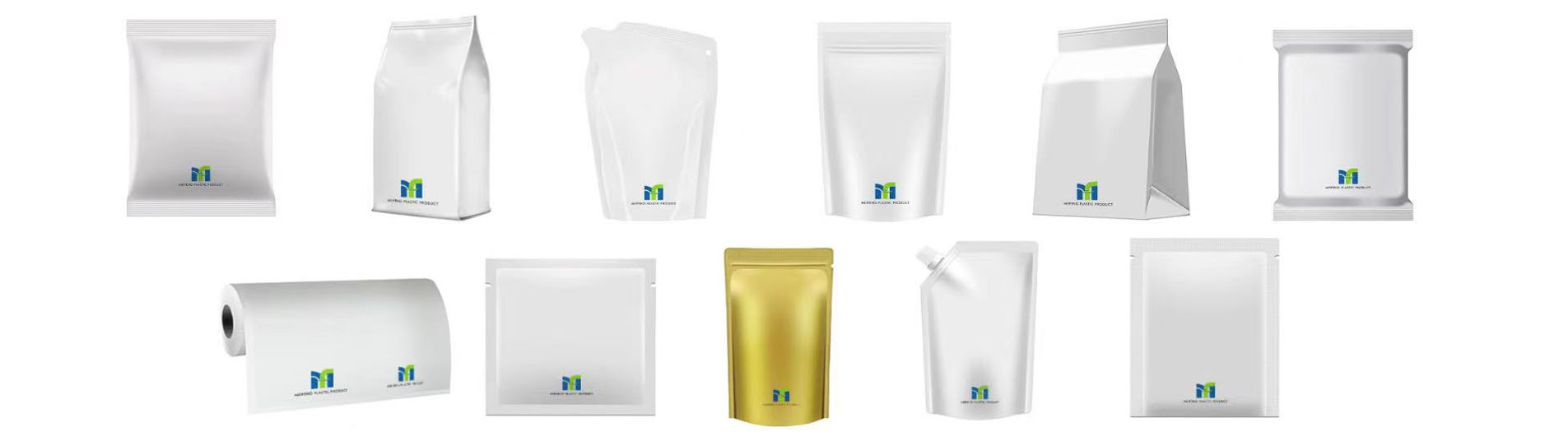
In modern food manufacturing, the ability to produce shelf-stable meals that remain safe, nutritious, and stable without refrigeration has become a defining requirement for global brands, and 121℃ high temperature food retort pouches represent one of the most advanced packaging technologies that makes this possible. Unlike conventional packaging formats that focus only on containment, retort pouches are engineered as part of the sterilization system itself, designed to survive extreme thermal processing while preserving product integrity across long supply chains.
As consumer demand grows for ready-to-eat meals, emergency rations, and long-life packaged foods, retort pouch technology continues to expand across industrial food production systems worldwide.
The Role of 121℃ Thermal Processing in Industrial Food Safety Systems
The foundation of retort pouch packaging lies in thermal sterilization at 121℃, a globally recognized standard used in food processing facilities to eliminate pathogenic microorganisms and ensure long-term product safety. This process is typically carried out in pressurized steam environments where both temperature and pressure are carefully controlled to achieve complete sterilization without damaging food quality.
The packaging material must remain stable under these extreme conditions while also maintaining seal integrity after cooling, which makes material engineering a critical part of retort pouch design.
Unlike chilled or frozen food systems, this method enables ambient storage distribution, reducing dependency on cold-chain logistics and significantly improving global distribution efficiency.
Why Structural Engineering Matters More Than Material Thickness
One of the most important but often overlooked aspects of 121℃ retort pouch performance is structural engineering rather than simple material thickness. These pouches are not designed as single-layer films but as multi-functional laminated systems where each layer plays a specific role during and after sterilization.
Instead of relying on a single strong material, manufacturers design composite structures that distribute thermal stress, maintain flexibility, and prevent delamination under pressure cycles.
The success of a retort pouch depends on how well these layers interact under heat expansion, pressure fluctuation, and cooling contraction during the sterilization process.
Key Performance Requirements for Retort Pouch Design
To function reliably in 121℃ environments, retort pouches must meet several industrial performance conditions that go beyond standard food packaging requirements.
Core functional requirements include:
● Thermal stability under continuous exposure to 121℃ saturated steam without structural deformation or seal failure
● Oxygen and moisture barrier performance that preserves food flavor, texture, and nutritional stability during long-term storage
● Mechanical durability that prevents puncture or layer separation during handling, transportation, and distribution
● Seal integrity retention after cooling cycles to ensure zero leakage across extended shelf life periods
These requirements define the engineering standards that differentiate retort packaging from ordinary flexible food packaging systems.
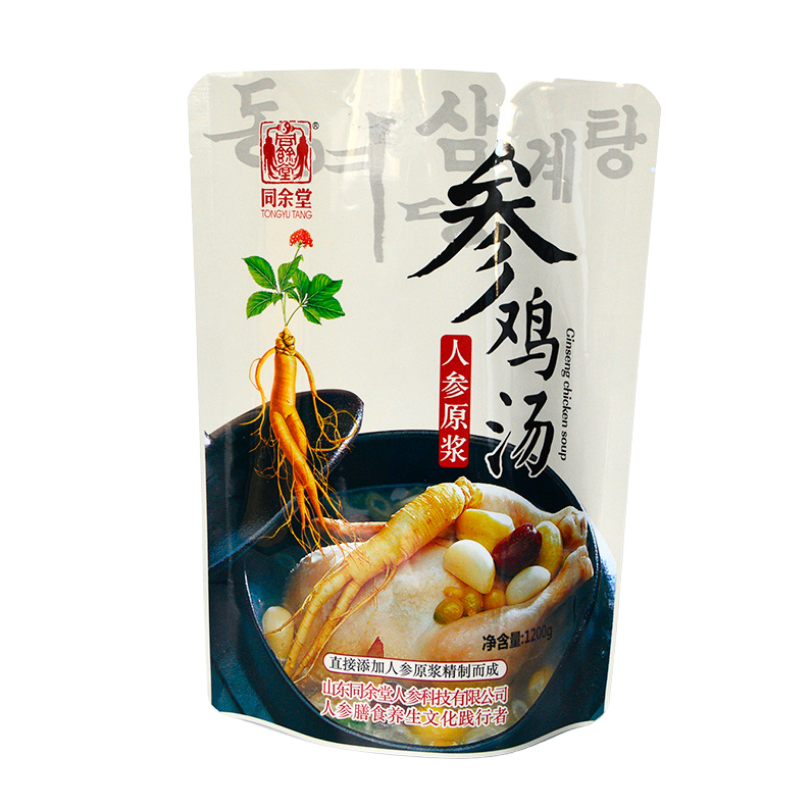
How Material Science Enables Long-Term Shelf Stability
The materials used in 121℃ retort pouches are selected based on their ability to withstand both thermal and mechanical stress while maintaining barrier functionality throughout the product lifecycle.
Instead of focusing on a single high-performance material, retort packaging relies on synergistic layering systems where each layer contributes to a specific protective function such as heat resistance, sealing, or gas barrier control.
This multilayer approach ensures that even under extreme sterilization conditions, the overall packaging system remains intact and continues to protect food quality over time.
Industrial Applications Beyond Conventional Food Packaging
While retort pouches are commonly associated with ready-to-eat meals, their industrial applications extend far beyond consumer food packaging and are widely used in sectors where long-term stability and mobility are essential.
Major application environments include:
● Commercial ready-meal production systems where mass sterilization and long shelf distribution are required
● Humanitarian food supply chains where lightweight, long-life packaging is critical for emergency response operations
● Defense and military ration systems that require durability under extreme environmental conditions and extended storage periods
● Space and aerospace nutrition systems where packaging stability under variable pressure environments is essential
These applications demonstrate that retort pouch technology is not just a packaging solution but a functional component of advanced food preservation systems.
Operational Efficiency in Large-Scale Food Manufacturing
From a production perspective, 121℃ retort pouches contribute significantly to operational efficiency by simplifying packaging workflows and reducing dependency on rigid container systems.
Their flexibility allows manufacturers to integrate filling, sealing, and sterilization into continuous production lines without requiring complex container handling equipment.
This streamlined production approach reduces bottlenecks, improves throughput consistency, and lowers overall operational costs in large-scale food manufacturing environments.
Supply Chain Transformation Through Lightweight Packaging Systems
One of the most impactful advantages of retort pouch systems is their influence on global supply chain efficiency, particularly in terms of transportation density and storage optimization.
Because these pouches are lightweight and flexible, they allow significantly higher product volume per shipping container compared to rigid packaging formats, which directly reduces logistics cost per unit.
In addition, their flat storage format before filling reduces warehouse space requirements, enabling manufacturers and distributors to optimize inventory systems more effectively.
Future Development Directions in Retort Packaging Technology
The next stage of development in 121℃ retort pouch technology is closely linked to sustainability innovation and material simplification strategies aimed at improving recyclability without compromising sterilization performance.
Manufacturers are actively exploring mono-material structures, reduced-layer designs, and advanced sealing technologies that can maintain high-temperature resistance while improving end-of-life recyclability.
At the same time, research is focused on enhancing barrier performance while reducing material thickness, which supports both environmental goals and cost efficiency in large-scale production.
Conclusion
121℃ high temperature food retort pouches represent a highly specialized packaging technology that integrates thermal resistance, microbial safety, and supply chain efficiency into a single engineered system. Their ability to withstand extreme sterilization conditions while preserving food quality has made them a cornerstone of modern shelf-stable food production.
As global demand for convenient, long-life, and portable food products continues to grow, retort pouch technology will remain a critical component in the evolution of industrial food preservation systems and global distribution networks.
FAQ
1. What is the main purpose of 121℃ retort pouch technology?
It is designed to sterilize and preserve food at high temperature, enabling long-term room-temperature storage without refrigeration or preservatives.
2. What makes retort pouches different from normal food packaging?
They are engineered to withstand high-pressure steam sterilization while maintaining barrier integrity, which standard packaging materials cannot handle.
3. How does retort processing affect food quality?
When properly controlled, it ensures microbial safety while preserving most nutritional and sensory characteristics suitable for long-term storage.
4. Why are retort pouches widely used in global food supply chains?
Because they reduce logistics cost, improve storage efficiency, and enable safe distribution of shelf-stable meals across long distances without cold-chain dependency.
Post time: Jun-02-2026