


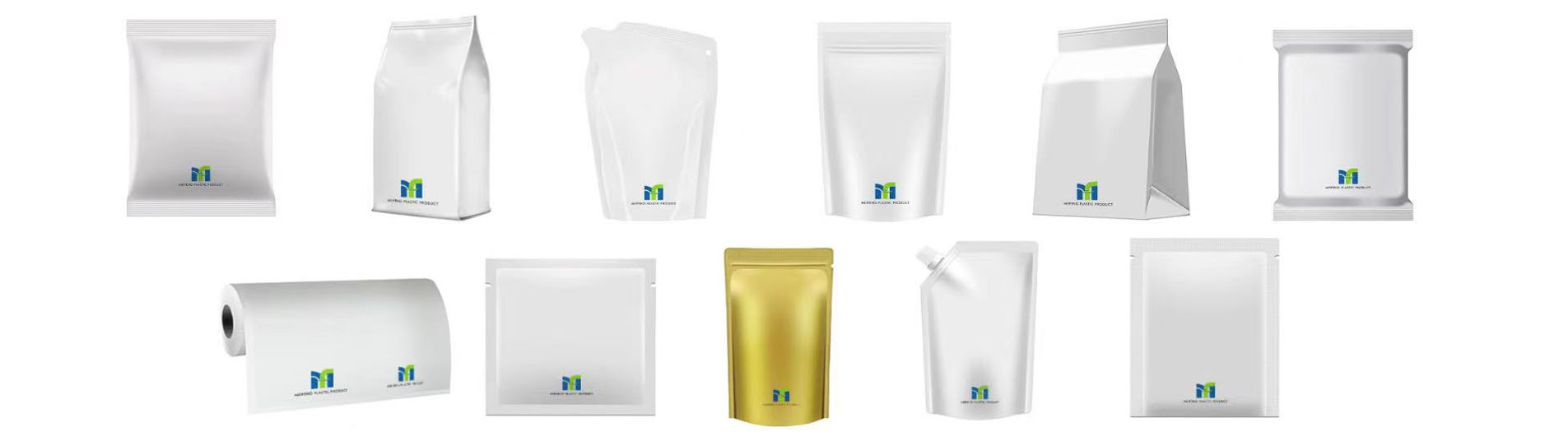
Food Packaging Roll Films are not limited to one standard material or one fixed level of protection. The same roll-film format can be developed with different laminated structures, barrier properties, surface finishes, and mechanical performance to suit snacks, coffee, powdered food, frozen products, seasonings, bakery items, dried foods, and many other categories.
A suitable roll film needs to do more than cover the product. It may need to control moisture, limit oxygen transfer, retain aroma, block light, resist oil, remain flexible at low temperatures, or withstand contact with sharp and hard contents.
These functions can be combined within one flexible packaging structure. By adjusting the material layers and specifications, food packaging roll films can provide anything from clear product display to high-barrier protection.
Food Packaging Roll Films Can Be Built Around Different Protection Priorities
Not every food product requires the same packaging performance.
Dry biscuits and chips mainly need protection from moisture. Coffee and tea require stronger oxygen and aroma barriers. Powdered food may need moisture protection together with light blocking. Frozen meat and seafood require toughness, low-temperature flexibility, and resistance to puncture.
Food packaging roll films can be designed around the most important protection priority rather than using the same structure for every product.
Several functions may also be combined in one laminated film. For example, a coffee packaging roll film may provide oxygen resistance, moisture protection, aroma retention, and an opaque printed surface at the same time.
Moisture-Barrier Roll Films for Dry and Crispy Foods
Moisture control is one of the most important functions of flexible food packaging.
Chips, biscuits, crackers, cereals, powdered ingredients, dried fruit, nuts, and other dry foods may absorb water vapor from the surrounding environment. This can affect crispness, texture, flowability, and overall condition.
Moisture-barrier food packaging roll films often use PE, CPP, metallized film, or aluminum foil within the laminated structure. The required material combination depends on the sensitivity of the food and the expected storage conditions.
For products with moderate protection requirements, a PET / PE or PET / CPP structure may provide suitable flexibility, print quality, and sealing performance. When stronger moisture protection is needed, PET / VMPET / PE or PET / AL / PE can provide a higher barrier level.
The film should also maintain stable heat-sealing performance. Moisture protection depends not only on the material surface but also on the integrity of the sealed package.
High-Barrier Roll Films for Aroma-Sensitive Products
Some foods are valued for their aroma and flavor intensity. Coffee, tea, spices, seasoning powder, roasted nuts, and flavored snack products may lose their original character when oxygen enters or aroma escapes through the packaging.
High-barrier food packaging roll films can reduce oxygen transfer and help retain volatile aromas.
Metallized PET and aluminum foil are commonly used in these structures. A PET / VMPET / PE film provides a lightweight metallic barrier, while PET / AL / PE offers stronger protection against oxygen, moisture, light, and aroma loss.
Transparent high-barrier structures can also be used when the food needs to remain visible. These structures combine visual transparency with improved protective performance, although the exact barrier level depends on the selected materials.
For aroma-sensitive foods, the roll film should be considered as a complete structure. The outer printing layer, middle barrier layer, adhesive system, and inner sealing layer all contribute to final performance.
Transparent Roll Films for Product Visibility
Transparent food packaging roll films allow the contents to remain visible without removing the protective packaging layer.
This format is commonly used for noodles, biscuits, candy, bakery products, dried fruit, frozen vegetables, and foods whose color, shape, or texture supports the package presentation.
Clear roll film may use PET / PE, PET / CPP, PA / PE, or PET / PA / PE structures. These combinations can provide different levels of clarity, toughness, sealing performance, and puncture resistance.
Transparent roll film can also include custom printed areas while leaving selected sections clear. This creates a balance between visual branding and product visibility.
The appearance of transparent packaging depends on more than transparency alone. Smooth film surfaces, controlled haze, stable gloss, clear printing, and clean lamination all influence the final look.
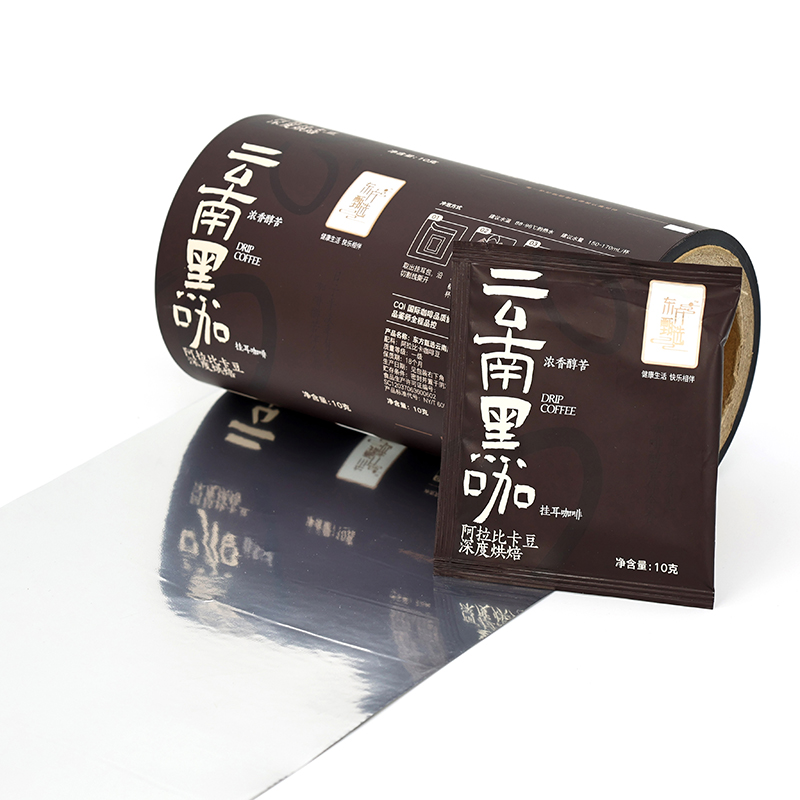
Metallized and Aluminum Foil Roll Films for Opaque Packaging
Opaque food packaging roll films help reduce exposure to light while creating a stronger visual surface for printed designs.
Metallized roll film has a reflective appearance and offers improved moisture and oxygen resistance compared with many standard transparent structures. It is widely used for chips, confectionery, instant food, coffee, seasoning products, and powdered food.
Aluminum foil laminated roll film provides a higher barrier level. Its opaque foil layer can block light and reduce the transfer of oxygen, moisture, and aroma. It is suitable for sensitive powders, coffee, nutritional food, spices, dried ingredients, and products that require stronger environmental protection.
The two formats are not identical.
| Roll Film Type | Main Characteristics | Typical Protection Level |
|---|---|---|
| Transparent laminated film | Clear display, flexible structure, printable surface | Basic to enhanced |
| Metallized laminated film | Metallic appearance, improved light and moisture protection | Medium to high |
| Aluminum foil laminated film | Fully opaque, strong moisture, oxygen, light, and aroma barrier | High |
The suitable format depends on whether product visibility, metallic appearance, or maximum barrier performance is the main priority.
Cold-Resistant Roll Films for Frozen Food
Frozen food packaging places additional demands on flexible materials.
At low temperatures, some films can become stiff or brittle. Foods such as frozen meat, seafood, vegetables, dumplings, and prepared meals may also have hard edges or irregular surfaces that place pressure on the packaging.
Cold-resistant food packaging roll films are designed to remain flexible in frozen conditions. PA / PE and PET / PA / PE structures are commonly used when additional toughness and puncture resistance are required.
PA contributes mechanical strength, while PE provides sealing and low-temperature flexibility. PET can support outer strength and printed presentation.
The complete film should remain stable during freezing, storage, stacking, and transportation. Good low-temperature performance helps reduce cracking, corner damage, and seal-area stress.
Oil-Resistant Roll Films for Seasonings and Rich Foods
Seasonings, sauces, oily snacks, cooked ingredients, and strongly flavored products may require an inner layer that resists oil contact and odor transfer.
Oil-resistant food packaging roll films are developed through the correct combination of inner sealing material, barrier layer, and lamination system.
A suitable structure helps maintain:
- seal-area stability;
- film surface condition;
- layer adhesion;
- aroma control;
- resistance to oil penetration.
The required film does not depend only on how much oil is present. Product composition, storage period, temperature, and flavor intensity can also influence the suitable material structure.
Printed Food Packaging Roll Films Support Product Presentation
Food packaging roll films can combine protective performance with custom printed presentation.
The outer layer can carry colors, graphics, text, product information, and repeated packaging layouts. Matte surfaces create a softer appearance, while glossy surfaces produce stronger brightness and color contrast.
Printed roll film can also include:
- transparent display areas;
- metallic design effects;
- full opaque backgrounds;
- repeated logos and graphics;
- product instructions;
- nutritional information;
- multiple color printing.
Printing quality should remain consistent across the complete roll. Clear text, stable color density, accurate registration, and controlled surface finish help the finished packages maintain a uniform appearance.
Food Packaging Roll Film Specifications Can Be Fully Customized
Food packaging roll films can be adjusted in both material performance and physical specification.
Common customization options include:
- laminated material structure;
- film thickness;
- roll width;
- roll diameter;
- paper or plastic core size;
- transparent, metallized, or aluminum foil format;
- moisture and oxygen barrier level;
- cold resistance;
- puncture resistance;
- oil resistance;
- matte or glossy finish;
- printing pattern and repeat length.
These options allow the roll film to match different food categories, package sizes, protective requirements, and visual designs.
A small snack package may require a lightweight moisture-barrier structure, while a large frozen-food package may need stronger mechanical performance. Coffee and powdered products may use higher-barrier opaque films, while bakery items may use transparent printed structures.
One Roll-Film Format, Multiple Food Packaging Solutions
The versatility of food packaging roll films comes from their adjustable structure.
A transparent film can emphasize product visibility. A metallized film can improve moisture and light protection. An aluminum foil laminate can provide a stronger barrier for sensitive foods. PA-based structures can add toughness, while PE and CPP layers support reliable sealing.
By combining these materials with custom dimensions, printing, surface finishes, and barrier levels, food packaging roll films can be developed for many different food products without relying on one standard specification.
The result is a flexible packaging material that can balance protection, strength, appearance, and sealing performance within one continuous roll.
FAQ
1. What materials are commonly used in Food Packaging Roll Films?
Common materials include PET, PE, CPP, PA, metallized PET, and aluminum foil. They can be laminated in different combinations according to barrier, strength, sealing, and appearance requirements.
2. Which roll film is suitable for moisture-sensitive food?
PET / PE and PET / CPP structures can support general moisture protection, while metallized or aluminum foil laminated films can provide stronger moisture-barrier performance.
3. Can food packaging roll films be transparent and high barrier?
Yes. Transparent laminated structures can combine product visibility with improved moisture and oxygen protection, depending on the selected barrier materials.
4. What specifications can be customized?
Material structure, film thickness, width, roll diameter, core size, barrier level, printing, surface finish, cold resistance, oil resistance, and puncture strength can all be customized.
Post time: Aug-06-2026