


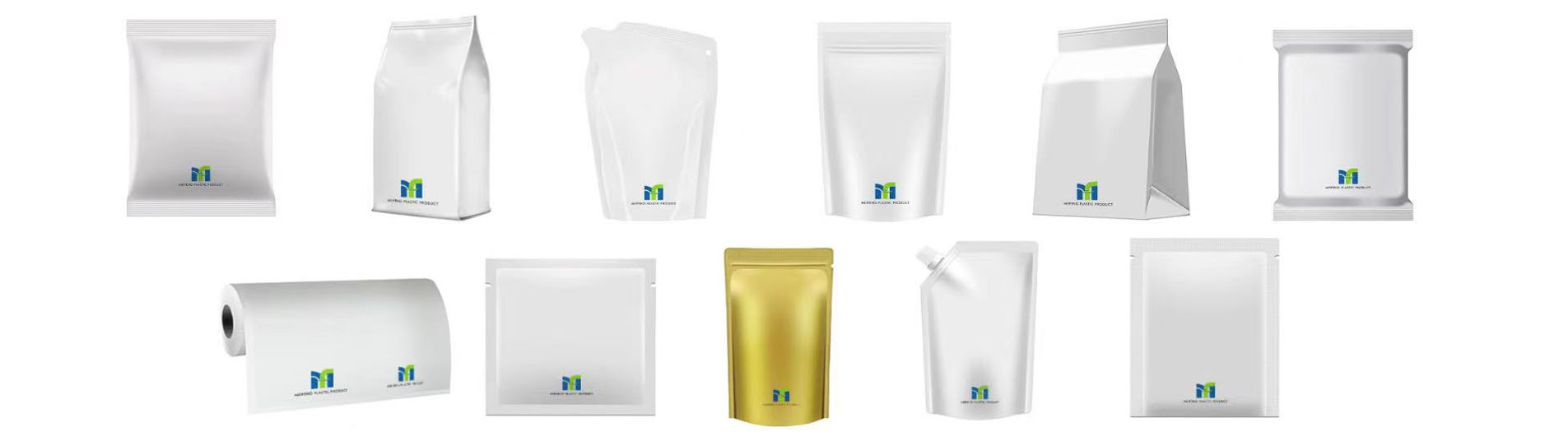
In today’s highly competitive food industry, packaging is no longer just a protective layer around products. It has become a critical part of production efficiency, supply chain cost control, product safety, and brand competitiveness. Among all flexible packaging formats, food packaging roll films are widely used in automated production systems due to their versatility, cost efficiency, and excellent compatibility with high-speed packaging machines.
For food manufacturers, choosing the right roll film solution directly impacts production output, packaging consistency, and product shelf life. As global demand for packaged food continues to grow, roll film packaging has become an essential material in modern food processing and packaging operations.
What Are Food Packaging Roll Films?
Food packaging roll films are continuous laminated plastic or composite materials supplied in roll form, designed for use in automatic packaging machines. Instead of using pre-made bags, manufacturers use roll film to form, fill, and seal packaging directly during production.
This packaging format is widely used in vertical form-fill-seal (VFFS) and horizontal form-fill-seal (HFFS) systems, allowing high-speed automated production with minimal manual intervention.
Because the material is processed directly on the production line, it significantly improves efficiency while reducing packaging waste and storage requirements.
Why Food Manufacturers Prefer Roll Film Packaging Systems
In modern food production environments, efficiency and consistency are essential. Food packaging roll films provide a stable and scalable solution that supports continuous production without frequent interruptions.
Unlike pre-formed packaging, roll films allow manufacturers to adjust packaging size, structure, and design without changing the entire production workflow. This flexibility makes them highly suitable for factories producing multiple product categories.
At the same time, roll film packaging supports long production runs, which helps reduce downtime and improve overall machine utilization.
High-Speed Production Compatibility
One of the most important advantages of food packaging roll films is their compatibility with high-speed automated packaging equipment. Modern food factories rely heavily on automation to maintain output efficiency and reduce labor costs.
Roll film packaging enables continuous forming and sealing, which means the packaging process can run non-stop for extended production cycles.
Key production advantages include:
● Continuous packaging operation with minimal machine interruption
● Stable sealing performance during high-speed production
● Reduced labor dependency in packaging processes
● Improved consistency across large production batches
These benefits make roll film packaging especially valuable for large-scale food manufacturers and export-oriented production facilities.
Material Structures Designed for Food Protection
Food packaging roll films are engineered using multi-layer laminated structures to provide strong protection against environmental factors such as oxygen, moisture, light, and contamination.
Different food categories require different barrier properties, so manufacturers can customize film structures according to product needs.
Common material combinations include:
● PET/PE structures for general dry food packaging with balanced strength and sealing performance
● BOPP/CPP films for snacks and confectionery products requiring good clarity and flexibility
● PET/AL/PE high-barrier laminates for coffee, spices, and long shelf-life products
● Nylon-based films for vacuum packaging applications requiring puncture resistance and durability
● Recyclable mono-material PE structures designed for sustainable packaging systems
Each structure is carefully designed to ensure product freshness, stability, and safe transportation throughout the supply chain.
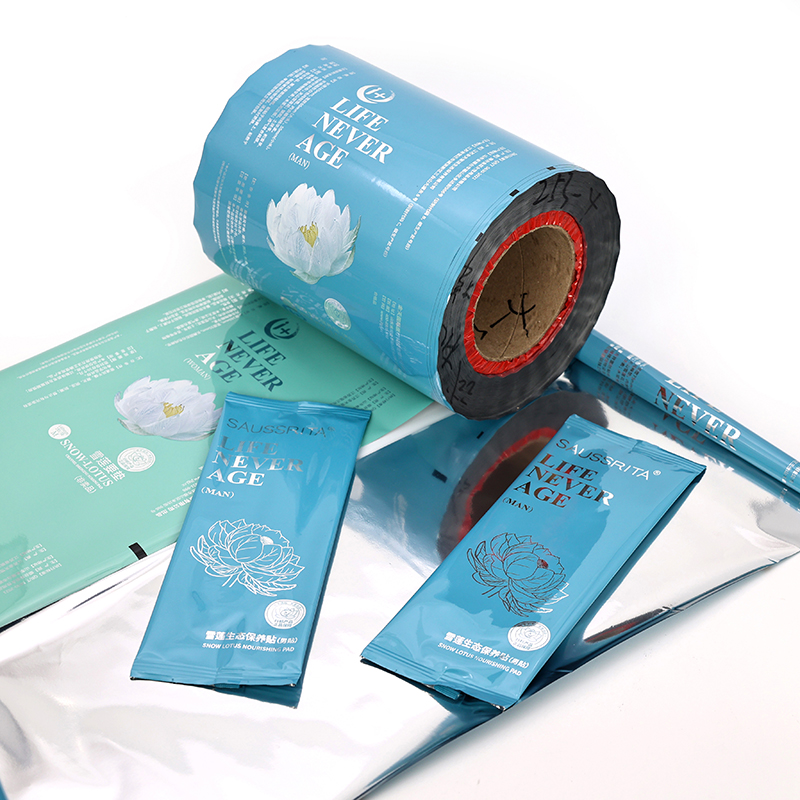
Versatility Across Multiple Food Applications
Food packaging roll films are widely used across nearly every segment of the food industry due to their flexibility and adaptability.
They can be used to produce different packaging formats depending on machine configuration and product requirements, making them suitable for both small consumer goods and bulk food packaging.
Typical application areas include:
● Snack food packaging such as chips, biscuits, candies, and nuts requiring attractive appearance and moisture protection
● Frozen food packaging including dumplings, vegetables, seafood, and ready meals that require strong sealing performance at low temperatures
● Coffee and beverage packaging where aroma retention and oxygen barrier performance are critical
● Dairy and powdered food packaging such as milk powder, protein powder, and nutritional supplements requiring moisture protection
● Sauces and liquid food packaging requiring leak-proof sealing and strong barrier protection
This wide application range makes roll film one of the most flexible packaging formats in the food industry.
Printing and Branding Advantages for Food Products
In modern retail markets, packaging plays a major role in influencing consumer purchasing decisions. Food packaging roll films support high-quality printing technologies that help brands create strong visual identity and product differentiation.
Because the film surface can be fully customized, manufacturers can design packaging that reflects brand identity while also providing essential product information.
Common branding features include:
● High-resolution gravure printing for detailed graphics and product labeling
● Matte and glossy finishes that enhance visual appeal and product positioning
● Transparent windows that allow consumers to view product quality directly
● Metallic and specialty effects that create premium packaging appearance
These design capabilities help food brands improve shelf visibility and strengthen customer recognition in competitive retail environments.
Cost Efficiency and Supply Chain Optimization
Compared with rigid packaging materials such as glass jars, metal cans, or plastic containers, food packaging roll films offer significant cost advantages throughout the supply chain.
Their lightweight and compact structure reduces both material consumption and transportation costs, making them an efficient solution for large-scale food distribution.
Key cost advantages include:
● Reduced packaging material usage compared to rigid containers
● Lower transportation costs due to lightweight structure
● Improved warehouse storage efficiency with compact roll format
● Higher pallet loading capacity for bulk shipping operations
● Reduced overall packaging waste during production
These advantages are particularly important for international food exporters and high-volume manufacturers.
Sustainability Trends in Food Packaging Roll Films
Sustainability has become a major focus in the global packaging industry, and food packaging roll films are evolving to meet environmental requirements.
Manufacturers are developing eco-friendly materials and reducing plastic usage while maintaining performance and durability.
Current sustainability developments include:
● Recyclable mono-material packaging films that simplify recycling processes
● Reduced thickness film technology that lowers raw material consumption
● Water-based inks and eco-friendly adhesives for safer production processes
● Lightweight packaging designs that reduce carbon emissions during transportation
These innovations help food companies align with global environmental regulations and consumer expectations.
Compatibility with Automated Packaging Equipment
Food packaging roll films are specifically designed for compatibility with modern automatic packaging machines, which is one of their biggest advantages in industrial applications.
They work seamlessly with vertical and horizontal form-fill-seal systems, enabling stable and efficient production lines.
Equipment compatibility benefits include:
● Smooth operation in high-speed VFFS and HFFS systems
● Consistent sealing performance across long production cycles
● Reduced equipment downtime and maintenance interruptions
● Improved production accuracy and reduced material waste
This makes roll film packaging a preferred choice for fully automated food production facilities.
Conclusion
Food packaging roll films are a core component of modern food packaging systems because they combine efficiency, flexibility, product protection, and cost optimization in a single solution. Their compatibility with automated production lines, customizable material structures, and strong branding capabilities make them an essential packaging format for food manufacturers worldwide.
As the food industry continues to evolve toward automation, sustainability, and premium product differentiation, roll film packaging will remain one of the most important and widely used packaging solutions in global food production.
FAQ
1. What are food packaging roll films used for?
Food packaging roll films are used in automated packaging machines to produce bags for snacks, frozen foods, coffee, dairy products, powders, sauces, and many other food items.
2. Why are roll films widely used in food factories?
They support high-speed continuous production, reduce labor costs, improve efficiency, and ensure consistent packaging quality.
3. Can food packaging roll films improve product shelf life?
Yes, multi-layer barrier structures help protect food from oxygen, moisture, and light, extending product freshness and stability.
4. Are eco-friendly food packaging roll film options available?
Yes, many manufacturers now offer recyclable mono-material films, reduced-thickness materials, and environmentally friendly printing systems.
Post time: May-21-2026