


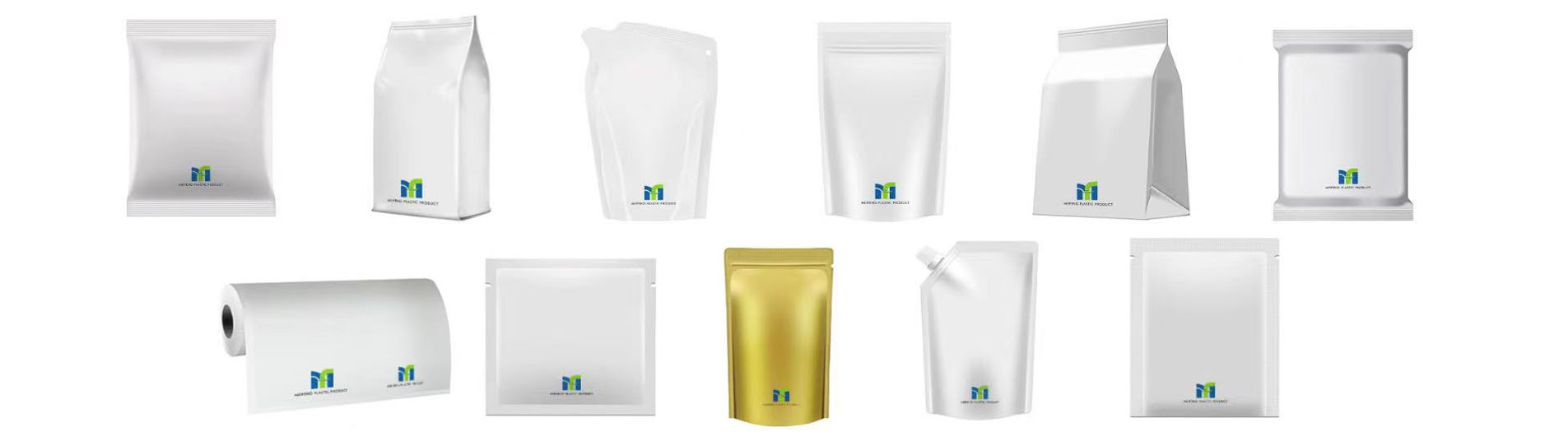
As the global food industry continues moving toward automation, large-scale production, and higher packaging standards, food packaging roll film solutions have become one of the most important parts of modern food packaging systems. For food manufacturers, packaging is no longer simply a protective layer around the product. It now directly affects production efficiency, shelf life, transportation costs, retail presentation, and overall brand competitiveness.
Compared with traditional rigid packaging formats, flexible roll film packaging provides better production flexibility, lower material consumption, and stronger compatibility with automated packaging lines. Whether companies are producing snack foods, frozen products, dairy products, coffee, sauces, or nutritional powders, customized packaging roll film solutions help improve both operational efficiency and product performance.
Why Food Packaging Roll Film Is Becoming More Important in Modern Food Manufacturing
In modern food factories, production speed and packaging consistency are critical factors that directly influence output capacity and operational costs. Packaging roll film is specifically designed to support continuous automatic packaging systems, allowing manufacturers to complete forming, filling, and sealing processes efficiently within one integrated production line.
Unlike pre-made bags that require additional storage and handling procedures, roll film packaging materials are supplied in continuous rolls, which reduces packaging interruptions and helps improve production continuity. This becomes especially important for high-volume food processing companies that require stable packaging performance throughout long production cycles.
At the same time, food packaging roll film also allows brands to create more flexible packaging designs, which means manufacturers can adjust bag sizes, structures, and printing layouts according to different product categories without completely changing production systems.
Advanced Material Structures Improve Food Protection and Shelf Stability
One of the core advantages of food packaging roll film solutions is the ability to customize material structures according to different food preservation requirements. Different food categories require different levels of oxygen resistance, moisture protection, sealing strength, and puncture resistance.
Modern flexible packaging manufacturers typically combine multiple material layers together to create packaging films with stronger overall performance. These structures are carefully engineered to maintain food freshness while also supporting automatic packaging equipment.
Common high-performance material structures include:
● PET and PE laminated structures that provide balanced sealing performance, printability, and moisture resistance for general food products while maintaining cost efficiency for large-scale production.
● Aluminum foil composite structures that deliver excellent oxygen and light barrier properties for products such as coffee, nutritional powders, freeze-dried foods, and premium snacks that require longer shelf life.
● Nylon-based laminated films that improve puncture resistance and packaging durability for vacuum packaging applications involving meat, seafood, frozen products, and heavy food contents.
● Recyclable mono-material film structures that are increasingly used in sustainable packaging systems to help brands reduce environmental impact while maintaining packaging functionality.
By selecting the correct material combination, food manufacturers can significantly improve product stability during transportation, storage, and retail display.
Packaging Roll Film Supports High-Speed Automated Production Systems
As labor costs continue increasing worldwide, more food factories are investing in fully automated packaging equipment. Packaging roll film is highly compatible with modern automatic filling and sealing systems, making it one of the most efficient packaging formats available for industrial food production.
Because roll film packaging materials move continuously through packaging machinery, manufacturers can achieve faster packaging speeds while reducing manual handling processes. This helps improve production output and reduce packaging inconsistencies caused by human operation.
Major production advantages include:
● Continuous packaging operation that minimizes production downtime and improves equipment utilization efficiency during large-scale manufacturing.
● Stable sealing performance that reduces leakage risks and helps maintain food safety standards throughout the supply chain.
● Faster packaging speed compared with manual or semi-automatic packaging systems, allowing manufacturers to increase output capacity without significantly expanding labor costs.
● Better packaging consistency across different production batches, helping food brands maintain stable packaging quality and improve customer confidence.
These advantages make roll film solutions especially valuable for export-oriented food manufacturers and companies producing high-volume consumer food products.
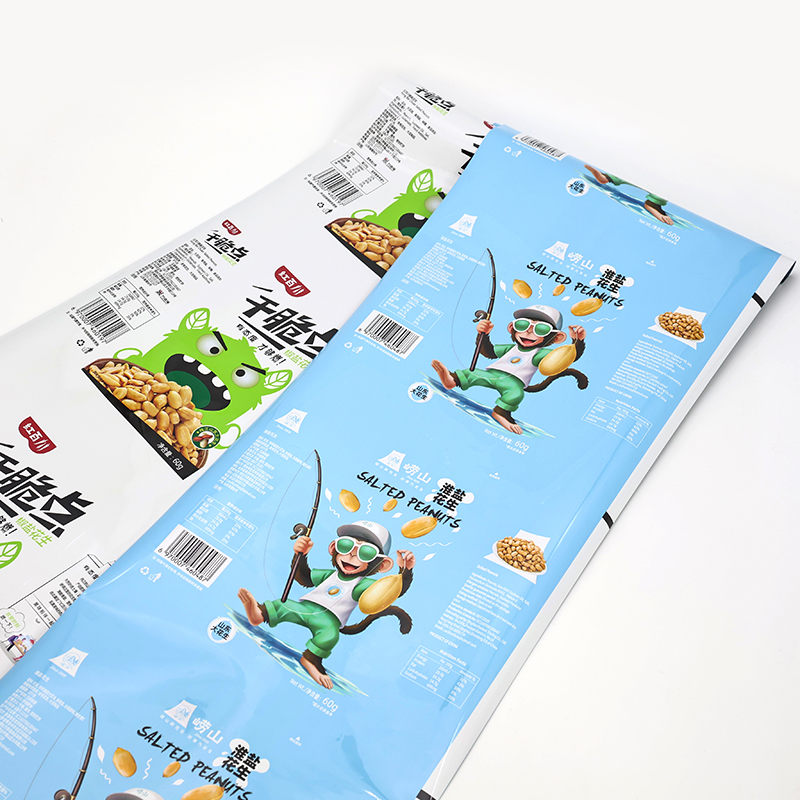
Flexible Packaging Design Helps Improve Brand Competitiveness
In modern retail environments, packaging appearance directly influences consumer purchasing decisions. Food packaging roll film supports high-quality printing technologies that help brands improve shelf visibility and strengthen market recognition.
Unlike plain traditional packaging, customized roll film allows food companies to create stronger visual identity systems across multiple product categories. Modern consumers often evaluate packaging quality before evaluating the actual product, which means packaging design now plays an important role in product positioning.
Modern printing and customization options include:
● High-definition rotogravure printing that allows brands to display detailed product graphics, nutritional information, and brand storytelling elements with improved clarity and color consistency.
● Matte and glossy surface finishes that help create premium packaging appearances suitable for high-end retail markets and specialty food products.
● Transparent display windows that allow consumers to directly view product quality inside the package, increasing purchasing confidence and improving shelf appeal.
● Metallic printing effects and customized textures that help products stand out in competitive retail environments where visual differentiation is extremely important.
Through customized packaging roll film solutions, food brands can strengthen both functional packaging performance and marketing effectiveness at the same time.
Food Packaging Roll Film Reduces Transportation and Storage Costs
Compared with rigid containers such as metal cans, glass jars, or plastic buckets, flexible roll film packaging offers significant logistics and warehousing advantages. Because flexible packaging materials are lightweight and compact, they help companies reduce shipping expenses while improving warehouse space utilization.
For international food exporters, reducing packaging weight can have a major impact on overall transportation costs, especially in global markets where shipping expenses continue rising.
Cost reduction benefits include:
● Lower packaging weight that helps reduce freight costs and improve transportation efficiency during large-volume shipping operations.
● Compact roll storage that minimizes warehouse space requirements before packaging production begins.
● Higher pallet loading efficiency that allows companies to transport more packaged products within the same shipping volume.
● Reduced material consumption compared with rigid packaging formats, helping businesses improve packaging sustainability while controlling overall production costs.
These economic advantages are one of the main reasons why flexible packaging roll film continues replacing traditional packaging systems in many food industries.
Sustainable Packaging Trends Are Reshaping Flexible Packaging Development
Environmental sustainability has become one of the biggest driving forces in the packaging industry. Governments, retailers, and consumers are increasingly demanding packaging solutions that reduce plastic waste and lower carbon emissions.
As a result, food packaging roll film manufacturers are developing more environmentally friendly packaging technologies that maintain packaging performance while improving recyclability and reducing environmental impact.
Current sustainable packaging developments include:
● Recyclable mono-material packaging structures that simplify recycling processes and support circular packaging systems.
● Reduced film thickness technologies that lower raw material consumption while maintaining sealing strength and barrier performance.
● Water-based inks and environmentally friendly adhesive systems that help reduce chemical emissions during packaging production.
● Lightweight packaging structures that lower fuel consumption during transportation and reduce total carbon footprint across the supply chain.
As sustainability regulations continue expanding globally, environmentally friendly roll film packaging solutions are expected to become increasingly important for food manufacturers.
Conclusion
Food packaging roll film solutions have become an essential part of modern food manufacturing because they combine production efficiency, product protection, flexible design, and cost control within one packaging system. Their compatibility with automated packaging equipment, customizable barrier structures, and strong branding capabilities make them one of the most practical packaging choices for today’s food industry.
As food companies continue focusing on efficiency, sustainability, and product differentiation, flexible packaging roll film will remain one of the fastest-growing packaging solutions in global food markets.
FAQ
1. Why do food manufacturers prefer packaging roll film?
Because roll film supports high-speed automated production, reduces packaging costs, improves sealing consistency, and provides flexible packaging design options.
2. Can packaging roll film improve food shelf life?
Yes. Multi-layer barrier structures help protect food from oxygen, moisture, light, and contamination, which helps maintain freshness and extend shelf stability.
3. Is food packaging roll film suitable for frozen and vacuum packaging?
Yes. Specialized material structures with strong puncture resistance and low-temperature performance are widely used for frozen food and vacuum packaging applications.
4. Are sustainable food packaging roll film solutions available?
Many packaging manufacturers now offer recyclable mono-material films, reduced-thickness packaging structures, and environmentally friendly printing systems to support sustainable packaging goals.
Post time: May-14-2026