


A professional Coffee Packaging Bags Supplier needs to understand that coffee packaging is different from ordinary dry food packaging. Coffee continues to release gas after roasting, while oxygen, moisture, and light can gradually affect aroma and flavor. Whole beans, ground coffee, small specialty packs, and larger everyday formats also have different packaging requirements.
For this reason, coffee packaging should not begin with a standard pouch style. It should start with the coffee itself and then determine the pouch format, one-way degassing valve, zipper, material structure, printing method, and final package size. Suitable Coffee Packaging Bags need to balance coffee protection, convenience, and brand presentation.
Coffee Packaging Bags Need to Manage Post-Roast Degassing
Freshly roasted coffee continues to release carbon dioxide for a period of time. If the package is completely sealed without a suitable way to release gas, pressure may build inside the pouch. At the same time, prolonged exposure to outside air can gradually affect aroma and flavor.
This is why coffee packaging often uses a One-Way Degassing Valve. The valve allows gas produced by roasted coffee to escape while helping reduce direct air exchange from outside. It is especially common for freshly roasted whole beans.
However, the valve should not be treated as a simple accessory added to the pouch surface. Its position needs to work with the pouch dimensions, printed artwork, zipper, and sealing area. On smaller coffee bags, usable panel space is limited, so poor valve placement can affect both visual layout and opening convenience.
For this reason, the valve should be planned as part of the overall coffee pouch structure rather than added after the package design is complete.
Whole Beans, Ground Coffee, and Different Pack Sizes Need Different Solutions
Different coffee formats create different packaging priorities.
Whole beans leave more open space inside the bag and continue to release gas after roasting, so internal volume and valve configuration become more important. Ground coffee has a larger exposed surface area and typically loses aroma more quickly after opening, which makes resealing and limiting repeated exposure more important.
Pack size also changes how the bag is used. A 100 g or 200 g specialty coffee pouch may place more emphasis on refined printing, compact presentation, and flexible short-run production. Larger 500 g or 1 kg coffee packs need greater attention to pouch stability, zipper position, and repeated use over a longer period.
| Coffee Product | Main Packaging Focus |
|---|---|
| Fresh whole beans | Degassing, aroma protection, pouch stability |
| Ground coffee | Resealing and reduced exposure after opening |
| Small specialty packs | Printing quality, short runs, multiple SKUs |
| Larger coffee packs | Structural stability, zipper, daily handling |
| Multi-origin or multi-roast lines | SKU differentiation and printing flexibility |
This approach is more practical than selecting a standard coffee bag based only on net weight.
Flat Bottom, Stand Up, and Side Gusset Coffee Bags Serve Different Purposes
Common coffee pouch formats do more than create different appearances.
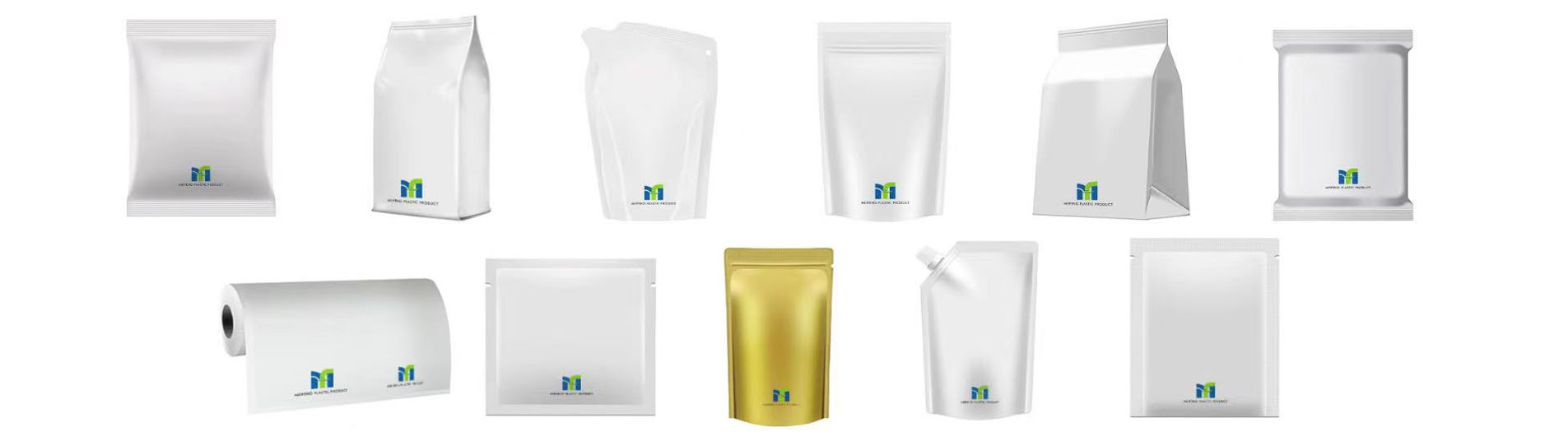
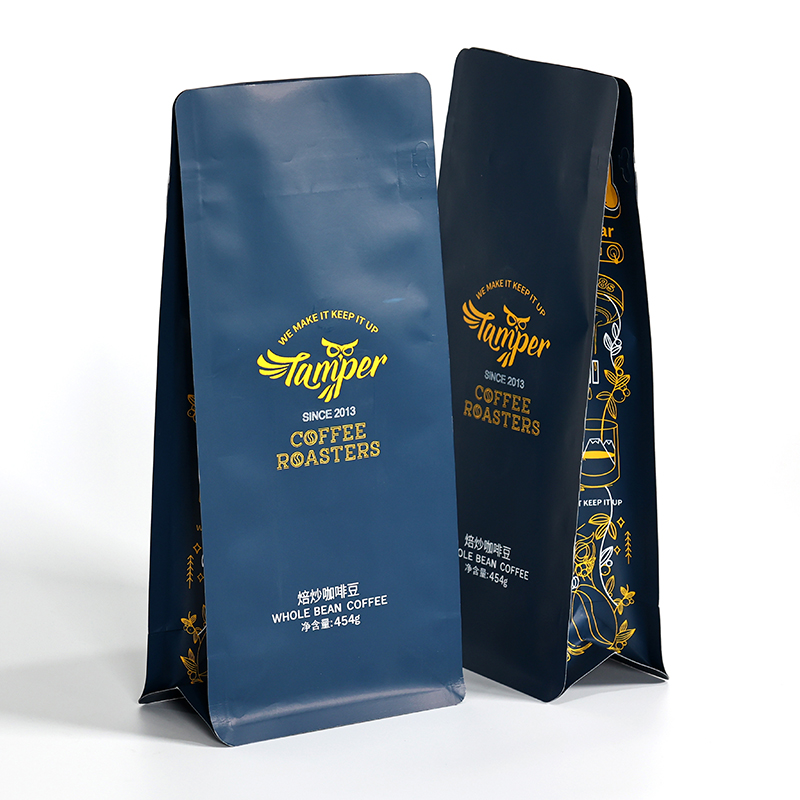
Flat Bottom Coffee Bags provide multiple defined panels and a structured three-dimensional shape. They are suitable for coffee products that place more emphasis on premium presentation, front-panel visibility, and side-panel information.
Stand Up Coffee Pouches provide a more flexible structure and are suitable for small to medium coffee packs. They can also accommodate zippers and degassing valves, making them useful for products that need both shelf presentation and daily convenience.
Side Gusset Coffee Bags offer a more traditional coffee-package profile. The gusset expands with the product, making this format suitable for different capacities and branding styles.
For a Coffee Packaging Bags Supplier, the important capability is not simply offering more pouch formats, but matching the right structure to the coffee type, pack size, and desired package appearance.
Zippers Affect the Coffee Experience After Opening
Many coffee products are not consumed in one use, so after the first opening, the pouch itself becomes part of the daily storage routine.
A Resealable Zipper allows whole beans or ground coffee to be closed again between uses, reducing prolonged exposure and improving convenience. For products that are opened repeatedly, this feature is often more useful than adding purely decorative packaging elements.
The zipper also affects the available space at the top of the pouch, so it needs to be coordinated with the degassing valve, tear notch, top seal, and printed layout. This becomes especially important on smaller coffee bags, where even a small change in structural space can noticeably affect the front-panel design.
Good coffee packaging should therefore consider not only how the unopened pouch looks, but also how practical it is after the consumer starts using it.
Multiple Coffee SKUs Need More Flexible Printing Options
Coffee brands often manage multiple origins, roast levels, flavor profiles, seasonal releases, and limited editions. This means coffee packaging is often a multi-SKU project rather than a single fixed design.
Mfirstpack supports both digital and gravure printing. Digital printing is suitable for new products, shorter runs, multiple SKUs, and designs that change more frequently. It can help different origins, roast profiles, and seasonal products use distinct packaging without following the same production logic as a large stable SKU.
When a coffee product reaches a more stable production stage, gravure printing can support larger-volume requirements.
This combination allows the printing method to follow the product stage instead of forcing every coffee line into the same production model from the beginning.
What Coffee Packaging Solutions Can Mfirstpack Provide?
Mfirstpack can develop different flexible coffee packaging solutions according to the coffee product, pack size, and brand presentation requirements. Available formats include flat bottom coffee bags, stand-up coffee pouches, side gusset coffee bags, and other customized structures.
Customization can include:
- One-way degassing valves;
- Resealable zippers;
- Different material and laminate structures;
- Matte, glossy, and other surface finishes;
- Multi-SKU custom printing;
- Different package capacities;
- Transparent or opaque visual designs.
For coffee brands with several product lines, different products can maintain a consistent visual direction without using exactly the same pouch structure. A small single-origin specialty coffee pack may focus more on detailed printing and compact presentation, while a larger everyday coffee pack may require greater structural stability and easier repeated opening.
This allows the packaging to be developed around the coffee product itself rather than simply applying different artwork to one standard pouch.
Develop the Final Package from the Coffee Product
When starting a new coffee packaging project, it is useful to first define several core details: whether the coffee is whole bean or ground, the required pack weight, whether a degassing valve is needed, whether a zipper is required, the preferred pouch style, and whether the product line includes multiple SKUs.
Once these details are clear, the material structure, pouch dimensions, printing method, and surface finish can be planned more accurately.
Mfirstpack can combine pouch structure, printing, lamination, bag making, and functional features to develop complete Custom Coffee Packaging Bags for different coffee products.
Looking for Custom Coffee Packaging Bags?
If you are developing a new coffee product, launching multiple origins or roast profiles, or upgrading an existing package, you can provide the coffee type, pack size, preferred pouch format, artwork, expected quantity, and whether features such as a one-way degassing valve or zipper are required.
If the final structure has not yet been confirmed, the pouch format and packaging details can also be developed around the coffee product and the intended presentation.
Contact Mfirstpack to develop custom Coffee Packaging Bags that match your coffee product, pack size, and brand presentation.
FAQ
1. What types of Coffee Packaging Bags can Mfirstpack provide?
Mfirstpack can develop flat bottom coffee bags, stand-up coffee pouches, side gusset coffee bags, and other customized flexible packaging structures according to coffee type and package capacity.
2. Can Coffee Packaging Bags include both a degassing valve and a zipper?
Yes. One-way degassing valves and resealable zippers can be integrated into suitable coffee pouch structures, with their positions coordinated with pouch dimensions and printed artwork.
3. Can multiple coffee SKUs use different printed designs?
Yes. Digital printing is suitable for different origins, roast levels, seasonal products, limited editions, and other multi-SKU projects. Gravure printing is also available for larger and more stable production runs.
4. What can be customized for coffee packaging?
Coffee packaging can be customized in pouch size, bag structure, material combination, printed design, degassing valve, zipper configuration, surface finish, and package capacity.
Post time: Sep-15-2026