


In the competitive global food industry, packaging is no longer just a protective layer but a critical component that influences storage efficiency, product presentation, logistics performance, and consumer perception. Among the many flexible packaging formats available today, bottom gusset food packaging bags have become one of the most practical and widely used solutions for food manufacturers and brands seeking better shelf stability and higher packaging capacity.
With their unique structural design and strong functional performance, bottom gusset bags are widely used in retail food packaging, wholesale distribution, and industrial food supply chains. Their ability to stand upright, expand capacity, and improve shelf display makes them especially valuable in modern food packaging systems.
What Are Bottom Gusset Food Packaging Bags?
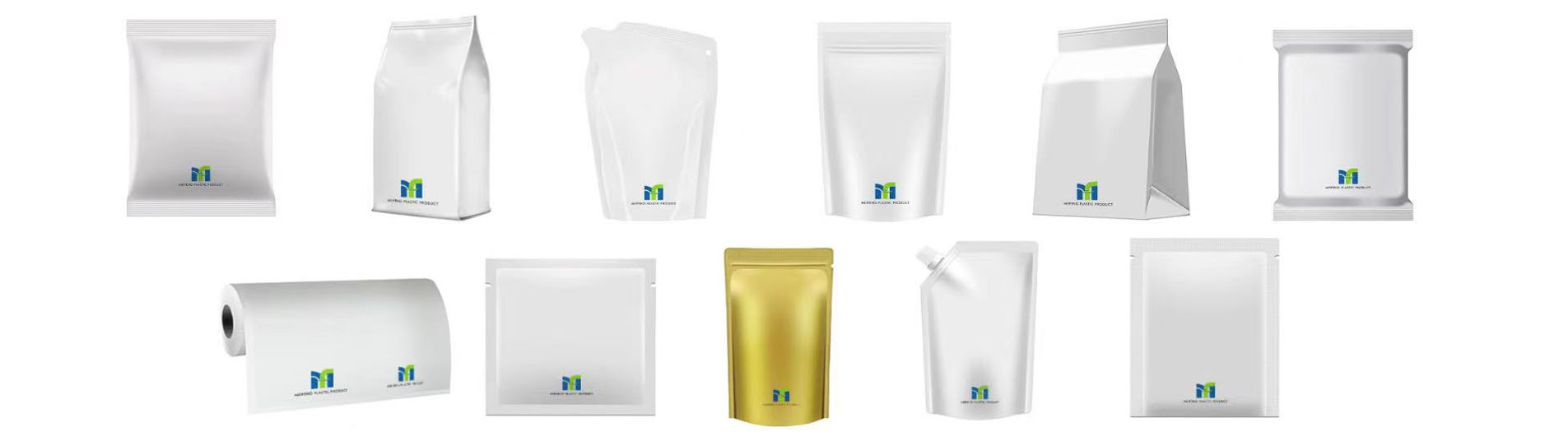
Bottom gusset food packaging bags are flexible packaging bags designed with a folded bottom structure that expands when filled, allowing the bag to stand upright on shelves. This structural design increases stability and improves product visibility in retail environments while also enhancing internal volume capacity.
Unlike flat pouches, bottom gusset bags naturally form a stable base when filled, making them suitable for both manual and automated filling processes. The gusset structure also allows the packaging to adjust shape depending on product volume, which improves overall packaging flexibility.
Why Bottom Gusset Design Is Important in Food Packaging
The bottom gusset structure is not just a design feature; it plays a functional role in improving packaging performance across multiple dimensions. Food manufacturers prefer this format because it supports both operational efficiency and marketing effectiveness.
The structural expansion at the bottom allows the bag to stand securely without additional support, which is especially important in retail environments where shelf space is limited and product visibility is critical.
At the same time, the expandable design helps optimize internal space utilization, ensuring that products are packaged efficiently without unnecessary material waste or empty space.
Improved Shelf Stability and Retail Presentation
One of the strongest advantages of bottom gusset food packaging bags is their ability to stand upright naturally on retail shelves. This improves product visibility and allows brands to present packaging in a more organized and attractive way.
In retail environments where multiple products compete for consumer attention, packaging stability becomes a key factor in influencing purchasing decisions. A stable upright bag not only improves display quality but also enhances perceived product value.
Key shelf presentation advantages include:
● Stable upright structure that improves product visibility on shelves
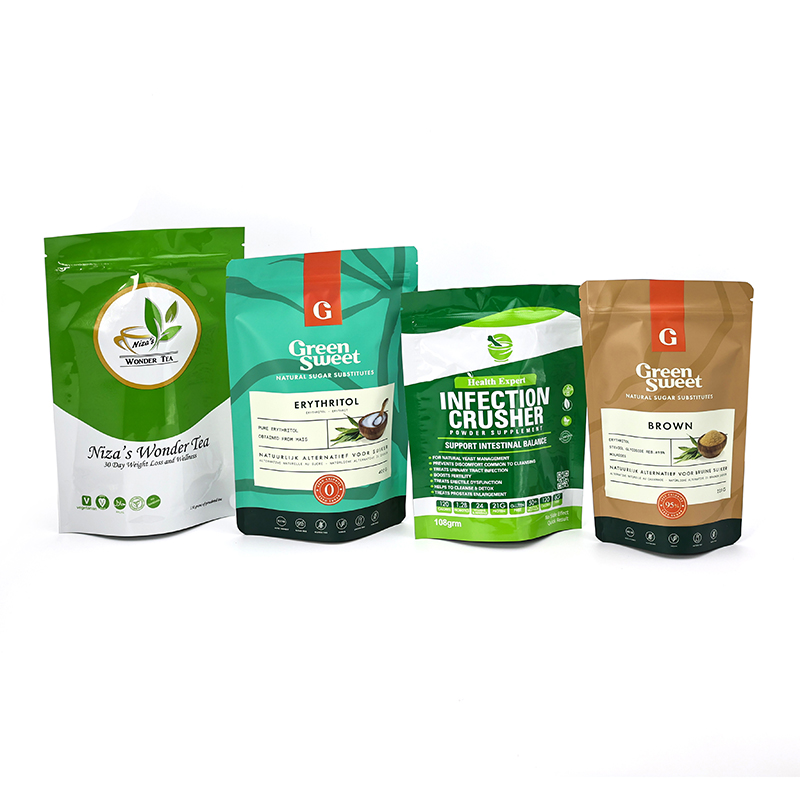
● Larger front and back surface area for branding and product information
● Better alignment in retail displays compared to flat packaging formats
● Improved visual consistency across different product batches
These advantages make bottom gusset bags highly suitable for supermarkets, convenience stores, and specialty food retailers.
Material Structures for Food Safety and Protection
Bottom gusset food packaging bags are typically manufactured using multi-layer laminated materials designed to protect food from external environmental factors such as moisture, oxygen, light, and contamination.
Depending on product requirements, manufacturers can customize material structures to achieve different levels of barrier performance.
Common material combinations include:
● PET/PE laminated structures for general dry food packaging with balanced strength and sealing performance
● Kraft paper composite materials for natural and eco-friendly branding presentation
● Aluminum foil layered structures for high-barrier protection of sensitive products such as coffee and spices
● Nylon-reinforced films for improved puncture resistance and durability during transportation
These material combinations ensure that bottom gusset bags can meet the requirements of various food categories while maintaining product freshness and quality.
Printing and Branding Opportunities
Packaging plays a central role in modern food branding, and bottom gusset bags offer a large printable surface that allows companies to communicate brand identity effectively.
The flat front and back panels provide ample space for high-resolution graphics, product information, and marketing content, helping brands differentiate themselves in competitive retail environments.
Common branding features include:
● High-definition printing for logos, product details, and marketing visuals
● Matte or glossy surface finishes for premium packaging appearance
● Transparent windows to showcase product quality inside the bag
● Custom color schemes aligned with brand identity systems
These design options help food companies improve shelf appeal and strengthen consumer recognition.
Suitable Applications Across the Food Industry
Bottom gusset food packaging bags are widely used across multiple food categories due to their versatility and functional advantages.
Typical application areas include:
● Coffee beans and ground coffee packaging requiring stable shelf display and aroma protection
● Tea and herbal products that benefit from moisture-resistant packaging structures
● Nuts, dried fruits, and snack foods that require both visibility and freshness preservation
● Pet food packaging where larger capacity and durable structure are essential
● Bakery products and confectionery items requiring attractive retail presentation
● Organic and specialty food products that rely on premium packaging appearance
This wide application range demonstrates the adaptability of bottom gusset packaging in both mainstream and niche food markets.
Compatibility with Filling and Sealing Systems
Bottom gusset bags are compatible with both manual and automated filling systems, making them suitable for small-scale producers as well as large industrial food manufacturers.
In automated production environments, these bags can be integrated into vertical and horizontal filling systems, allowing efficient and consistent packaging operations.
Production efficiency benefits include:
● Smooth integration with automatic filling and sealing equipment
● Stable bag positioning during filling processes
● Reduced packaging errors and material waste
● Improved production speed and consistency
This compatibility helps food manufacturers streamline operations and improve overall productivity.
Sustainability and Future Packaging Trends
Sustainability has become a key focus in the global packaging industry, and bottom gusset food packaging bags are evolving to meet environmental expectations.
Manufacturers are increasingly adopting recyclable materials and reducing plastic usage while maintaining packaging performance.
Sustainable development directions include:
● Recyclable mono-material structures for easier processing
● Reduced material thickness without compromising strength
● Eco-friendly printing technologies and adhesives
● Lightweight packaging designs to reduce carbon emissions
These innovations align with global sustainability goals and help food brands improve their environmental responsibility.
Conclusion
Bottom gusset food packaging bags provide a highly effective packaging solution that combines structural stability, increased capacity, strong branding potential, and efficient logistics performance. Their ability to stand upright, expand volume, and support high-quality printing makes them an essential packaging format in modern food packaging systems.
As the food industry continues to evolve toward efficiency, sustainability, and stronger brand differentiation, bottom gusset bags will remain a key packaging solution for manufacturers seeking both functional performance and market competitiveness.
FAQ
1. What makes bottom gusset bags different from flat food packaging bags?
Bottom gusset bags feature a folded base that allows them to stand upright and expand in capacity, improving both shelf display and packaging efficiency.
2. Are bottom gusset food packaging bags suitable for automated filling systems?
Yes, they are compatible with both manual and automated filling systems, making them suitable for various production scales.
3. Can bottom gusset bags improve product shelf life?
Yes, when combined with high-barrier materials, they help protect food from moisture, oxygen, and light exposure.
4. What food products are commonly packaged in bottom gusset bags?
They are widely used for coffee, tea, snacks, nuts, dried fruits, pet food, bakery products, and specialty foods.
Post time: May-19-2026