


Aluminium Foil Food Packaging Bags can show clear differences in stiffness, flexibility, fold behavior, and opening feel even when they are listed with the same total thickness. The reason is simple: total thickness only describes the combined thickness of the laminate. It does not show how that thickness is distributed among the individual layers, nor does it fully explain how the finished pouch will behave.
For example, two aluminium foil bags may both be specified at around 120 μm, but one may use a thicker inner sealing layer while the other allocates more thickness to the outer or reinforcing layer. Differences in pouch size, bag format, and surface finish can further change how the finished package feels and looks.
For this reason, evaluating Aluminium Foil Food Packaging Bags requires more than comparing thickness values. The laminate structure and finished pouch configuration are equally important.
Total Thickness Does Not Fully Describe Aluminium Foil Food Packaging Bags
Aluminium foil food packaging bags are usually made from several laminated layers. The same total thickness can therefore be achieved through very different layer combinations.
The outer film usually contributes to surface stability and overall stiffness. Intermediate layers may provide reinforcement and toughness, while the aluminium foil layer influences folding behavior. The inner sealing layer can affect softness, flexibility, and the behavior of the sealing area.
As a result, two pouches with the same total thickness may have very different characteristics. One may feel firmer and hold its shape better, while another may feel softer and conform more easily to the product.
| Structural Difference | More Direct Effect on the Finished Bag |
|---|---|
| Thicker or stiffer outer layer | Flatter surface and clearer pouch shape |
| Higher proportion of reinforcement layer | Better toughness and deformation resistance |
| Thicker inner sealing layer | Softer overall feel |
| Different aluminium foil configuration | Changes fold retention and stiffness |
| Different layer distribution | Changes opening feel and shape retention |
This is why total thickness should be treated as a basic reference rather than a complete description of the pouch structure.
Stiffness and Flexibility Should Be Evaluated Together with Bag Size
The perceived stiffness of a laminate changes with the dimensions of the finished pouch.
The same material structure may feel relatively firm when used in a small pouch, but noticeably softer when applied to a much larger bag. As the panel area increases, the film has more space to bend and flex.
This means material stiffness should not be judged independently from pouch size. A small bag made from an overly heavy structure may feel too rigid, while a large pouch made from a very soft laminate may lose panel flatness and structural definition.
Bag dimensions and laminate construction should therefore be considered together.
Dead Fold Directly Affects the Appearance of Aluminium Foil Bags
One distinctive characteristic of aluminium foil is its dead-fold behavior.
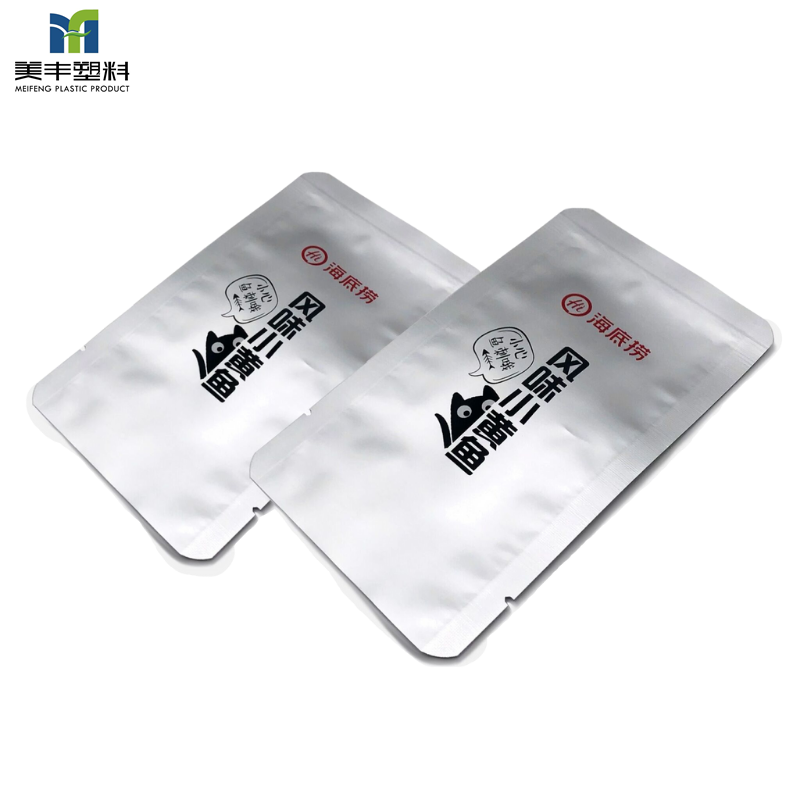
After being bent or folded, aluminium foil tends to retain the crease more strongly than many plastic films. This means aluminium foil laminates often show more visible fold lines around corners, gussets, sealed edges, and repeatedly bent areas.
These marks do not automatically indicate material damage. Minor, regular creases may simply reflect the natural folding behavior of the aluminium foil layer.
It is more useful to distinguish normal fold marks from abnormal wrinkling or structural deformation. Localized, predictable creases are often related to material behavior, while large waves, severe distortion, or uneven panel deformation may indicate issues related to laminate balance, pouch size, or bag construction.
Different Pouch Formats Emphasize Different Material Characteristics
The same aluminium foil laminate can behave differently when converted into different pouch formats.
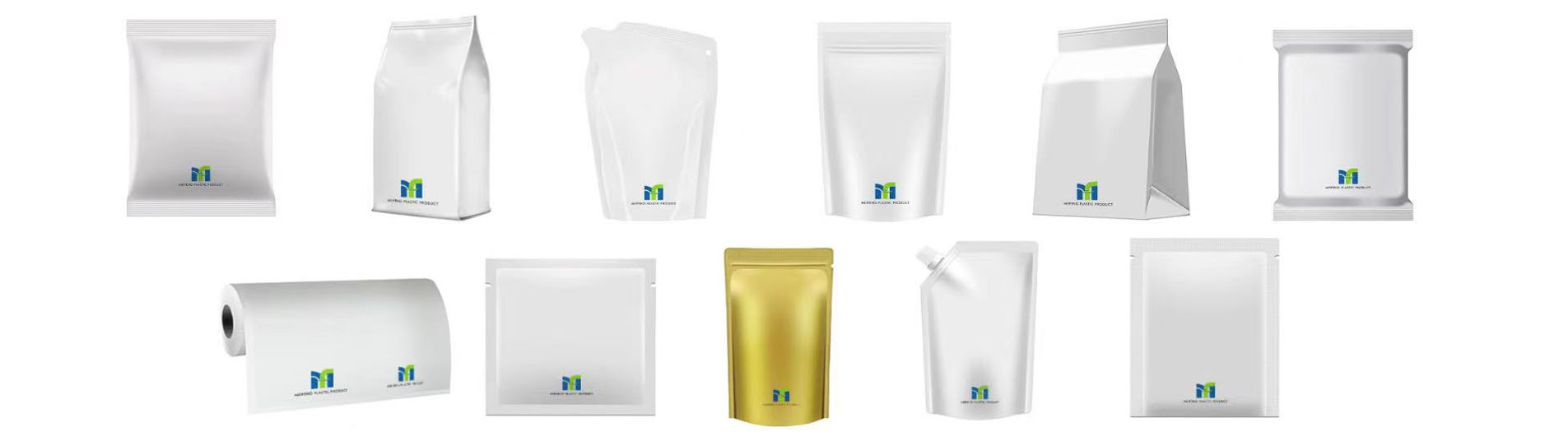
Three-side seal bags have relatively flat front and back panels, so the stiffness of the laminate is easy to observe. Stand-up pouches include a bottom gusset, which requires the material to remain stable while also bending and expanding at the base.
Flat bottom bags have several defined panels and folds, so the balance between stiffness and flexibility becomes even more noticeable. Side gusset bags contain repeated vertical folds, which makes the dead-fold characteristics of aluminium foil more visible.
This is why a material structure that performs well in one pouch format may not produce exactly the same appearance or feel in another.
Why Are Some Aluminium Foil Food Packaging Bags Easier to Open?
Opening feel can also reveal differences in laminate construction.
A relatively stiff structure may cause the two sides of the pouch to stay closer together, while a softer laminate may separate more easily at the opening. The surface characteristics of the inner film, opening width, seal width, and the presence of a zipper can also influence how easily the pouch opens.
These differences are especially noticeable in smaller packages because the opening area is more limited.
Therefore, when two bags of the same size feel different during opening, the reason may not be thickness alone. Inner-layer properties, overall stiffness, and pouch geometry can all contribute.
Surface Finish Changes How Flatness Is Perceived
Glossy, matte, and metallic finishes affect more than appearance. They also influence how surface irregularities are visually perceived.
Glossy surfaces reflect more light, making small wrinkles, creases, and panel waviness easier to notice. Matte finishes reduce reflection, so similar surface marks may appear less obvious. Metallic effects can strengthen the visual character of aluminium foil while also making certain fold lines more noticeable.
As a result, two pouches with similar physical structures may appear very different simply because of their surface finish.
This is why visual flatness should not be treated as a direct measurement of laminate quality or stiffness.
What Should Be Compared Besides Thickness?
Comparing only the total thickness of Aluminium Foil Food Packaging Bags provides limited information. A more useful evaluation considers both the material structure and the finished pouch.
| Evaluation Item | What It Helps Explain |
|---|---|
| Total thickness | Provides a basic material reference |
| Layer thickness distribution | Explains stiffness and flexibility differences |
| Pouch dimensions | Shows how material behaves across different panel sizes |
| Bag format | Explains folds, panel shape, and base behavior |
| Surface finish | Influences visible flatness and crease appearance |
| Opening feel | Reflects stiffness and inner-film characteristics |
| Shape retention | Shows how well the pouch maintains its intended form |
These factors together provide a much clearer understanding of actual pouch performance.
Aluminium Foil Food Packaging Bags Should Be Evaluated as Finished Pouches
The final performance of Aluminium Foil Food Packaging Bags cannot be explained by one thickness value alone.
The same total thickness can contain different layer distributions, while pouch dimensions can change how stiff or flexible the material feels. Bag format, aluminium foil fold retention, surface treatment, and panel structure further influence the final appearance and handling characteristics.
For this reason, a more practical evaluation should consider the laminate structure, pouch dimensions, panel condition, opening behavior, and shape retention together.
These characteristics provide a more realistic picture of how the packaging will behave after it has been converted into a finished pouch.
FAQ
1. Why can aluminium foil food packaging bags with the same thickness feel different?
Because total thickness does not show how the individual layers are distributed. Differences in the outer film, reinforcement layer, aluminium foil layer, and inner sealing layer can change stiffness and flexibility.
2. Do visible creases mean an aluminium foil bag has a material problem?
Not necessarily. Aluminium foil has strong dead-fold characteristics, so normal bending can leave visible crease lines. These should be distinguished from severe wrinkling, distortion, or abnormal deformation.
3. Why can the same laminate feel softer in a larger bag?
A larger pouch has a greater panel area and more room to bend. As a result, the same laminate can feel less rigid in a large package than in a small one.
4. What should be checked when comparing aluminium foil food packaging bags?
In addition to total thickness, it is useful to compare layer distribution, pouch dimensions, bag format, surface finish, opening feel, and shape retention.
Post time: Aug-27-2026