


In today’s fast-paced food packaging industry, retort pouches have emerged as a revolutionary solution for convenient, safe, and shelf-stable products. For manufacturers, understanding the materials behind these pouches is essential for ensuring product safety, extending shelf life, and meeting regulatory standards. This article delves into the composition of retort pouches and why their materials are critical for B2B operations in food processing and packaging.
Understanding Retort Pouches
Retort pouches are flexible packaging designed to withstand high-temperature sterilization processes, making them ideal for ready-to-eat meals, sauces, soups, and other perishable products. Unlike traditional cans or jars, retort pouches offer lightweight, space-saving alternatives while maintaining food safety and product quality.
The key to their performance lies in the carefully engineered layers of materials that protect the contents from heat, moisture, oxygen, and light. Each layer plays a distinct role, and the combination ensures durability during processing, transport, and storage.
Key Materials Used in Retort Pouches
The structure of retort pouches typically consists of multiple laminated layers. The choice of materials depends on the type of food being packaged, the sterilization process, and the shelf-life requirements. Common components include:
● Polyester (PET) Layer
● Provides mechanical strength and dimensional stability.
● Offers excellent resistance to high temperatures during retort processing.
● Acts as a barrier to oxygen and moisture, preserving food quality.
● Aluminum Foil Layer
● Serves as an effective barrier against light, oxygen, and microorganisms.
● Ensures the contents remain safe and free from oxidation.
● Enhances the pouch’s thermal stability during sterilization.
● Polypropylene (PP) Layer
● Provides heat-sealability, allowing airtight packaging.
● Contributes to chemical resistance, preventing reactions with acidic or oily foods.
● Ensures the pouch can withstand the pressure and temperature of retort processing.
● Nylon (Polyamide, PA) Layer
● Adds puncture and tear resistance for better durability.
● Protects the contents during handling, transport, and storage.
These layers are laminated together to form a robust, multi-functional barrier. Some advanced retort pouches may also include EVOH (Ethylene Vinyl Alcohol) or other specialty films to enhance oxygen and aroma barrier properties.
Advantages of Using Retort Pouches
Retort pouches are widely adopted by food manufacturers due to their unique advantages over traditional packaging. Key benefits include:
● Extended Shelf Life
● Retort pouches provide superior protection against spoilage factors such as oxygen, light, and moisture.
● Products can remain shelf-stable for months or even years without refrigeration.
● Reduced Packaging Weight and Volume
● Flexible packaging is lighter than cans or glass jars, lowering shipping costs.
● Pouches take up less storage space, improving warehouse efficiency.
● Convenience and Consumer Appeal
● Easy to open, reseal, and transport, meeting modern consumer expectations.
● Attractive printing and design options make products more marketable.
● Sustainability Opportunities
● Flexible packaging uses fewer raw materials, reducing environmental impact.
● Some materials are recyclable or compatible with emerging circular economy initiatives.
Manufacturing Process of Retort Pouches
The production of retort pouches involves sophisticated processes to ensure safety and reliability:
-
Material Selection and Layering
● Engineers select the optimal combination of films based on food type and sterilization method. -
Lamination
● Layers are bonded using adhesives or extrusion lamination to form a single multi-layer sheet. -
Printing
● High-quality printing is applied to the laminated sheet for branding and regulatory labeling. -
Pouch Formation
● Sheets are cut and formed into pouch shapes using thermoforming, folding, or other specialized methods. -
Sealing
● Heat sealing creates airtight pouches capable of withstanding retort sterilization. -
Quality Testing
● Pouches are tested for burst strength, puncture resistance, seal integrity, and barrier properties.
Applications in B2B Industries
Retort pouches are increasingly popular in various B2B sectors:
● Food Manufacturers
● Ready-to-eat meals, soups, sauces, seafood, and baby food.
● Pet Food Industry
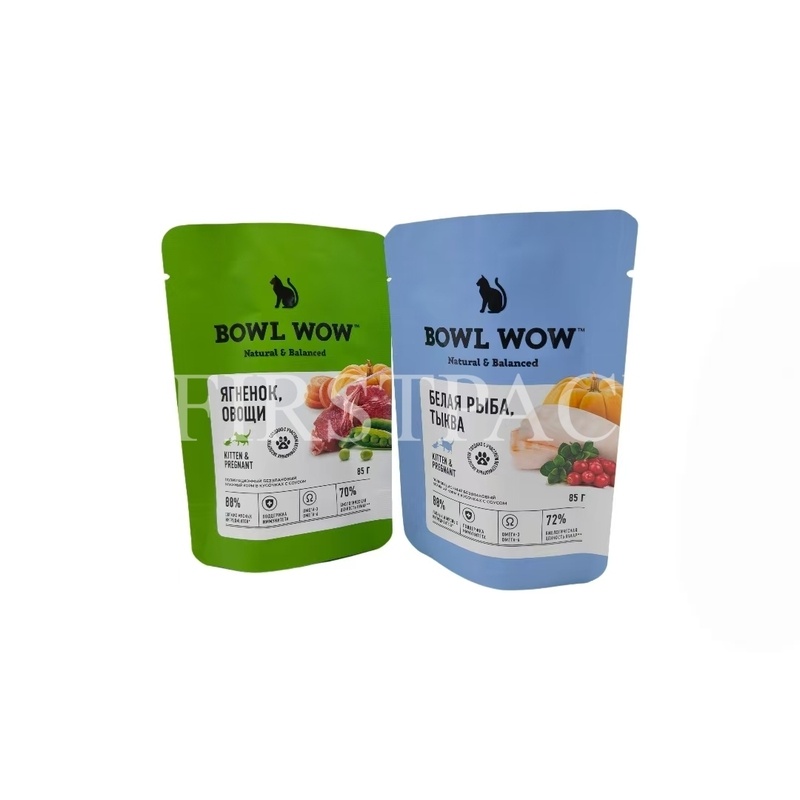
● Wet pet food that requires long shelf life without preservatives.
● Pharmaceutical and Nutraceuticals
● Temperature-sensitive liquids or gels packaged for stability.
● Emergency and Military Supplies
● Meals ready-to-eat (MREs) designed for field conditions.
Choosing the Right Material Composition
Selecting the proper material combination is essential for ensuring the success of a product in the marketplace. Key considerations include:
● Food Type – Acidic, oily, or liquid products require different barrier properties.
● Sterilization Temperature – High-temperature retort processes demand more heat-resistant films.
● Shelf-Life Requirements – Longer shelf life may necessitate multi-layer pouches with enhanced barrier films.
● Cost Efficiency – Balancing performance with material and production costs is crucial for B2B operations.
Summary
Retort pouches represent a versatile, cost-effective, and high-performance packaging solution for a wide range of food and industrial products. Their multi-layer construction—often combining PET, aluminum foil, PP, and nylon—ensures durability, safety, and extended shelf life. For B2B manufacturers, understanding what retort pouches are made of is key to optimizing production, reducing costs, and meeting market demands. By selecting the right materials and lamination techniques, businesses can deliver products that satisfy both safety standards and consumer expectations.
FAQ
Q1: Can retort pouches be recycled?
● While some layers are recyclable, multi-layer laminates can be challenging. Innovations in recyclable or mono-material pouches are underway to improve sustainability.
Q2: How do retort pouches withstand high temperatures?
● They are made with heat-resistant films like PET, PP, and aluminum foil, which maintain integrity during high-temperature sterilization.
Q3: Are retort pouches suitable for all types of food?
● They are versatile but must be designed based on food properties. Acidic, oily, or liquid foods may require specialized barrier layers.
Q4: What is the typical shelf life of products in retort pouches?
● Depending on the product and pouch design, shelf life can range from several months up to 3 years without refrigeration.
Post time: Dec-25-2025