


Tri laminate retort pouches have become a critical packaging solution in modern food production. With the increasing demand for ready-to-eat meals, sauces, and export-oriented foods, businesses are seeking packaging that ensures product safety, long shelf life, and efficient logistics. For B2B buyers, understanding the structure, performance, and application of tri laminate retort pouches is essential for making informed procurement decisions.
This guide provides a detailed overview of tri laminate retort pouches, focusing on product features and performance, designed for food manufacturers, brands, and distributors.
What Is a Tri Laminate Retort Pouch
A tri laminate retort pouch is a flexible packaging solution composed of three laminated layers designed to withstand high-temperature and high-pressure sterilization, commonly used in retort processing. Retort processing is essential for ready-to-eat foods, sauces, soups, baby food, and pet food.
The three-layer structure combines heat resistance, mechanical strength, and barrier protection in one pouch. Compared with cans or glass jars, tri laminate retort pouches are lighter, easier to transport, and allow for faster heat penetration during sterilization.
Tri Laminate Structure and Material Composition
The performance of a tri laminate retort pouch depends on the properties and interaction of its three layers:
● Outer Layer (PET or Nylon): Provides mechanical strength, puncture resistance, and a printable surface for branding and labeling. It also protects the pouch during handling and shipping.
● Middle Barrier Layer (Aluminum Foil or EVOH): Acts as the primary barrier against oxygen, moisture, and light, preserving flavor, texture, and nutrients.
● Inner Sealing Layer (CPP or PE): Ensures food safety and provides strong, reliable seals capable of withstanding high-temperature retort processing.
Professional manufacturers carefully control layer thickness, lamination quality, and bonding methods to ensure pouch stability during sterilization and long-term storage.
Key Product Performance Advantages
Tri laminate retort pouches offer a combination of features that make them ideal for industrial food production:
● Heat resistance suitable for retort processing at 121–135°C
● Excellent barrier properties to extend shelf life
● High seal integrity to prevent leaks and delamination
● Lightweight and flexible structure that reduces transportation and storage costs
● Compatibility with automated filling and sealing equipment
These performance advantages make tri laminate retort pouches a reliable choice for B2B buyers seeking consistent product quality.
Applications Across Food Categories
Tri laminate retort pouches are widely used in multiple food categories where sterilization and long shelf life are essential:
● Ready-to-Eat Meat and Poultry: Maintains flavor, moisture, and appearance during sterilization
● Seafood Products: Protects delicate textures and prevents spoilage
● Prepared Meals and Sauces: Supports portion control and convenient packaging
● Baby Food and Nutritional Products: Ensures safety and consistent quality
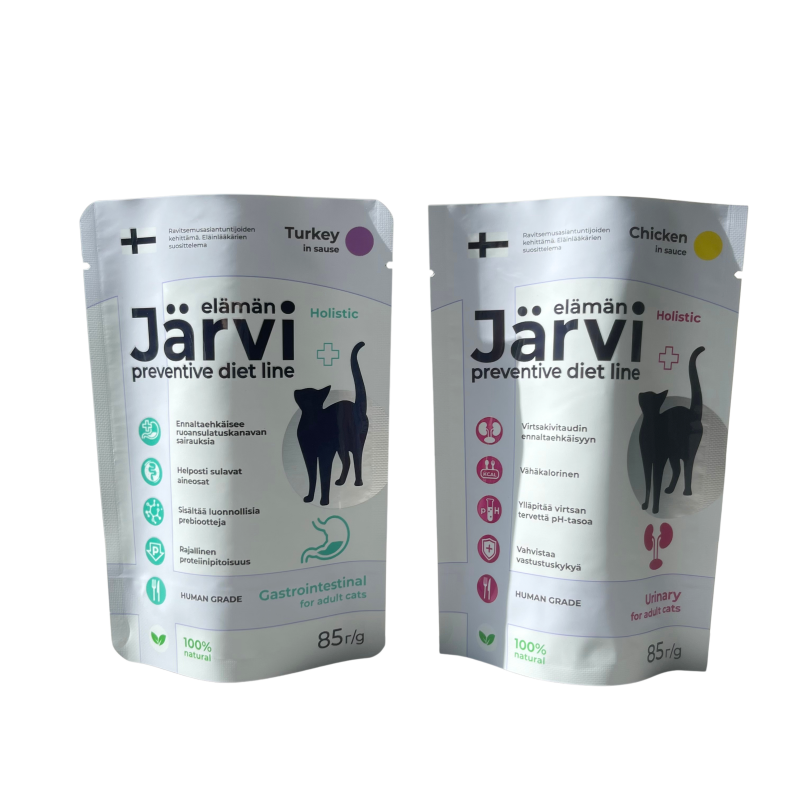
● Pet Food: Provides strong barrier protection and easy-to-use packaging
Each application requires careful selection of material composition and pouch design to ensure optimal performance.
Customization Options for B2B Buyers
Tri laminate retort pouches can be fully customized to meet specific production, branding, and packaging needs:
● Pouch size, thickness, and shape
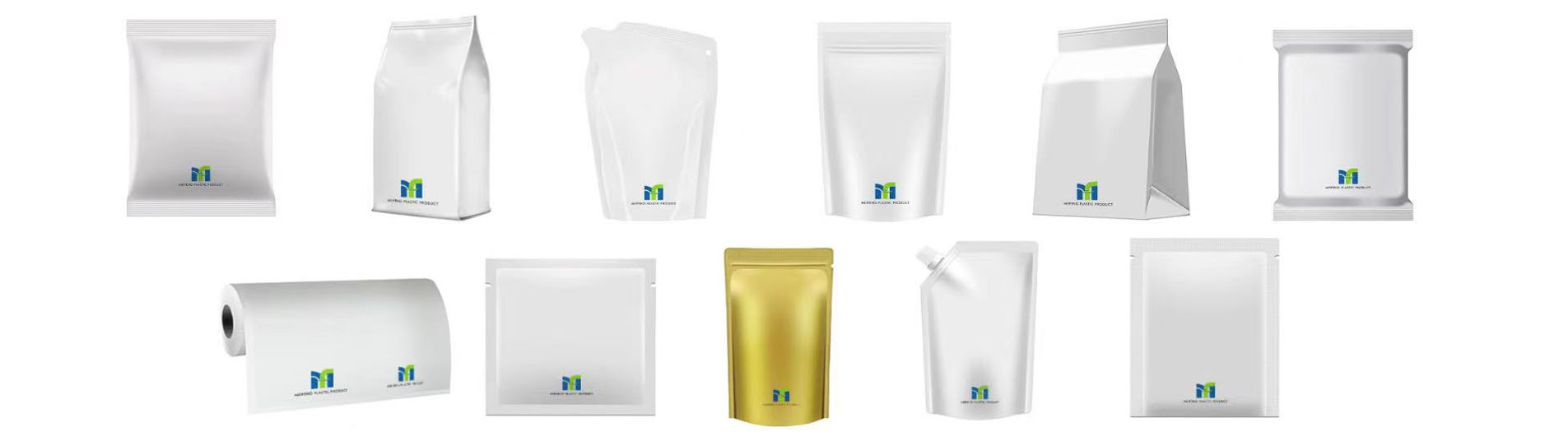
● Stand-up, flat, or spouted pouch formats
● Surface printing and high-quality labeling
● Easy-tear notches, rounded corners, or consumer-friendly openings
● Compatibility with high-speed automated filling lines
Customization ensures that the pouches align with both the product characteristics and the brand’s presentation requirements.
Product Stability and Heat-Sealing Reliability
The inner sealing layer is critical for pouch performance. During retort processing, consistent seal integrity ensures that:
● Pouches remain intact without delamination or leakage
● Bags maintain shape and structural integrity after sterilization
● Barrier properties remain effective throughout storage and transportation
● Packed products are easy to handle and stack efficiently
These product-level performance metrics are essential for B2B buyers aiming for reliable, scalable production.
Advantages for Food Processing Efficiency
Tri laminate retort pouches improve operational efficiency in food production:
● Pouches allow direct sterilization after filling, reducing secondary contamination
● Lightweight and flexible design optimizes storage space and shipping efficiency
● High barrier and heat resistance support longer shelf life, reducing waste
● Standardized pouch designs enable consistent quality across batches
These advantages make tri laminate retort pouches ideal for industrial-scale food processing.
Conclusion
Tri laminate retort pouches combine high heat resistance, barrier protection, and reliable sealing in a flexible packaging format. For B2B buyers, selecting the right tri laminate retort pouch ensures product safety, consistent quality, and operational efficiency. Understanding the material structure, performance advantages, applications, and customization options is essential for making informed packaging decisions and supporting long-term growth in the competitive food market.
FAQ:
Q1: What temperatures can tri laminate retort pouches withstand?
They are typically designed to handle 121–135°C, making them suitable for standard retort sterilization of ready-to-eat and shelf-stable foods.
Q2: How do tri laminate retort pouches differ from regular laminated pouches?
Tri laminate retort pouches are specifically engineered for high-temperature sterilization, with enhanced barrier properties, stronger seals, and greater structural stability.
Q3: Are tri laminate retort pouches suitable for liquid or high-fat foods?
Yes, their multi-layer design allows safe packaging of sauces, soups, ready meals, and high-fat products while maintaining barrier protection and seal integrity.
Q4: Can tri laminate retort pouches be used with automated filling lines?
Yes, they are compatible with most automated filling and sealing equipment due to their wide heat-sealing window and stable material properties.
Post time: Jan-27-2026