


Retort pouch material plays a critical role in determining the performance, safety, and shelf stability of retort food packaging. Unlike ordinary flexible packaging, retort pouches must withstand high temperatures, pressure changes, moisture, and long-term storage conditions without losing their protective properties.
Choosing the right material structure is not simply about selecting a thicker film or a stronger package. Different foods require different levels of barrier protection, mechanical strength, and sealing performance. A suitable retort pouch material needs to match the food characteristics, sterilization process, and expected storage conditions to achieve reliable packaging performance.
Why Is Retort Pouch Material Different from Regular Packaging Materials?
Retort processing creates a more demanding environment than conventional food packaging. During sterilization, the pouch is exposed to high temperatures and pressure, followed by cooling and transportation processes that can place additional stress on the package.
For this reason, retort pouch materials are usually designed with multiple layers, with each layer performing a specific function. A single material layer often cannot provide all the properties required for food protection, heat resistance, and sealing reliability.
The purpose of a multilayer structure is to balance different performance requirements:
- Protection against oxygen, moisture, and light
- Resistance to heat and pressure during retort processing
- Mechanical strength during filling, transportation, and handling
- Reliable sealing performance to prevent leakage
The ideal material structure depends on the actual application rather than one universal solution.
What Are the Main Layers Used in Retort Pouch Material?
A typical retort pouch consists of several functional layers that work together.
The outer layer is usually responsible for protecting the package surface and supporting printing quality. It also provides resistance against external handling conditions.
The middle layer provides barrier performance. Depending on the application, it may help prevent oxygen, moisture, or light from affecting the food product. This layer is especially important for foods that require longer shelf stability.
The inner sealing layer directly contacts the food and is responsible for creating a strong seal during production. It needs to maintain sealing performance under retort conditions while remaining suitable for food packaging applications.
The combination and thickness of these layers can be adjusted according to food type, processing requirements, and storage expectations.
How Do Different Retort Pouch Materials Affect Packaging Performance?
Different material structures provide different advantages, and the best option depends on the product requirements.
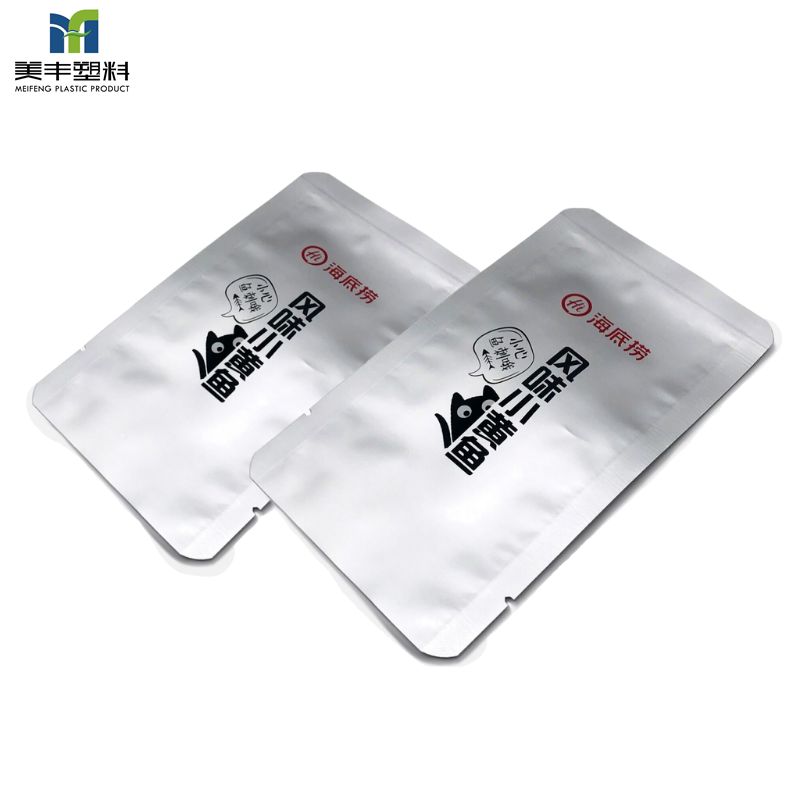
Aluminum Foil Retort Pouch Material
Aluminum foil is widely used in retort pouch structures because it provides excellent barrier performance against oxygen, moisture, and light. It is often considered for foods that require strong protection from external environmental factors.
For products sensitive to oxidation or light exposure, aluminum foil structures can help maintain quality during storage. However, because the foil layer blocks visibility, it may not be the preferred choice when consumers need to see the product inside the package.
Transparent High Barrier Retort Pouch Material
Transparent retort pouch materials provide an alternative when product visibility is important. They allow consumers to see the food appearance while still offering protection against environmental factors.
This type of structure can be suitable for products where color, texture, and visual presentation influence purchasing decisions.
However, transparent structures need to be carefully selected because different applications may require different levels of barrier protection.
Polyester and Nylon Layers in Retort Pouch Structures
Polyester and nylon layers are commonly used to improve mechanical performance. They can contribute to strength, durability, and resistance against puncture or physical stress.
For foods containing solid pieces, bones, or sharp edges, mechanical strength becomes an important consideration. The supporting layers within the pouch structure help reduce the risk of damage during filling, processing, and transportation.
How to Choose Retort Pouch Material for Different Foods?
The correct retort pouch material depends heavily on the characteristics of the food product.
Ready-to-eat meals may require a balance between barrier protection, durability, and convenient use. Meat and seafood products may need stronger mechanical performance due to their physical structure. Liquid foods such as sauces and soups require reliable sealing because leakage can directly affect product quality.
When evaluating a retort pouch material, manufacturers should consider:
- Food composition, moisture level, and oil content
- Product shape and presence of hard particles
- Retort temperature and processing time
- Required shelf life and storage conditions
- Packaging format and filling method
A material structure that works well for one food product may not provide the same performance for another.
What Problems Can Occur When Choosing the Wrong Retort Pouch Material?
Selecting an unsuitable material structure can create problems during processing or storage. One common issue is delamination, where different layers of the pouch separate after exposure to heat and moisture. This can reduce the overall strength and barrier performance of the package. Another possible problem is seal failure. Even when the pouch material itself has good barrier properties, an unsuitable sealing layer or structure may lead to leakage after retort processing.
Loss of barrier performance can also affect food quality by allowing oxygen or moisture to enter the package. In addition, incorrect material selection may contribute to pouch deformation or reduced mechanical strength during transportation. Therefore, material selection should be based on the complete packaging process rather than only the appearance or basic specifications of the film.
How Does Retort Processing Affect Material Selection?
Retort conditions have a direct influence on material requirements. Temperature is an important factor, but it is not the only consideration. Processing time, pressure changes, cooling methods, and the physical condition of the food inside the pouch can also affect packaging performance.
For example, a product processed under longer thermal conditions may require a different material structure compared with a product using a shorter sterilization cycle. This means retort pouch material should be evaluated according to the complete processing environment, not just the maximum temperature.
How to Evaluate a Retort Pouch Material Before Mass Production?
Before large-scale production, testing the material structure under realistic conditions can help identify potential problems.
Important evaluation areas include:
- Seal performance: Check whether the sealing area remains stable after retort processing.
- Barrier performance: Confirm that the material continues to protect the food product during storage.
- Layer adhesion: Evaluate whether the multilayer structure remains stable after exposure to heat and moisture.
- Mechanical strength: Consider resistance to puncture, handling, and transportation stress.
These evaluations provide a better understanding of whether the selected material structure can meet actual production requirements.
Choosing the Right Retort Pouch Material for Your Product
The best retort pouch material is determined by the relationship between the food product and the packaging process. Before selecting a material structure, it is important to understand the food type, filling weight, pouch dimensions, retort conditions, and expected storage environment. These factors help determine the appropriate combination of barrier performance, mechanical strength, and sealing properties.
For some products, strong barrier protection may be the priority, while others may require better visibility, flexibility, or puncture resistance. By matching the material structure with the actual application, manufacturers can develop packaging that is more reliable and suitable for long-term use.
Conclusion
Retort pouch material is a key factor that influences food protection, processing stability, and shelf performance. Because retort packaging must withstand high temperatures, pressure changes, and storage conditions, choosing the right material structure requires careful consideration of multiple factors.
There is no single material combination suitable for every food product. By evaluating food characteristics, retort conditions, barrier requirements, and mechanical performance together, manufacturers can select a more suitable retort pouch material and reduce common packaging problems during production and storage.
FAQ
1. What materials are commonly used in retort pouches?
Retort pouches commonly use multilayer structures that may include polyester, nylon, aluminum foil, and heat-sealing layers. The exact combination depends on the food product and processing requirements.
2. Is aluminum foil necessary for retort pouch packaging?
Not always. Aluminum foil provides strong barrier protection, but transparent high-barrier structures may be more suitable when product visibility is important.
3. How does retort pouch material affect shelf life?
The material structure influences how well the package protects against oxygen, moisture, and external factors. A suitable structure can help maintain food quality during storage.
4. Can retort pouch materials be customized for different foods?
Yes. Material structures can be adjusted according to food characteristics, processing conditions, barrier requirements, and packaging performance needs.
Post time: Oct-10-2026