


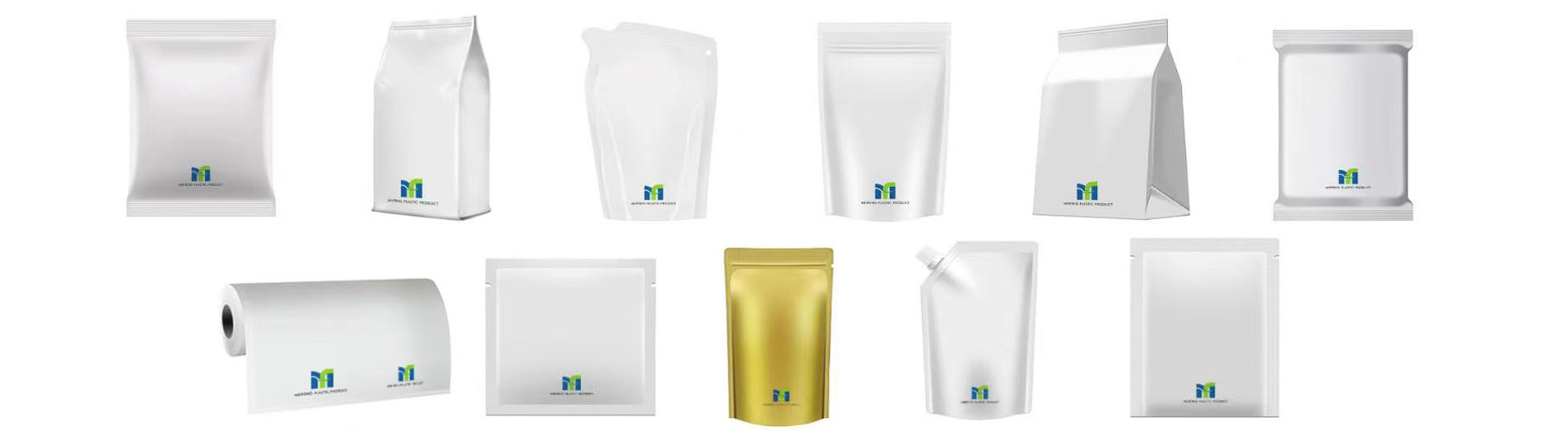
Mixed foods often contain solid ingredients, sauces, broths, or other liquids. Compared with single-ingredient products, these foods create more complex packaging requirements. Differences in ingredient size, moisture content, and heat transfer behavior can affect filling efficiency, thermal processing, and package integrity. Selecting a suitable retort pouch therefore requires more than choosing the right size or appearance. The food composition, pouch structure, and processing conditions must work together.
Why Mixed Foods Create Additional Packaging Challenges
The main challenge of packaging mixed foods comes from the differences between their ingredients. Products such as rice with curry, meat with sauce, and vegetables in broth contain solid particles and liquids with different flow characteristics. These differences influence how food enters the pouch and how heat moves through the package during processing.
For example, solid ingredients may settle in one area while liquid components move into another. This uneven distribution can affect the thickness and composition of the food inside the pouch, potentially influencing heating behavior. For products requiring commercial sterilization, these variations need particular attention because the entire product must receive the required thermal treatment.
Ingredient size, shape, and overall viscosity also influence filling operations. Large meat pieces require sufficient space, while thick sauces may be more difficult to dispense consistently. If the pouch is too small or the filling process is poorly controlled, ingredients may accumulate near the opening or interfere with sealing. These challenges make mixed-food packaging a coordinated process. The pouch must accommodate the food without excessive compression, support reliable sealing, and remain suitable for the intended thermal treatment.
How Solid and Liquid Ingredients Affect Pouch Performance
Solid and liquid ingredients behave differently inside a retort pouch. Liquids can move around the package, whereas solid pieces may remain concentrated in particular areas. This difference affects space utilization, filling consistency, and heat distribution.
For foods containing substantial amounts of sauce or broth, the pouch needs sufficient capacity to accommodate both the solids and the liquid. The sealing area must also remain clean. Sauce, oil, or small food particles trapped between sealing surfaces may compromise seal quality, making appropriate filling equipment and sealing controls essential.
Solid ingredients create another set of considerations. Their size, shape, and surface characteristics influence how they fit inside the pouch. Large or irregular pieces may press against the packaging material, creating localized stress during filling, handling, or transportation. Sharp edges can be particularly problematic if the material structure is not suitable for the product. Ingredient distribution is equally important. A pouch filled with unevenly distributed solids may have an inconsistent thickness, which can influence both package handling and thermal processing.
Why Filling Accuracy Matters for Mixed-Food Packaging
Filling mixed foods is generally more complicated than filling products consisting mainly of liquids. The process must control the proportions of solids and liquids while maintaining consistent product distribution. Too much solid content can cause localized bulging and make it more difficult to keep the sealing area clear. Too little liquid may leave larger gaps between ingredients, while excessive liquid can reduce the available space for solids and increase the likelihood of contamination around the pouch opening.
Several factors deserve attention during production:
- Solid-to-liquid ratio: Maintain the intended recipe proportions to reduce variation between production batches.
- Ingredient distribution: Prevent large pieces from accumulating excessively in one area and creating uneven pouch thickness.
- Seal cleanliness: Keep sauces, oils, and food particles away from the sealing surfaces.
- Filling consistency: Match the filling volume to the pouch capacity and maintain adequate space for sealing.
These controls help improve packaging consistency and reduce avoidable defects. They also support more predictable conditions for subsequent processing. However, accurate filling alone does not establish that a product is safe; the thermal process must still be validated for the specific food formulation and package configuration.
How Retort Processing Influences Mixed Foods
Retort pouches must withstand the specified thermal processing conditions. Their materials, laminate structure, and seals must remain suitable throughout the process. For mixed foods, particle size, viscosity, and the proportion of solids to liquids can influence how heat moves through the product.
For instance, a meal containing large pieces of meat may heat differently from a product consisting mainly of broth. Even when two products use pouches of similar dimensions, their formulations and heating characteristics may require different processing evaluations. This is why heat resistance alone is not enough when selecting packaging. A pouch may tolerate a particular temperature without necessarily being suitable for every food formulation or sterilization process. Product thickness, ingredient arrangement, and the selected processing method must also be considered.
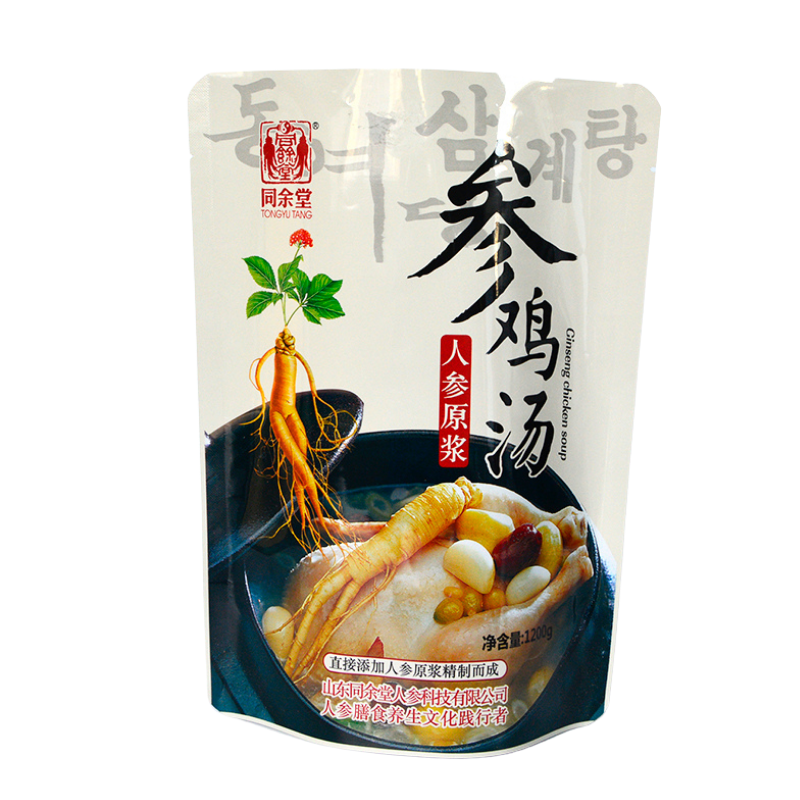
When developing a Retort Meal product, the pouch structure should match the food’s characteristics and the intended processing conditions. In addition to heat resistance, relevant considerations include barrier performance, layer adhesion, and seal reliability. The complete packaging system should be evaluated under the intended processing conditions rather than selected solely from a material specification. Post-processing handling also matters. Cooling, stacking, and transportation can expose the pouch to mechanical stress or temperature changes. Inspection procedures should therefore cover potential leakage, delamination, deformation, and other signs of packaging damage. Appropriate thermal process validation and package integrity testing help establish whether the selected packaging system is suitable for the application.
Choosing Pouch Dimensions for Different Food Combinations
Retort pouch dimensions should be determined by food volume, particle size, liquid content, and target net weight. For example, a chunky stew may need a wider pouch to accommodate large pieces, while a soup-based meal may require more attention to liquid capacity and sealing clearance. Choosing a pouch based on weight alone may lead to overfilling or poor ingredient distribution.
First, consider the shape and arrangement of the solid ingredients. Irregular pieces may occupy more space than their weight suggests. Second, leave adequate clearance at the top of the pouch to reduce the risk of food contacting the sealing area. Third, assess the filled pouch thickness because it can influence heat transfer and handling. The packaging must also withstand the expected conditions during storage and transportation. Excessive filling or concentrated pressure from solid ingredients may increase the risk of damage, especially when the pouch is stacked or handled repeatedly.
For different Retort Meal applications, practical filling trials can help identify whether ingredients accumulate in certain areas, whether the pouch experiences localized pressure, and whether the sealing zone remains clean. The final dimensions should be based on the actual product and validated process requirements rather than appearance alone.
Evaluating Packaging Requirements Before Production
Before selecting a retort pouch, it is important to define the food formulation, processing conditions, and intended storage requirements. These factors determine which packaging properties are most important for the application.
The first step is to examine the product composition, including particle size, liquid ratio, oil content, and viscosity. Next, confirm the intended thermal processing conditions and assess whether the packaging materials are suitable. Heat resistance, barrier properties, laminate adhesion, and seal integrity should be evaluated as part of the complete packaging system. If the food contains large or dense solid pieces, their influence on heat penetration also needs to be addressed during process validation.
Finally, establish appropriate inspection and testing procedures. Depending on the product, these may include seal integrity checks, leak testing, and evaluations under expected storage and transportation conditions. For Retort Meal packaging, the pouch must remain suitable not only during processing but also throughout subsequent handling and distribution.
Conclusion
Mixed-food packaging requires careful consideration of ingredient proportions, distribution, filling accuracy, thermal processing, and pouch dimensions. Because different food combinations create different challenges, the packaging design should reflect the actual formulation and production process.
For Retort Meal products, selecting a suitable retort pouch involves evaluating material performance, pouch structure, sealing reliability, and thermal process requirements together. A packaging solution that matches the food characteristics and processing conditions can help maintain product quality and package integrity throughout production and distribution.
FAQs
1. Can different mixed foods use the same type of retort pouch?
Not necessarily. Different foods may vary in particle size, liquid content, viscosity, and thermal processing requirements. The pouch material and structure should be evaluated for each specific formulation and application.
2. Why must retort pouch sealing areas remain clean?
Sauce, oil, and food particles can interfere with the contact between sealing surfaces and increase the risk of defective seals. Appropriate filling controls and seal inspections help maintain package integrity.
3. Does a larger retort pouch always improve heat processing?
No. Pouch dimensions, filling volume, and food thickness can all affect heat transfer. An unnecessarily large pouch may reduce packaging efficiency, while an unsuitable filling arrangement can create uneven product thickness. Practical testing helps determine appropriate dimensions.
Post time: Oct-20-2026