


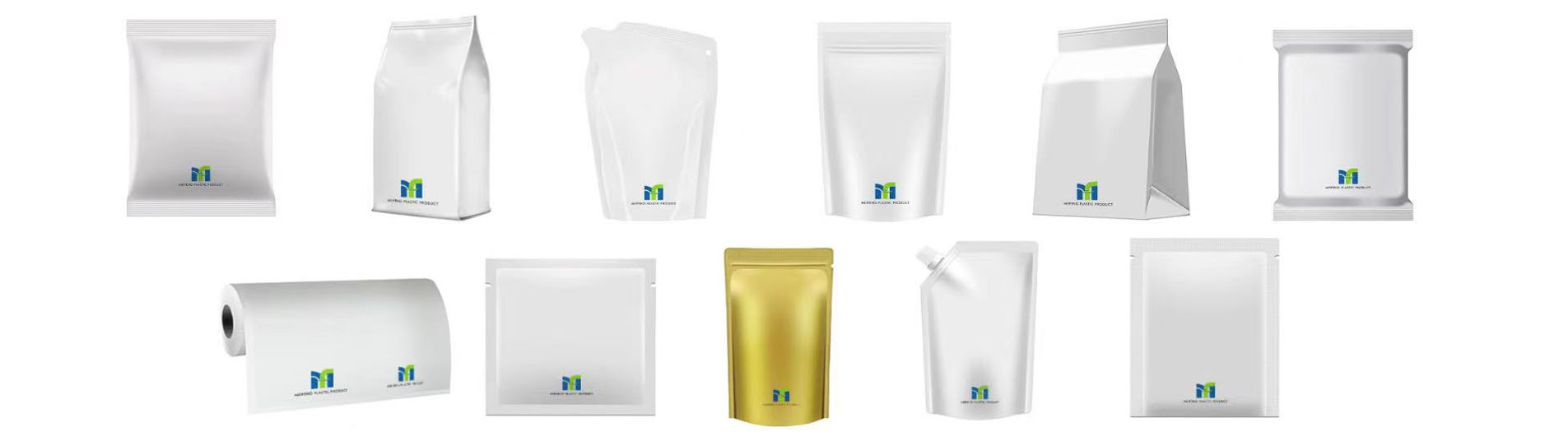
In today’s global food supply chain, packaging performance directly impacts product safety, shelf life, and brand competitiveness. PET food packaging bags have become a preferred choice for B2B food manufacturers, exporters, and distributors due to their high strength, clarity, and versatility.
By combining durability, barrier protection, and premium printability, PET packaging solutions help maintain product integrity while enhancing market appeal.
Why PET Food Packaging Bags Are Widely Used
PET (Polyethylene Terephthalate) is commonly used as the outer layer in flexible packaging due to its excellent mechanical and visual properties. When laminated with other materials, it forms a high-performance packaging structure suitable for various food products.
Key characteristics include:
● High tensile strength for improved durability
● Excellent print surface for branding and product information
● Strong resistance to moisture and contamination
● Compatibility with multi-layer laminated structures
● Stable performance under different storage and transportation conditions
These features make PET packaging bags suitable for both retail packaging and bulk food applications.
Flexible Structures for Different Food Requirements
One of the main advantages of PET food packaging bags is their adaptability in multi-layer structures. Different material combinations allow manufacturers to tailor packaging performance based on product needs.
Common Structure Types
● PET/PE — Cost-effective solution for dry foods and snacks
● PET/CPP — Good sealing performance with high clarity
● PET/VMPET/PE — Enhanced barrier against oxygen and light
● PET/AL/PE — High-barrier structure for long shelf-life products
● PET/NY/PE — Strong puncture resistance for heavy-duty packaging
By optimizing these structures, manufacturers can meet various shelf-life, storage, and transportation requirements.
Performance Advantages in Food Packaging
PET food packaging bags offer a balanced combination of protection, efficiency, and visual appeal, making them highly suitable for B2B applications.
1. Reliable Product Protection
● Multi-layer barrier structures reduce oxygen and moisture exposure
● Prevent contamination during storage and transportation
● Maintain freshness, aroma, and texture
2. Extended Shelf Life
● High-barrier materials slow down oxidation and spoilage
● Suitable for ambient and cold-chain storage
● Supports long-distance shipping and export needs
3. Improved Production Efficiency
● Compatible with automated filling and sealing equipment
● Stable material performance ensures consistent production
● Lightweight design reduces packaging and logistics costs
4. Strong Branding and Visual Impact
● High-resolution printing for detailed product presentation
● Supports matte, glossy, or metallic finishes
● Suitable for premium packaging positioning
Functional Design for Practical Use
Modern PET food packaging bags are designed with functional features that enhance usability and packaging performance.
Key Functional Options
● Heat-sealable inner layers for secure closure
● Resealable zippers for repeated use
● Tear notches for easy opening
● Transparent windows for product visibility
● Custom sizes and thickness to meet different packaging needs
These features improve convenience while maintaining packaging efficiency.
Wide Applications Across Food Industries
PET food packaging bags are widely used across various food sectors due to their stable performance and flexibility.
● Snack products such as chips, nuts, and dried fruits
● Frozen and refrigerated foods
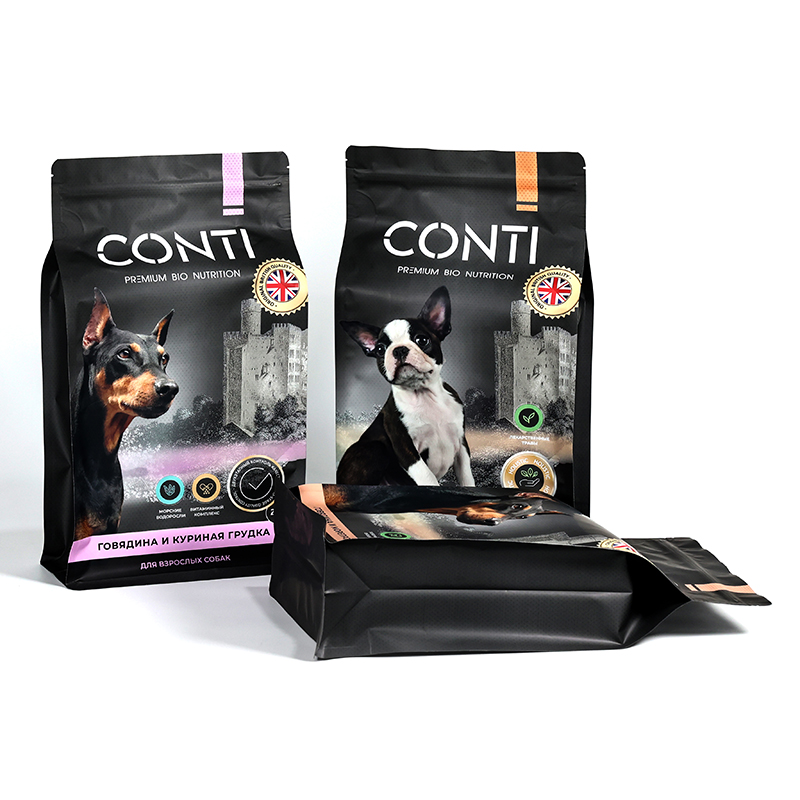
● Pet food and nutritional products
● Powdered foods, spices, and grains
● Ready-to-eat and processed foods
Their versatility makes them suitable for both retail and industrial packaging applications.
Sustainability Trends
As environmental requirements continue to grow, PET packaging is evolving toward more sustainable solutions.
● Development of recyclable mono-material PET structures
● Lightweight design to reduce material consumption
● Use of eco-friendly inks and solvent-free lamination
● Improved production efficiency to minimize waste
These advancements help companies meet global environmental standards while maintaining performance.
Conclusion
PET food packaging bags offer a powerful combination of strength, flexibility, and premium appearance, making them a core solution in modern B2B food packaging. Their customizable structures, excellent barrier properties, and superior printability help businesses protect product quality and enhance brand value. By selecting the right material combinations and functional features, companies can achieve efficient packaging operations while meeting diverse market demands.
FAQ:
1. What is the difference between PET food packaging bags and standard plastic bags?
PET food packaging bags offer higher strength, better barrier performance, and superior print quality. Compared to single-layer plastic bags, PET laminated structures provide better protection and are suitable for more demanding packaging applications.
2. Are PET packaging bags suitable for long-distance shipping and export?
Yes. PET materials provide excellent strength and durability, allowing them to withstand long-distance transportation, stacking, and international logistics without damage or leakage.
3. Can PET food packaging bags be used in high-temperature or frozen conditions?
Yes. PET offers good temperature resistance, making it suitable for frozen food packaging and certain heat-processing applications, depending on the laminate structure.
4. Are PET food packaging bags suitable for premium branding?
Absolutely. PET provides an excellent printing surface, enabling high-resolution graphics, vibrant colors, and premium finishes such as matte, glossy, or metallic effects.
Post time: Mar-17-2026