


In today’s competitive food industry, packaging plays a crucial role in protecting products, ensuring shelf life, and enhancing brand visibility. Laminated food packaging roll films have emerged as a versatile and reliable solution for B2B food manufacturers. By combining multiple layers of specialized materials, these films offer excellent barrier properties, durability, and printability, making them ideal for large-scale production and global distribution.
Understanding the benefits, materials, and applications of laminated roll films can help manufacturers optimize product quality, reduce waste, and improve consumer appeal.
Why Laminated Food Packaging Roll Films Are Key
Laminated food packaging roll films are made by bonding two or more layers of different materials. Each layer serves a specific purpose, such as barrier protection, strength, or printability.
The advantages of using laminated roll films include:
● Superior protection against moisture, oxygen, and light
● Extended shelf life for perishable and processed foods
● High-quality surface for vibrant branding and product information
● Flexibility for automated filling, sealing, and packing equipment
For B2B manufacturers, these films not only enhance product safety but also improve operational efficiency and packaging consistency.
Common Materials and Layer Structures
Selecting the right materials and lamination structure is crucial to meet the diverse requirements of food packaging.
Materials Used in Laminated Films
● PET (Polyethylene Terephthalate) – Provides strength, clarity, and high-quality print surface
● PE (Polyethylene) – Ensures heat-sealability and flexibility
● BOPP (Biaxially Oriented Polypropylene) – Adds durability, moisture resistance, and high transparency
● Aluminum Foil (AL) – Offers superior barrier against oxygen and light
● VMPET (Vacuum Metallized PET) – Reduces light transmission while maintaining printability
Layering Options
● PE/PET/AL – Ideal for products requiring maximum barrier protection
● PET/PE or PET/BOPP/PE – Suitable for snacks, dry foods, and retail packaging
● Custom multi-layer laminates – Tailored for specific food types, liquid or powder products, and shelf-life requirements
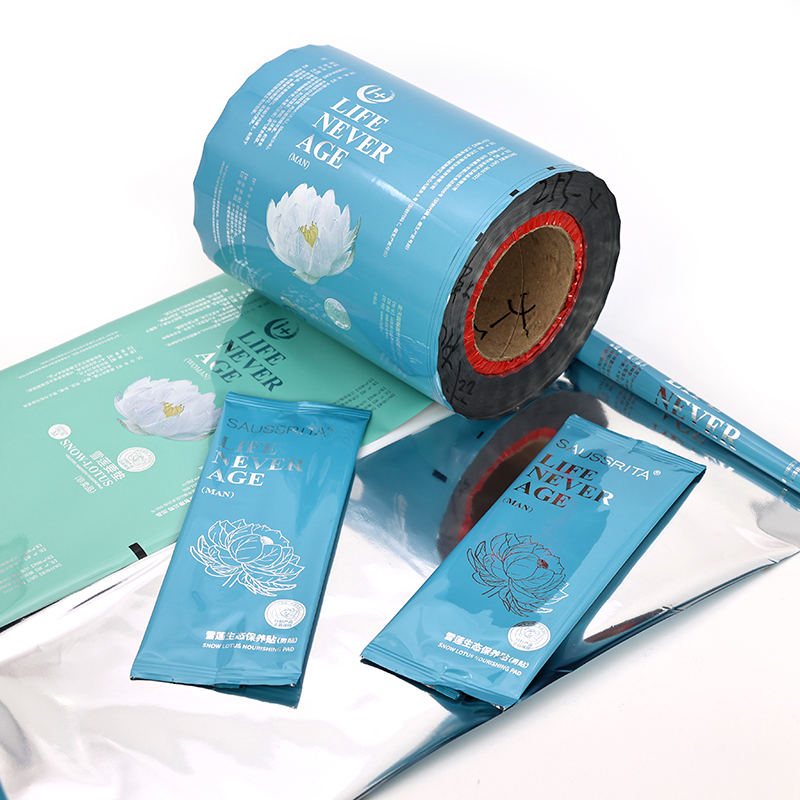
Advantages for B2B Food Manufacturers
Laminated roll films bring tangible benefits to large-scale food production.
1. Enhanced Product Protection
● Prevent moisture absorption, oxidation, and contamination
● Maintain aroma, flavor, and nutritional quality
● Reduce product loss during storage and transport
2. Improved Shelf Life
● High-barrier laminates extend the freshness of perishable foods
● Aluminum or metallized layers protect sensitive products from light and oxygen
● Suitable for frozen, dry, and processed foods
3. Branding and Marketing Potential
● High-quality print surface for logos, nutritional information, and promotions
● Supports matte, glossy, or metallic finishes for premium appeal
● Enables transparent windows to showcase the product
4. Operational Efficiency
● Compatible with automated roll-to-roll packaging machines
● Supports continuous, large-scale production
● Lightweight and space-saving for storage and logistics
5. Versatility Across Product Types
● Snacks, confectionery, and dry foods
● Liquid, semi-liquid, and paste products
● Pet food, powders, grains, and condiments
● Ready-to-eat meals and frozen products
Functional Features and Customization
Laminated roll films can be enhanced with functional features to increase usability and product value.
● Heat-sealable layers for reliable sealing
● Tear notches or perforations for easy opening
● Transparent windows to display contents
● Customized thickness and width to match production lines and packaging needs
● Barrier layers to preserve aroma, flavor, and shelf life
These design elements make laminated films suitable for diverse B2B food applications while optimizing consumer satisfaction.
Sustainability Considerations
Environmental responsibility is increasingly important in food packaging. Many laminated films now integrate sustainable practices:
● Recyclable or mono-material laminates for easier recycling
● Reduced material use without compromising performance
● Low-solvent or solvent-free lamination processes
Choosing eco-friendly laminated films helps manufacturers meet regulatory requirements and appeal to environmentally conscious consumers.
Conclusion
Laminated food packaging roll films are a critical solution for modern B2B food manufacturing. By combining multi-layer protection, functional design, and branding potential, these films protect product quality, extend shelf life, and enhance market visibility. Optimizing materials, layer structures, and functional features allows manufacturers to meet diverse product requirements while supporting operational efficiency and sustainability. Laminated roll films are indispensable for B2B companies seeking to maintain competitive advantage in global food markets.
FAQ:
1. What types of food products are suitable for laminated roll films?
● Snacks, confectionery, and dry foods
● Liquid or paste products
● Pet food, powders, grains, and condiments
● Frozen and ready-to-eat meals
2. How do laminated films extend shelf life?
Multi-layer structures provide moisture, oxygen, and light barriers, preserving freshness, flavor, and nutrients while reducing spoilage.
3. Can laminated roll films be customized?
Yes. Manufacturers can customize layer composition, thickness, width, print design, and functional features such as tear notches, transparent windows, or heat-sealable layers.
4. Are laminated roll films environmentally friendly?
Many suppliers offer recyclable or mono-material options and low-solvent lamination processes, combining high performance with sustainable packaging solutions.
Post time: Mar-10-2026