


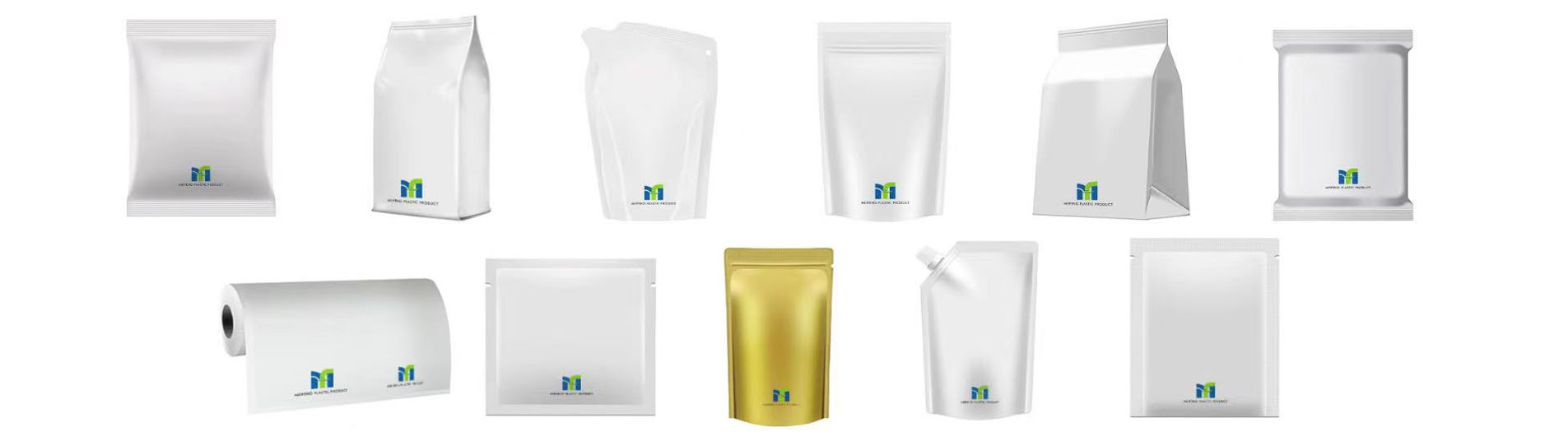
In food, pet food, and high-barrier product packaging, multilayer composite films have long been the industry standard. However, with increasing environmental regulations, recycling concerns, and sustainability awareness, many companies and consumers are asking: Is it still necessary to use multilayer structures? Or can single-material packaging fully replace them? This article analyzes the topic from materials, performance, and alternative perspectives.
Common Packaging Materials and Their Functions
In multilayer composite packaging, the most commonly used materials include:
| Material | Main Function |
|---|---|
| PET (Polyethylene Terephthalate) | High transparency, strength, excellent oxygen and moisture barrier, often used as outer layer for protection and printing |
| OPP (Oriented Polypropylene) | Good gloss and transparency, suitable for color printing; moderate moisture barrier |
| PA / Nylon (Polyamide) | High barrier performance and puncture resistance, ideal for meat or pet food packaging |
| PE (Polyethylene) | Excellent sealability, flexibility, and heat-seal performance, commonly used as inner layer in direct contact with food or liquids |
| AL / VMPET (Vacuum Metallized PET) | Extremely high barrier performance, blocks light, prevents oxidation and odor, suitable for high-end snacks or coffee packaging |
These materials are often laminated into multilayer structures to achieve the best combination of barrier properties, puncture resistance, heat sealability, and printability.
Why Use Multilayer Composite Films
The main reasons for using multilayer films include:
1. Complementary performance
* A single material rarely meets all requirements for high barrier, puncture resistance, transparency, and heat sealing, whereas a multilayer structure can combine multiple materials’ strengths.
2. Protect product quality
* For coffee, nuts, or pet food, which are sensitive to oxygen, moisture, and light, multilayer films extend shelf life and preserve flavor and freshness.
3. Meet branding and printing requirements
* Outer layers like PET or OPP provide excellent printability, gloss, and visual appeal, enhancing brand perception.
How to Replace Multilayer Films
With growing emphasis on sustainable packaging and recyclability, more companies are exploring single-material packaging as an alternative. Common strategies include:
1. High-barrier single-material films
* Materials like MDO-PE or BOPE can achieve improved oxygen and moisture barrier through orientation and stretching.
2. Coating technology
* Applying food-safe barrier coatings on a single layer to improve moisture, oxygen, and aroma barrier.
3. Innovative bio-based or compostable materials
* PLA, PBAT, or bio-based blends can, with proper processing, achieve barrier performance similar to multilayer films.
Can Single-Material Films Fully Replace Multilayer Films?
Advantages of single-material films:
* Eco-friendly & recyclable
* Simplified production and supply chain
Challenges and limitations:
* Barrier performance: High-barrier single-material films are improving, but for products requiring extreme oxygen/moisture barrier (e.g., coffee, wet pet food), multilayer films still perform better.
* Puncture and abrasion resistance: Single-material films may not match the mechanical strength of PA or VMPET layers.
* Printability & aesthetics: Multilayer films provide superior surface gloss and color printing, which may be slightly compromised with single-material films.
* Cost: High-performance single-material films can be more expensive than conventional multilayer composites, depending on production scale.
In summary, single-material films can replace multilayer films in many cases, but multilayer composites still have advantages in extreme barrier, high-end printing, or puncture-resistant applications.
Discussion and Interaction
Which packaging do you prefer?
* Multilayer Composite Films: Strong performance, excellent protection, but harder to recycle
* Single-Material Films: Sustainable, recyclable, simplified production, but some performance may be slightly lower
We’d love to hear your opinion! In your products or market, which packaging type do you think is the future of sustainable and high-performance packaging?
Post time: Dec-01-2025