


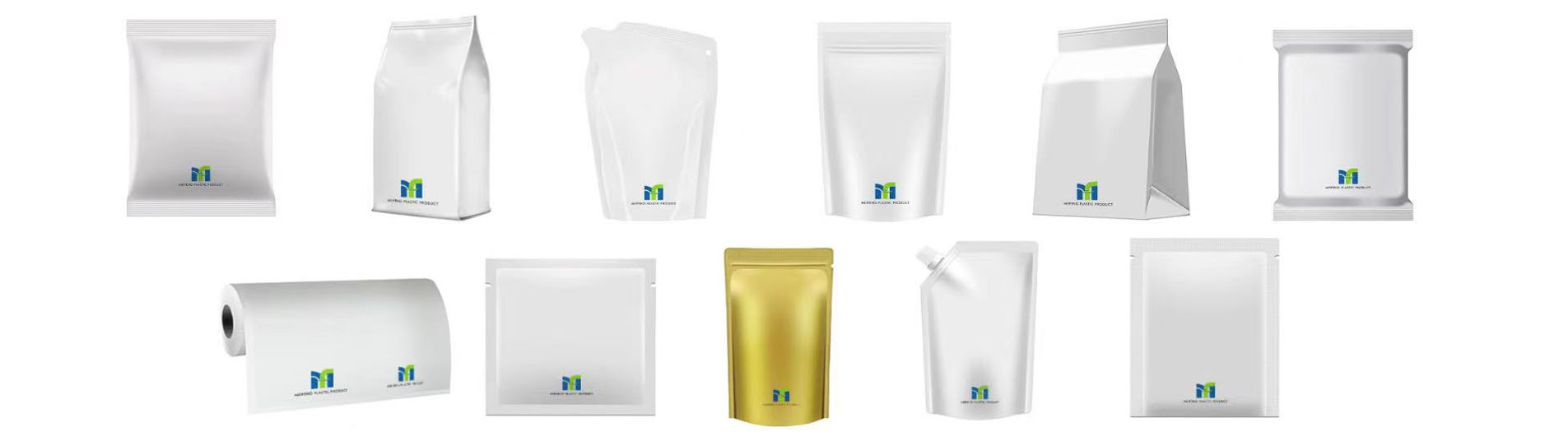
High barrier bags are widely used for products that require strong protection against oxygen, moisture, light, and external environmental factors. From food and beverages to medical supplies and industrial products, these bags help maintain product quality during storage, transportation, and distribution. However, selecting high barrier bags is not simply about choosing packaging with the highest protection level. Different products have different sensitivity to oxygen, humidity, light, and temperature changes. The right packaging structure needs to match the product characteristics, storage conditions, and expected shelf life to achieve reliable performance.
Why Are High Barrier Bags Important for Product Protection?
Many products gradually lose quality when exposed to external factors such as oxygen, moisture, or light. For example, oxygen can accelerate oxidation, moisture can affect texture and stability, and light exposure may reduce the quality of sensitive products.
Compared with standard packaging materials, high barrier bags are designed with specialized multilayer structures that provide stronger protection. Instead of relying on a single thick material, these bags combine different layers, with each layer contributing specific functions. The main purpose of a high barrier structure is to create a controlled environment inside the package. By reducing the movement of gases and moisture through the packaging, high barrier bags can help maintain product freshness, stability, and overall quality.
How Do High Barrier Bags Prevent Product Quality Loss?
The performance of high barrier bags mainly depends on their ability to control different types of external exposure.
Oxygen is one of the major factors that can affect product quality. For foods containing fats, oils, or sensitive ingredients, oxygen exposure may lead to oxidation and changes in flavor, color, or nutritional value. High barrier bags with strong oxygen resistance help reduce oxygen transmission into the package, making them suitable for products that require longer storage stability.
Moisture can significantly affect products that require a dry environment. Powder products, snacks, coffee, and other moisture-sensitive items may lose their texture or become unstable when exposed to humidity.A suitable moisture barrier helps prevent water vapor from entering the package and supports better product consistency during storage.
Some products are sensitive to light exposure, which can affect appearance, flavor, or chemical stability. Materials with light-blocking properties, such as foil-based structures, can provide additional protection when transparency is not required.
What Materials Are Used in High Barrier Bags?
High barrier bags are usually made from multiple layers, with each material providing different performance benefits.
Common materials include:
- Aluminum foil layer: Provides excellent protection against oxygen, moisture, and light, making it suitable for products requiring strong barrier performance.
- PET layer: Offers strength, dimensional stability, and support for high-quality printing.
- PE or CPP sealing layer: Provides heat-sealing performance and ensures reliable package closure.
- Transparent barrier films: Allow product visibility while maintaining improved protection compared with standard films.
The final material combination depends on the product requirements. A package designed for dry food may have different priorities compared with one used for liquid products or sensitive industrial materials.
How to Choose High Barrier Bags for Different Applications?
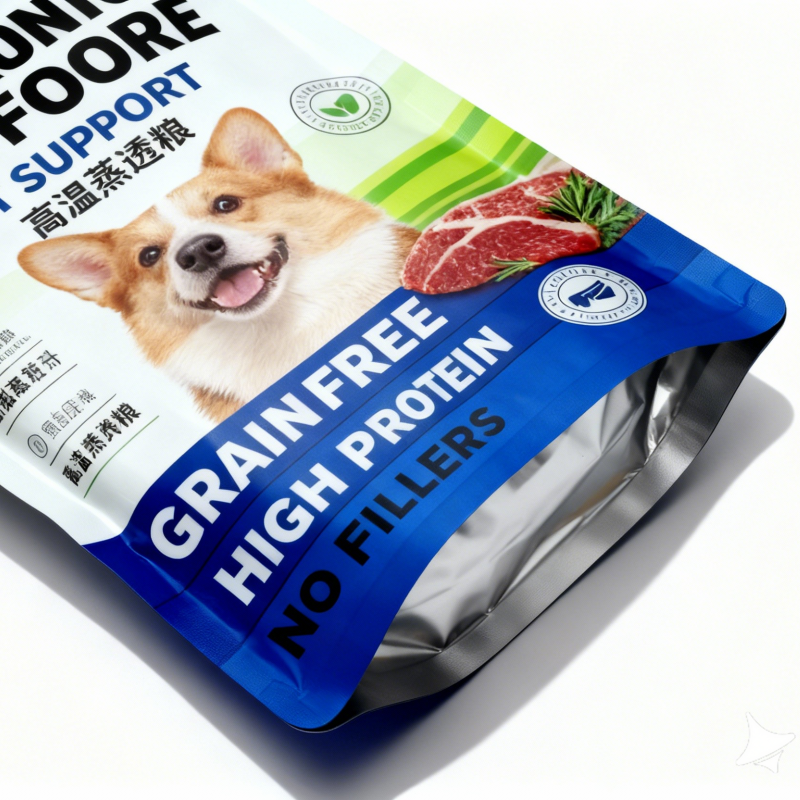
Different products require different packaging performance. Choosing the right high barrier bag starts with understanding what needs to be protected. For food products, the main considerations are usually freshness, moisture control, aroma retention, and shelf life. Products such as snacks, coffee, dried foods, and ready-to-eat items often require packaging that limits oxygen and humidity exposure. For coffee and powder products, maintaining aroma and preventing moisture absorption are important factors. Since these products can be highly sensitive to environmental changes, the barrier structure needs to provide consistent protection.
For medical and industrial products, packaging requirements may focus more on stability, contamination prevention, and maintaining product conditions during storage and transportation.
When selecting high barrier bags, several factors should be evaluated:
- Product sensitivity to oxygen, moisture, and light
- Required storage period and environment
- Filling method and sealing process
- Packaging format and handling requirements
A packaging structure that works well for one application may not provide the same results for another.
What Factors Affect the Performance of High Barrier Bags?
Even a high-performance material structure may not work effectively if other packaging factors are not properly controlled. Material selection is one important factor, but sealing quality, packaging process, and storage environment also influence the final performance. For example, weak sealing areas can reduce the overall protection ability of the package. Incorrect storage conditions, such as excessive heat or humidity, may also affect product stability over time.
The combination of material structure, manufacturing process, and actual application conditions determines how well a high barrier bag performs.
Why Do High Barrier Bags Sometimes Fail?
Although high barrier bags are designed for strong protection, problems can still occur when the packaging structure does not match the application.
Common issues include:
- Seal leakage: Poor sealing conditions or unsuitable sealing layers may cause package failure.
- Reduced barrier performance: Incorrect material selection may allow excessive oxygen or moisture transmission.
- Layer delamination: Multilayer structures may separate if materials are not compatible or processing conditions are unsuitable.
- Improper material selection: A bag designed for one type of product may not perform well for another.
Understanding these potential problems helps ensure that packaging decisions are based on actual product requirements rather than appearance or basic specifications alone.
How to Select the Right High Barrier Bag for Your Product?
Choosing suitable high barrier bags requires evaluating the relationship between the product and the packaging environment. Before selecting a bag structure, it is important to consider the product type, expected storage period, environmental conditions, and packaging process. These factors help determine the required barrier level, material combination, and bag format.
For products that require maximum protection against oxygen and moisture, stronger barrier structures may be preferred. For products where visibility is important, transparent high barrier materials may provide a better balance between protection and presentation. By matching the packaging structure with actual product requirements, high barrier bags can provide more stable protection and help maintain product performance throughout storage and distribution.
Conclusion
High barrier bags provide an effective packaging solution for products that need protection from oxygen, moisture, light, and external environmental influences. However, the best packaging choice depends on more than the barrier level alone. Material structure, sealing performance, product characteristics, and storage conditions all influence the final packaging performance. By evaluating these factors together, businesses can select a more suitable high barrier bag structure and reduce potential packaging problems during storage and transportation.
FAQ
1. What makes a bag a high barrier bag?
A high barrier bag uses specialized multilayer materials designed to reduce the transmission of oxygen, moisture, light, and other external factors. The specific barrier performance depends on the material structure and application requirements.
2. Are high barrier bags suitable for long-term storage?
Yes. High barrier bags can support long-term storage when the material structure matches the product requirements and storage conditions. Shelf life also depends on the product itself and the storage environment.
3. What is the difference between high barrier bags and regular bags?
Regular bags mainly provide basic packaging and protection, while high barrier bags are designed to provide stronger resistance against oxygen, moisture, and other environmental factors through advanced material structures.
4. Can high barrier bags be customized for different products?
Yes. High barrier bags can be customized according to product characteristics, required barrier performance, packaging format, and sealing requirements.
Post time: Oct-13-2026