


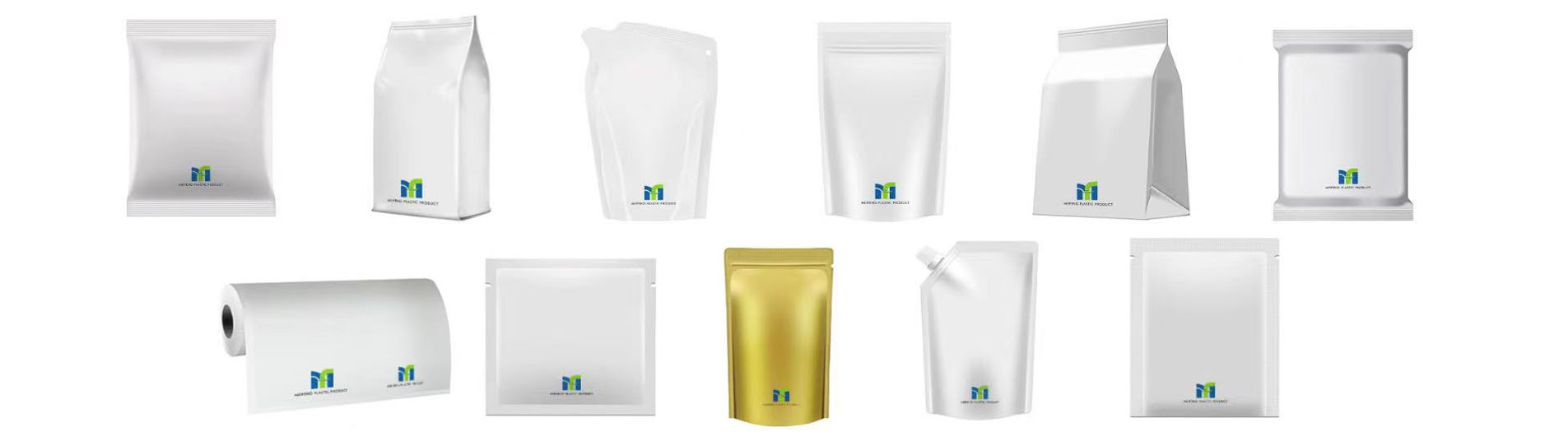
Food Packaging Stand Up Pouches are designed to do more than simply hold food. Once filled, the pouch needs to maintain a stable shape, present the product properly, and remain practical during storage, transportation, display, and everyday use. This is why a stand-up pouch that looks good as an empty sample may perform differently after it is filled.
For custom food packaging, the real challenge is not simply making a pouch that can stand. It is creating a pouch that remains balanced and consistent with the actual product inside.
A Stand-Up Pouch Does Not Stand the Same Way Empty and Filled
An empty pouch has very little weight, so its shape does not tell the whole story. Once food is added, the weight distribution changes the way the pouch sits on a surface.
For example, a pouch containing dense food may place more weight toward the bottom, while a lightweight product with a larger volume may fill more of the pouch body. Granular products can also settle during handling, changing the internal distribution of weight.
This means the finished package should be considered together with the product it will contain. A pouch dimension that works for one product may not create the same result for another product with the same nominal package weight.
Package Balance Starts with More Than Capacity
When developing Food Packaging Stand Up Pouches, package capacity is important, but it should not be the only dimension considered.
Two products can both require a 500 g package while having very different densities and volumes. One may need a wider pouch, while another may need a different height-to-width ratio to achieve a practical finished shape.
The goal is not to maximize internal volume. The goal is to create a package that provides enough usable space while maintaining a suitable overall proportion.
A well-balanced pouch can also make the product look more consistent on a shelf. If the pouch is excessively tall and narrow, or too wide for its contents, the finished package may not communicate the intended product positioning as effectively.
Why the Bottom Structure Matters
The bottom of a stand-up pouch carries an important part of the finished package design. It creates the base that allows the pouch to stand, but its effect goes beyond simply creating an upright package.
The bottom needs to work with the pouch width, height, filling volume, and product weight. When these dimensions are considered together, the finished package can achieve a more stable shape and more predictable appearance.
This becomes particularly important for products that are frequently handled. A package that stands well when freshly filled but changes shape significantly after transportation may create a different visual impression by the time it reaches its final destination.For this reason, the bottom structure should be treated as part of the complete pouch design rather than an isolated feature.
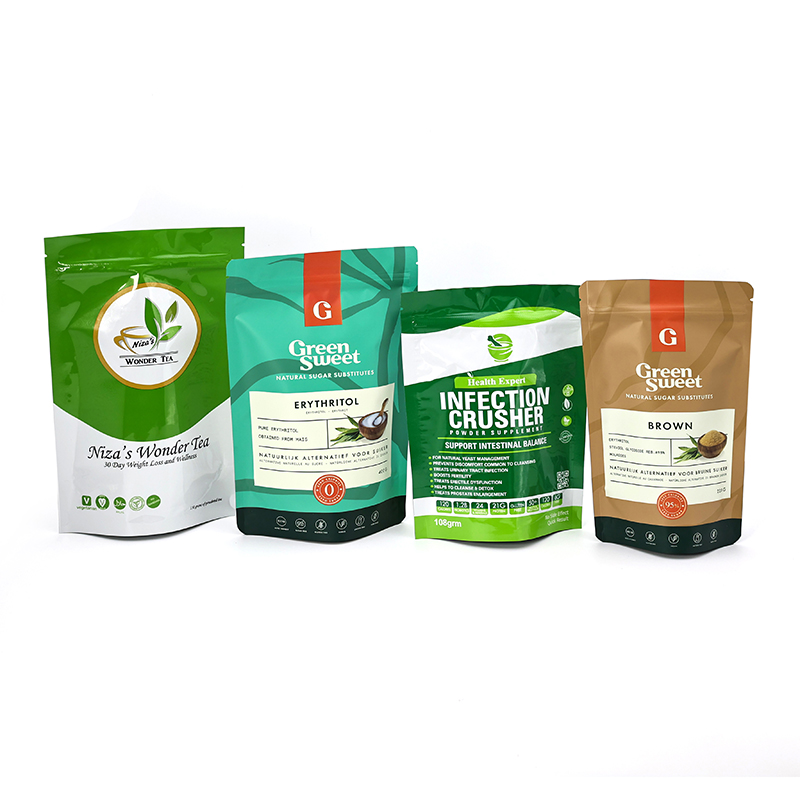
The Same Weight Can Require a Different Pouch
One of the easiest mistakes in food packaging is assuming that the same net weight always means the same pouch size.Consider two products that are both packed at 250 g. If one product has a higher bulk density and the other occupies more volume, they may require different pouch dimensions.
The difference becomes even more noticeable with products such as snacks, freeze-dried foods, powders, and granular foods. The amount of empty space inside the pouch can affect the final shape, while the way the product settles can change the appearance after handling.
This is why packaging development should consider both weight and volume rather than using weight alone to determine pouch dimensions.
Package Shape Also Affects Product Presentation
A stand-up pouch creates a relatively large front-facing surface, which makes it useful for printed product information and brand presentation. But the visual effect depends on the finished pouch shape.
If the package is too narrow, important graphics may have less room to breathe. If the pouch is too wide, the product may look smaller than expected within the package. If the filled pouch changes shape significantly, the artwork may also appear different from the original flat design.
For Food Packaging Stand Up Pouches, the printed design and physical pouch should therefore be developed together. The final dimensions, gusset structure, seal areas, and artwork need to work as one package rather than being treated as separate decisions.
What About Zippers, Tear Notches, and Other Features?
Additional features can improve convenience, but they should support the actual way the package will be used.
A zipper can be useful when the product is opened and consumed over multiple occasions. A tear notch can make the initial opening easier. A spout can be considered for certain liquid or semi-liquid applications. Windows or special surface finishes can also change the visual presentation.
However, adding more features does not automatically create a better package. Each feature occupies space and needs to be positioned correctly within the pouch structure.
For a custom project, it is more practical to define the intended user experience first and then determine which features genuinely contribute to it.
Consistency Matters After the Pouch Is Produced
A packaging design may work well as a single sample, but commercial production requires consistency across a much larger quantity of finished bags.
Dimensions, sealing areas, printing position, pouch formation, and overall appearance need to remain stable from bag to bag. This becomes especially important when the pouches will be displayed side by side or when several SKUs use the same packaging style.
For brands developing a new product, checking samples before moving into larger production can therefore be useful. The sample can be evaluated for appearance, dimensions, structure, printing, and practical handling before the final specification is confirmed.
Custom Food Packaging Stand Up Pouches from Mfirstpack
Mfirstpack provides customized flexible packaging, including stand-up pouches for food applications. The company can develop pouch dimensions, capacities, printing, structures, and functional options around the specific packaging project rather than relying on one standard pouch format.
Customization can include features such as zippers, tear notches, windows, handles, spouts, and different surface finishes when they are appropriate for the final application. Mfirstpack also supports different printing requirements, including digital printing for smaller and multi-SKU projects and gravure printing for larger production programs.
This is particularly useful when the required pouch size or product presentation does not fit a standard packaging specification. Instead of starting with an existing bag and trying to make the product fit it, the pouch can be developed around the product’s weight, volume, dimensions, display requirements, and intended use.
Need Food Packaging Stand Up Pouches Made for Your Product?
If you are developing a new stand-up pouch, the most useful starting information is not just the required bag capacity. Provide the food type, package weight, approximate product volume, target pouch dimensions, artwork, preferred features, and estimated quantity.
If the pouch size has not been finalized, Mfirstpack can discuss the structure and dimensions around the actual product requirements. Samples can also help confirm the appearance, printing, material structure, and sealing performance before larger production.
Contact Mfirstpack to discuss a custom Food Packaging Stand Up Pouch for your product.
FAQ
1. Why does product weight affect stand-up pouch design?
Weight influences how the finished pouch sits and how the product distributes inside the package. However, product volume and density are also important, so the same weight does not always require the same pouch dimensions.
2. Can the size of a Food Packaging Stand Up Pouch be customized?
Yes. Pouch dimensions, capacity, structure, printing, and functional features can be customized according to the product and packaging requirements.
3. Do all stand-up pouches need a zipper?
No. A zipper is useful for products that benefit from repeated opening and closing, but it is not necessary for every food application. The closure should match the intended use of the package.
4. What information should be provided for a custom stand-up pouch?
Useful information includes the food type, package weight, approximate product volume, target dimensions, artwork, required features, and expected quantity. If some specifications are not finalized, they can be discussed during packaging development.
Post time: Sep-29-2026