


An Aluminium Retort Pouch is often associated with high-barrier protection and shelf-stable food packaging, but not every retort product automatically needs an aluminium structure. The more useful question is whether the food requires the specific protection and package characteristics that aluminium foil can provide. For products exposed to light, oxygen, moisture, or long ambient storage requirements, an aluminium retort pouch can provide a practical combination of barrier protection, flexible packaging efficiency, and a fully opaque package format.
Choosing aluminium should therefore start with the product and its intended storage conditions rather than with material thickness alone.
When an Aluminium Retort Pouch Makes Sense
The strongest reason to consider an Aluminium Retort Pouch is when the package needs very strong protection from external environmental factors while also going through high-temperature retort processing.
Light-sensitive foods are one example. If exposure to light can affect the appearance, flavor, nutrients, oils, or other sensitive components of a product, an opaque aluminium structure prevents the contents from being directly exposed to light. This can be useful for certain ready-to-eat meals, sauces, cooked foods, seafood products, rice products, and wet pet food applications.
Long ambient storage is another consideration. Retort packaging is designed for products that require thermal processing, and aluminium structures can add a strong barrier against oxygen and moisture. This combination can be valuable when the finished food is intended to remain stable during transportation and storage without refrigeration.
However, high barrier performance alone is not enough to justify aluminium. If the product needs to remain visible through the package, a transparent retort structure may be more appropriate. The packaging decision should reflect the actual product presentation and protection requirements.
Aluminium Retort Pouch vs. Transparent Retort Packaging
The difference between aluminium and transparent retort packaging is not simply a question of which material offers more protection. It is also about how the finished product needs to be presented.
An aluminium pouch creates a fully opaque package. This allows the printed surface to become the primary visual communication area while keeping the food completely covered. For prepared foods where appearance through the package is not important, this can create a clean and consistent package presentation.
Transparent retort packaging takes the opposite approach. It allows the contents to remain visible, which can be valuable for products where food appearance helps communicate quality or product identity.
This creates a practical decision point:
| Packaging requirement | Aluminium Retort Pouch | Transparent Retort Packaging |
|---|---|---|
| Light protection | Strong | Depends on structure |
| Product visibility | Not available | Available |
| Fully opaque appearance | Yes | No |
| Printed surface | Large uninterrupted surface | Can include transparent areas |
| Retort applications | Suitable for many products | Suitable for selected products |
| Visual product inspection | Not possible through pouch | Possible |
Neither format should be selected simply because it has a higher perceived specification. The right structure depends on what the finished package needs to accomplish.
Does Your Food Really Need Aluminium?
A useful way to evaluate an aluminium retort pouch is to look at the product’s sensitivity rather than starting with the pouch itself.
Consider three questions.
First, does light exposure matter? If the product contains ingredients that are sensitive to light or the package is expected to remain in bright retail or distribution environments, an opaque structure may provide a useful advantage.
Second, does the product require strong barrier protection during extended ambient storage? If oxygen and moisture exposure are important concerns, a high-barrier retort structure can help protect the packaged food throughout its intended storage period.
Third, does the package need to show the food? If the answer is yes, an aluminium structure may conflict with the presentation objective even though its barrier performance is strong.
These questions help separate genuine packaging requirements from the assumption that “retort” automatically means “aluminium.”
Package Format Matters as Much as Material Choice
Selecting an aluminium retort structure is only one part of the packaging decision. The finished pouch format also affects how the package is used and presented.
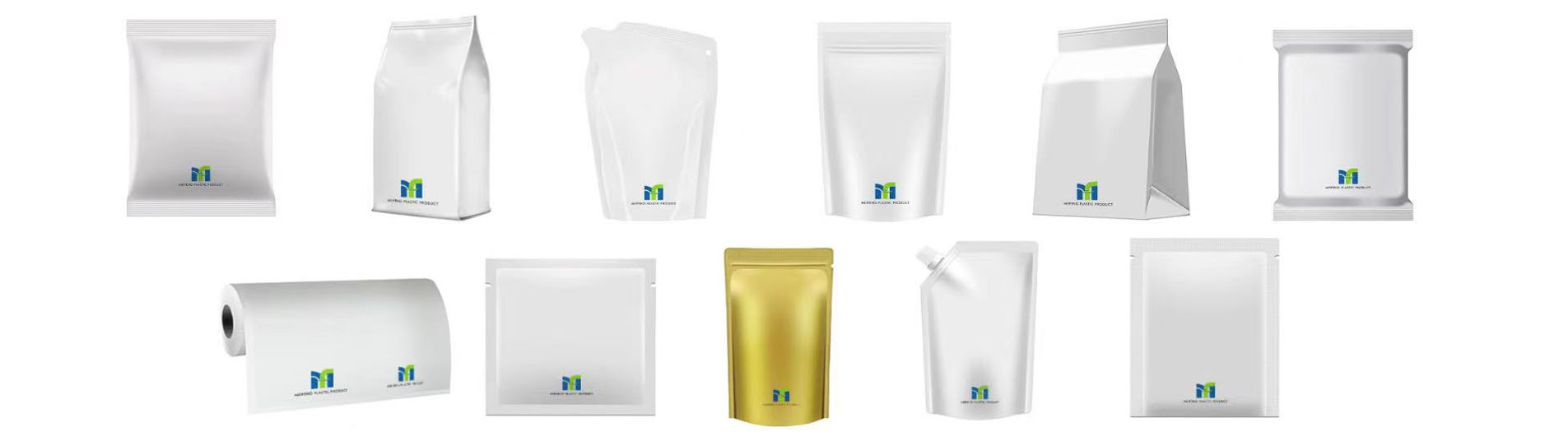
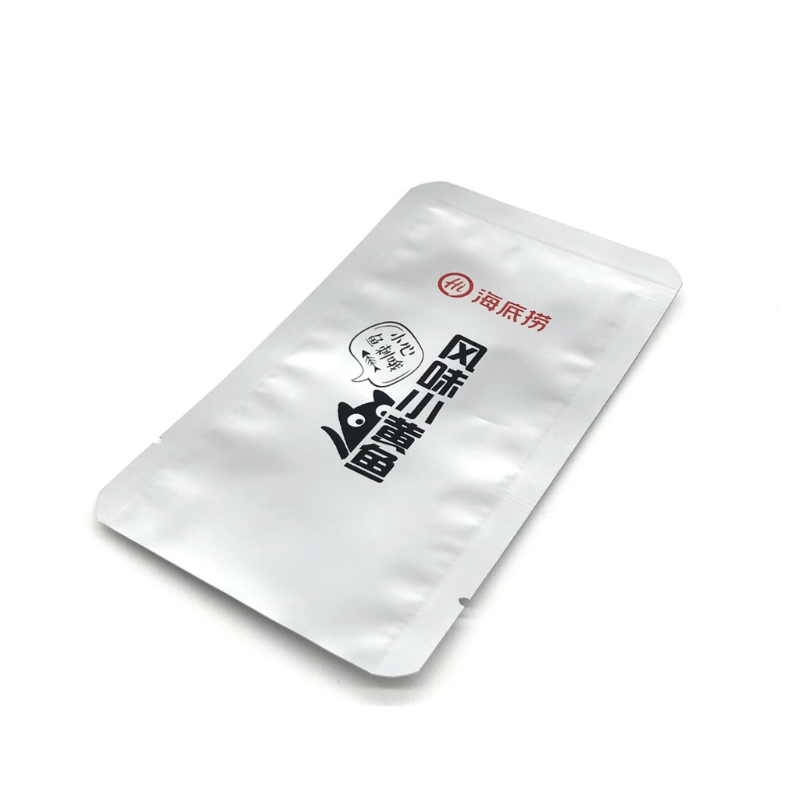
A three-side seal pouch provides a relatively flat and simple format that can work well for individual portions and compact products. A stand-up retort pouch creates a more defined package shape and can provide a stronger front-facing display area for products such as sauces, soups, prepared foods, and wet pet food.
Vacuum-oriented retort formats can be considered when the package needs to fit more closely around products such as meat or seafood. The final pouch should therefore be defined by the food form, portion, package dimensions, handling requirements, and desired presentation rather than by material structure alone.
For the same aluminium retort material, changing the pouch format can significantly change the final package appearance and user experience.
What Should Be Confirmed Before Developing an Aluminium Retort Pouch?
Before finalizing a structure, several product details should be clearly defined. These include the food type, approximate package weight, desired pouch dimensions, retort conditions, storage requirements, package format, printing requirements, and whether features such as a zipper, spout, tear notch, or handle are required.
The retort process is particularly important because packaging performance depends on the complete structure rather than the aluminium layer alone. The pouch needs to maintain seal integrity and overall package performance through the intended thermal processing conditions.
It is also useful to consider the final distribution environment. A package intended for long-distance transportation, ambient storage, or repeated handling may have different mechanical requirements from a package designed for a shorter distribution cycle.
Defining these factors early helps avoid developing a structure that looks suitable on paper but does not match the actual finished application.
Custom Aluminium Retort Pouch Solutions from Mfirstpack
Mfirstpack develops flexible packaging for food applications and provides multiple retort pouch formats, including aluminium retort pouches and other retort-compatible structures. Its product range includes stand-up pouches, flat pouches, three-side seal pouches, vacuum pouches, and other flexible packaging formats, allowing the pouch design to be developed around the intended application rather than forcing every product into one standard format.
For custom projects, Mfirstpack can support printing and flexible packaging production across different specifications. Its capabilities include digital printing for short-run and multi-SKU projects, as well as gravure printing for established production requirements. The company also operates equipment covering printing, lamination, slitting, and bag making, supporting an integrated flexible packaging production process.
Quality control is also built into the production process, with online and offline inspection capabilities. Mfirstpack holds BRC and ISO 9001:2015 certifications for its packaging operations.
For a new aluminium retort pouch project, the most useful starting information is the food type, package weight, target pouch size, retort conditions, storage requirements, preferred pouch format, artwork, and estimated quantity. If some specifications have not yet been finalized, the packaging structure and finished pouch format can be discussed around the actual food application.
FAQ
1. What is an Aluminium Retort Pouch used for?
An Aluminium Retort Pouch is commonly used for foods that require retort processing and strong protection from oxygen, moisture, and light. Applications can include ready-to-eat meals, sauces, soups, rice products, seafood, meat products, and wet pet food.
2. Is aluminium always necessary for retort packaging?
No. Retort packaging can also use transparent structures and other material combinations. Aluminium is particularly useful when strong barrier protection and light shielding are important, while transparent retort packaging may be more suitable when product visibility is required.
3. Can an Aluminium Retort Pouch be made as a stand-up pouch?
Yes. Aluminium retort structures can be converted into different finished pouch formats, including stand-up and three-side seal designs, depending on the product and processing requirements.
4. What information is needed to develop a custom Aluminium Retort Pouch?
Useful information includes the food type, package weight, pouch dimensions, retort conditions, storage requirements, desired pouch format, artwork, and estimated quantity. These details help determine a suitable packaging structure and finished pouch design.
Post time: Sep-24-2026